


The Rockefeller Foundation has underscored a growing shift from donor dependency to African-led solutions in its 2025 impact report, as global aid continues to decline.
The report, titled Big Bets, Real Results, details how the 113-year-old philanthropic organisation is investing in what it describes as transformative initiatives in energy, food systems and health, with a strong focus on Africa.
It indicated that, despite a challenging global environment marked by shrinking aid flows, the Foundation awarded more than US$350 million in grants, directly mobilised US$3 billion and committed $133 million across 66 opportunities in Africa, reaching some 731 million people worldwide.
The report highlighted how African-led partnerships were driving practical solutions to critical challenges, including disease prevention, food insecurity and access to energy.
In West Africa, a collaborative funding model developed by the Global Fund and supported by the Foundation, the Abbott Foundation and IQVIA, has strengthened laboratory systems and disease surveillance.
The initiative has so far enabled the detection of more than 100 outbreaks, including viral haemorrhagic fevers, while over 1,000 laboratory technicians have been trained. In addition, 11 countries in the sub-region have established sentinel surveillance systems to improve monitoring and response.
In Ghana, the Foundation’s partnership with the World Food Programme is promoting nutritious, locally sourced meals in schools, while supporting smallholder farmers and local economies.
The programme connects schools directly to local food systems, encourages the use of fortified whole grains and diverse proteins, and seeks to address supply chain and cultural barriers that affect food quality and delivery. It also supports policy engagement to promote evidence-based decisions on school feeding.
In Nigeria, the report noted that an innovative energy initiative had delivered the country’s first interconnected mini-grid system, combining solar, battery storage and grid power to connect 30,000 people to electricity and create or improve nearly 14,000 jobs.
The project is expected to unlock over $287 million to scale up nationwide.
The report also pointed to the growing role of digital innovation in agriculture. It cited Digital Green’s AI-powered application, FarmerChat, which is helping farmers in several countries, including Nigeria, access tailored advice to adapt to climate challenges.
The platform has recorded more than 1.6 million downloads and handled over 10 million queries.
In Zambia, efforts under Mission 300 are supporting access to electricity, with more than 44 million people already connected through projects led by the World Bank and the African Development Bank.
Thirty countries are also advancing national energy compacts.
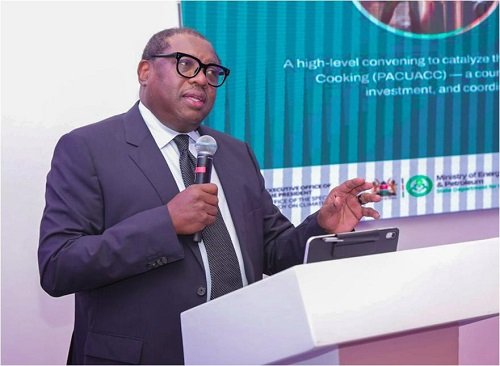
Commenting on the report, the Senior Vice-President and head of the Foundation’s Africa Regional Office, William Asiko, said the findings reflected a broader shift in development thinking.
He said that, in the face of aid cuts, climate pressures and geopolitical tensions, the focus was increasingly on strengthening African capacity and leadership across key sectors.
He said “As the Rockefeller Foundation marks 60 years of its Africa Regional Office, it reflects a broader shift in the future of development. Amid aid cuts, geopolitical tensions and conflict, climate impacts, and political change, progress is becoming harder to sustain.”
“Against this backdrop, the focus is increasingly on strengthening African capacity across health, education, and energy, and on African-led solutions and leadership, alongside the role of philanthropic capital. The Foundation’s latest Impact Report highlights how we are reimagining progress through mission-driven action and partnerships,” he said.
BY TIMES REPORTER
Follow our WhatsApp Channel now! https://whatsapp.com/channel/0029VbAjG7g3gvWajUAEX12Q

