


Stakeholders in Ghana’s insurance industry have called for stronger collaboration among government, regulators, insurers, innovators and development partners to expand inclusive insurance and protect vulnerable people against climate, health and economic shocks.
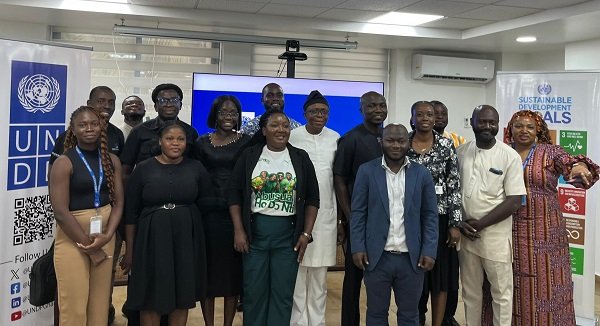
They made the call at a hybrid seminar on ‘Scaling Inclusive Insurance Innovation in Ghana,’ organised under the United Nations Development Programme (UNDP) Insurance and Risk Finance Facility (IRFF) in partnership with the National Insurance Commission (NIC).
The seminar brought together policymakers, insurance industry leaders, innovators, development partners, academics and investors to discuss practical ways of moving innovative insurance solutions from pilot projects to nationwide implementation.
Delivering the opening remarks in Accra Wednesday, the UNDP Resident Representative said inclusive insurance was no longer just an insurance issue but a development priority that could help households, businesses and governments recover quickly from disasters and economic shocks.
The Resident Representative said climate change, health emergencies and economic uncertainty were increasing worldwide, leaving millions of people financially exposed.
“For many families, one flood, one illness or one failed harvest can erase years of progress. Closing the insurance protection gap is therefore not simply an insurance challenge. It is a development imperative,” the representative stated.
The representative noted that through the Insurance and Risk Finance Facility, UNDP had been working with the National Insurance Commission since 2022 to strengthen Ghana’s financial resilience and improve access to inclusive insurance.
According to the representative, the Inclusive Insurance Innovation Challenge (3iC) was created to identify innovative, affordable and accessible insurance solutions for underserved communities rather than simply organise another innovation competition.
The representative said the winning innovators Agricom, WellMax and Resolut had demonstrated that Ghana possessed the talent and entrepreneurial capacity to develop practical insurance solutions for farmers, workers and low-income households.
Setting the context for the discussions, organisers said Ghana continued to face a wide insurance protection gap as many people, particularly those in the informal sector, smallholder farmers and micro, small and medium-sized enterprises, remained uninsured or underinsured despite growing exposure to floods, droughts, fires, accidents and health emergencies.
They explained that many affected households often resorted to depleting savings, borrowing money or selling productive assets after disasters, a situation that deepened poverty and slowed development.
The organisers identified low awareness, affordability challenges, weak distribution systems and products that did not reflect the realities of low-income earners as major factors limiting insurance coverage.
They stressed that innovation in product design, technology, partnerships and regulation would be essential in closing the protection gap.
The seminar also featured a panel discussion on the theme: ‘From Innovation to Market Impact,’ moderated by Shirley Botchwey, which examined how innovative insurance products could be scaled to reach more Ghanaians.
Panel members included Gideon Ataraire, Micro insurance Expert and Certified Master Trainer in Inclusive Insurance Training and Systems, Francis Gota, Chief Executive Officer of aYo Ghana, Rachel Abbey of the Enterprise Life Insurance and officials from the Mrs Stella Jonah , Head of market strategy and innovation at the National Insurance Commission (NIC).
The panelists agreed that although Ghana had made progress through initiatives such as the Inclusive Insurance Innovation Challenge and the Insurance and Risk Finance Facility, insurance coverage remained low because many innovative ideas struggled to secure financing, partnerships, regulatory support and access to markets.
Mr Gideon Ataraire urged insurance providers to adopt customer-centred product designs based on extensive market testing to ensure products addressed the real needs of farmers and informal sector workers.
Mr Francis Gota said mobile technology, simple insurance products, strategic partnerships and trusted distribution channels had enabled aYo Ghana to reach millions of customers.
He said building trust among low-income earners remained critical to increasing insurance uptake.
The Enterprise Life representative said inclusive insurance products must remain commercially viable while addressing the financial realities of underserved populations.
Mrs Rachel Abbey Senior Manager for Inclusive insurance, a panelist further emphasised that stronger partnerships among government, development partners, insurers, financial institutions, telecommunications companies and innovators would be necessary to move successful pilot projects into large-scale commercial operations.
Participants also highlighted the importance of aligning inclusive insurance with national disaster preparedness efforts under the National Disaster Management Organisation (NADMO) Act, 2016, noting that wider insurance coverage could complement disaster response by reducing the financial burden on affected households and government after emergencies.
BY NELLY QUARCOOPOME
Follow our WhatsApp Channel now! https://whatsapp.com/channel/0029VbAjG7g3gvWajUAEX12Q

