


Our dear ‘Ama’ Ghana appears to be standing at a crossroads, confronted by the difficult choice of whether to pull itself together or allow itself to be torn apart by forces that threaten its peace, unity and democratic values.
Ghana today is certainly not asleep. The emergence and rapid growth of social media have transformed the way citizens communicate, share information, express opinions and participate in national discourse. Social media platforms have become powerful tools that are easily accessible to people irrespective of age, social background, educational level or economic status.
The opportunities created by these platforms cannot be underestimated. Social media has brought the world closer, allowing people to communicate with family and friends across geographical boundaries. It has also created opportunities for businesses, journalists, civil society organisations, politicians, activists and ordinary citizens to reach large audiences within seconds.
However, like every powerful tool, social media can be used for both constructive and destructive purposes.
Ghana appears caught in a disturbing social media culture in which vulgarity, insults, abusive language, character assassination and the deliberate spread of misleading information are sometimes presented as entertainment or “content creation.” The appetite for sensationalism appears to be growing, with some individuals seemingly prepared to cross ethical and legal boundaries in pursuit of attention, influence and financial rewards.
The situation becomes even more worrying when individuals hide behind anonymous accounts and pseudonyms to make allegations, issue threats, insult public officials and attack private citizens.
There is nothing inherently wrong with blogging or content creation. Indeed, responsible bloggers and content creators have contributed significantly to public education, accountability and the democratisation of information.
The problem arises when the desire for views, followers, engagement and monetary rewards becomes more important than truth, responsibility and respect for human dignity.
For some people, social media has become a convenient money-making venture. For others, however, it has become a weapon for defamation, incitement, intimidation and abuse. A single post can travel across the country within minutes and potentially reach thousands or millions of people before the person affected has an opportunity to respond.
This presents a serious challenge to a democratic society such as Ghana.
The original intention behind social media was largely positive: to connect people, facilitate communication, share knowledge and bridge geographical and information gaps. Globalisation and technological innovation have made it possible for an individual sitting in a remote community to participate in a national conversation alongside politicians, academics, journalists and other influential voices.
But the same technology that can unite society can also deepen divisions when it is deliberately manipulated.
The question therefore arises: Is this the Ghana that our forebears, including Osagyefo Dr Kwame Nkrumah, envisioned? Is this the country for which generations of Ghanaians struggled and sacrificed to establish democratic institutions, national unity and a sense of collective identity?
The answer should not be left entirely to political leaders. It is a responsibility that must be borne by every Ghanaian. The values associated with nation-building, patriotism, discipline, tolerance, social responsibility and national unity must remain relevant in the digital age.
Whatever political, ethnic, religious or ideological differences may exist among us, we must not allow social media to become a platform through which Ghana’s peace and stability are deliberately undermined.
This is particularly important as Ghana continues to strengthen its democratic credentials. Democracy does not mean that citizens must agree on everything. On the contrary, disagreement is an essential component of democratic governance.
Citizens have the right to criticise governments, opposition parties, public officials and institutions. Moreover, criticism must be distinguished from abuse. The right to express an opinion does not automatically justify defamation, threats, harassment, incitement or the deliberate destruction of another person’s reputation.
A healthy democracy requires citizens to exercise their freedoms responsibly while respecting the rights of others. Unfortunately, the growing politics of insults presents a worrying dimension of Ghana’s contemporary political discourse.
Political disagreements are increasingly accompanied by personal attacks and character assassination, both on traditional political platforms and across social media. Instead of concentrating on policies, ideas and the performance of public officials, political communication can sometimes degenerate into attacks on personalities, families and private lives.
This culture must not be allowed to become normal.
Political parties have an important responsibility in this regard. Party leaderships should not only condemn abusive political communication when it comes from their opponents; they must also demonstrate consistency by calling their own supporters and communicators to order when they cross acceptable boundaries.
The same responsibility applies to social media “watchdogs”, political commentators, bloggers and content creators who operate around political parties. Their influence can be considerable, particularly among young people who consume much of their news and political information online.
The political parties must therefore recognise that digital communication is not merely another avenue for campaigning. It is also a powerful instrument capable of influencing public attitudes, shaping perceptions and, in extreme circumstances, contributing to social tensions.
Ghana has experienced the consequences of inflammatory political rhetoric before. We should therefore be careful not to allow social media to become an accelerator of political hostility.
The danger is not simply about insults. Repeated exposure to abusive political language can gradually lower the standards of public discourse. What was once considered unacceptable may eventually become normal. Once insults become a routine part of political communication, more extreme forms of hostility may follow.
However, acting today means protecting tomorrow; hence the need for the leadership of all political parties to take responsibility for the conduct of their communicators and supporters, particularly those who use social media as an extension of partisan political activity. Internal mechanisms should be strengthened to discourage abusive language, personal attacks, misinformation and incitement.
Civil society organisations, media organisations and professional bodies also have important roles to play. They can contribute to public education on responsible digital citizenship and encourage citizens to verify information before sharing it.
Parents and schools must equally help young people understand that social media activity has consequences. The internet should not be treated as a lawless space where anything can be said without responsibility.
Journalists and professional media practitioners also have a responsibility to uphold ethical standards in the digital environment. The distinction between journalism and unverified social media commentary must not be lost simply because both appear on a person’s phone screen.
Above all, ordinary citizens must recognise their own power. Every Ghanaian who shares, reposts, comments on or amplifies controversial content becomes part of the information ecosystem. We cannot complain about toxic social media discourse while continuously rewarding it with our attention, engagement and shares.
The future of Ghana’s democracy cannot be secured by political leaders alone. It requires collective responsibility.
As the country looks ahead to the 2028 general elections, there is a need for political actors and citizens alike to reflect carefully on the kind of political environment they want to create. Elections should be contests of ideas, policies, programmes and leadership records not battles of insults, threats and character assassination.
Ghana’s peace should never be taken for granted. Our democracy is valuable precisely because citizens can disagree without destroying one another. Social media should strengthen this democratic culture rather than weaken it.
Although Ama Ghana deserves better, the challenge before us is not whether social media should exist. It is already an integral part of modern society and will continue to evolve. The real issue is how we, as a people, choose to use it.
We can use it to educate, unite and hold leaders accountable. We can use it to promote national development and give voice to communities that may otherwise remain unheard. Or we can use it to spread hatred, insults, misinformation and division. The choice is ours.
If Ghana is to remain a beacon of democratic stability in the sub-region, every stakeholder must play a role in protecting the values that hold the nation together. Political parties must discipline their communicators. Content creators must embrace responsibility. Citizens must verify information. Media organisations must uphold professional standards. And the state must continue to protect both freedom of expression and the rights of individuals.
Let us therefore return to the values of tolerance, respect, patriotism and responsible citizenship.
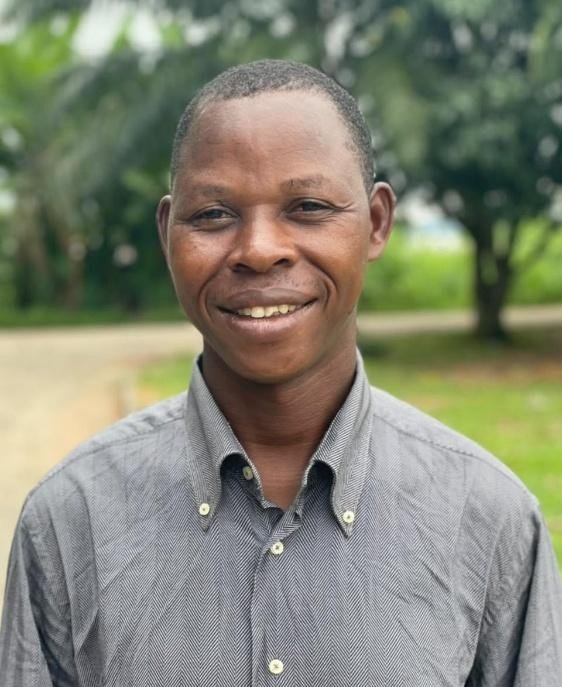
BY PAUL NYOJAH DALAFU
The writer is a Journalist, communications specialist and Public Relations practitioner. Email Address: paulnyojah30@gmail.com
You can now read the *Ghanaian Times* and *The Spectator* newspapers digitally on [TimesNewsPlus](https://timesnewsplus.com/newspapers).
Follow our WhatsApp Channel now! https://whatsapp.com/channel/0029VbAjG7g3gvWajUAEX12Q

