


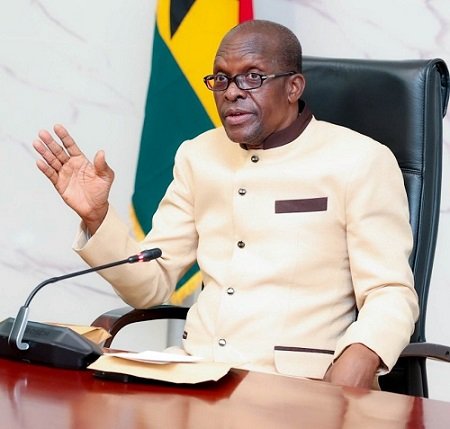
The Speaker of Parliament, Mr Alban Sumana Kingsford Bagbin, has underscored the need for Parliament to forge strong partnerships with academia and civil society organisations (CSOs) in the discharge of its legislative mandate.
He said stronger collaboration would ensure informed legislative deliberations through valuable research and help public policies reflect the lived experiences of the citizenry.
Additionally, he stressed that such partnerships must be founded on mutual respect, shared responsibility and an unwavering commitment to the national interest.
Mr Bagbin said this at the opening of an information-sharing session between civil societies, academia and Parliament committees on economic governance and public financial management in Accra last Wednesday.
The session, organised by the Citizens Bureau of Parliament, was aimed at promoting evidence-based legislation, informed policy dialogue and enhanced parliamentary oversight.
“While academia and civil society pursue common objectives, opportunities for structured and sustained collaboration have been limited. As a result, valuable research has not always informed legislative deliberations and the lived experiences of citizens have not constantly found expression in public policy,” Mr Bagbin said.
He also highlighted the importance of collaboration among Parliament, academia and CSOs in protecting the public purse and ensuring accountability.
“Parliament cannot be the solo police of our purse. This is why Parliament must cultivate strong and enduring partnerships with civil society, academia and other knowledge institutions,” he said.
“Likewise, academia and civil society must continue to engage Parliament responsibly, offering objective research, practical solutions and constructive criticism that contribute meaningfully to public policy and democratic governance,” Mr Bagbin added.
The Speaker said Parliament was promoting transparency by institutionalising openness through the development of an Open Parliament Plan and the establishment of a multi-stakeholder Parliamentary Open Government Steering Committee.
He said Parliament had also deepened direct engagement with citizens through initiatives such as the electronic petitions platform, live broadcasts of parliamentary proceedings across digital media and the annual Open Parliament Week celebration.
Mr Bagbin urged that constructive criticism should not be viewed as hostility towards Parliament but rather as a defining characteristic of a confident and accountable legislature.
He called for sustained dialogue between Parliament, academia and civil society to ensure the partnership extended beyond the session.
The Speaker further highlighted the strategic role of the Citizens Bureau in advancing citizen participation in the legislative process, describing it as a bridge between Parliament and the public.
Mr Bagbin commended institutions such as IMANI Africa for shaping Ghana’s economic, financial and social policies through research, and pledged Parliament’s commitment to openness, accountability and meaningful public participation.
The Clerk to Parliament, Rev. Ebenezer Ahumah Djietror, in his welcome address, said although Parliament was mandated to pass legislation, its public engagement role could not be underestimated, hence the need for the session.
The programme featured a presentation by the Institute of Statistical, Social and Economic Research (ISSER) and a panel discussion on economic governance and public financial management.
BY BENJAMIN ARCTON-TETTEY
Follow our WhatsApp Channel now! https://whatsapp.com/channel/0029VbAjG7g3gvWajUAEX12Q

