


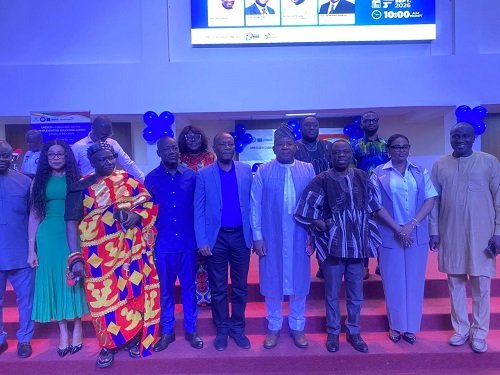
Stakeholders in Ghana’s education sector have called for stronger partnerships and innovative approaches to improve literacy and lifelong learning, particularly among underserved communities.
The call was made at a stakeholder engagement organised by the Government of Ghana, the United Nations Educational, Scientific and Cultural Organization (UNESCO) and the Complementary Education Agency (CEA) in Accra yesterday.
The engagement was held under the theme, “Emerging Issues, Challenges and Opportunities in Literacy and Lifelong Learning in Ghana.”
The Deputy Executive Director, Support Services of the CEA, Mrs Patience Effie Abue Dogbey, said the complementary education space was dynamic and required equally dynamic channels to deliver quality learning.
She said the CEA had enrolled 10,000 out-of-school children across four regions, 12 districts and 320 communities as part of efforts to extend the reach of its Complementary Basic Education Programme.
“For that reason, building strong relationships, partnerships and collaborations remain our central goal,” Mrs Abue Dogbey said.
The Head of the Office and Representative of UNESCO in Ghana, Mr Edmond Moukala, said literacy programmes must go beyond foundational skills to include livelihoods, entrepreneurship and digital competencies.
He said continuous learning was necessary to ensure that Ghanaians remained economically and socially relevant in an increasingly digital world.
“For Ghanaians to remain economically and socially relevant, we must foster an ecosystem where knowledge acquisition is a continuous lifelong journey,” he said.
Mr Moukala noted that Ghana’s aspiration for a resilient economy could not be fully achieved if significant numbers of citizens remained excluded from the digital and foundational skills required for modern life.
“We must ensure learning is not just accessible, but life-changing,” he added.
The Programme Manager at World Vision Ghana, Mr Joshua Baidoo, said the global theme, “Literacy for People, the Planet and Prosperity,” demonstrated that literacy went beyond the ability to read and write.
He said although Ghana had made progress in expanding access to education, such access had not translated quickly enough into improved learning outcomes.
“According to the Ministry of Education, 53 per cent of 10-year-old children in Ghana still cannot demonstrate proficiency in literacy and numeracy,” Mr Baidoo said.
He further noted that digital technology was redefining literacy, while many learners in rural communities continued to face challenges, including limited connectivity and inadequate access to digital devices.
He therefore called for increased efforts to bridge the digital and literacy gaps and ensure that all learners acquired the skills needed to participate meaningfully in society.
BY PERPETUAL MENSAH AND JESSIE PRINCESS DUAH
You can now read the *Ghanaian Times* and *The Spectator* newspapers digitally on [TimesNewsPlus](https://timesnewsplus.com/newspapers).
Follow our WhatsApp Channel now! https://whatsapp.com/channel/0029VbAjG7g3gvWajUAEX12Q

