


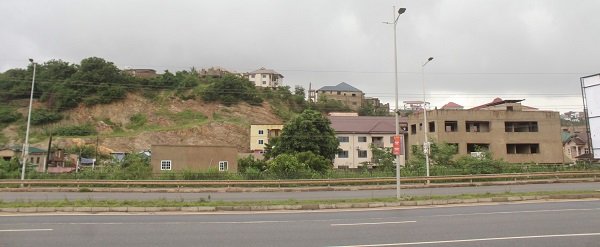
A senior urban planning expert, Professor Martin Oteng-Ababio, has urged the government to place an immediate ban on unplanned and uncontrolled residential development on hill-tops.
He warned that the country is “sitting on a time bomb waiting to detonate soon”.
He explained that the indiscriminate clearing of vegetation on hills for housing was exposing communities to mudflows, landslides and severe erosion, particularly as rainfall intensifies.
According to him, such practices are steadily creating the conditions for a major environmental disaster.
Prof. Oteng-Ababio cautioned that continued development on hills such as the Aburi, Bortianor and McCarthy ranges without proper planning posed a serious threat.
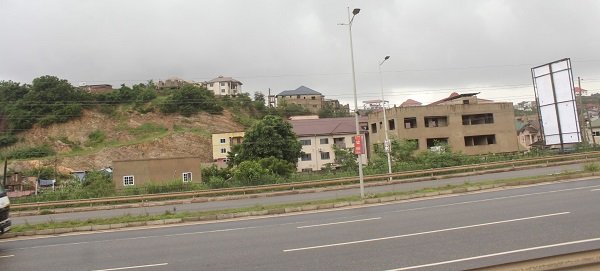
He cautioned that the removal of vegetation leaves topsoil vulnerable to erosion, and with increasing rainfall, entire communities could be wiped away by mudflows, landslides or avalanches.
The professor, who also serves as Board Chairman of the Forest Plantation Development Fund (FPDF), gave the warning in an interview with The Ghanaian Times while discussing recent flooding incidents and the persistent sand deposits along the Mallam–Kasoa stretch of the Accra–Cape Coast Highway.
He described hills as ecologically sensitive areas that require careful planning and strict regulation to balance development with environmental protection.
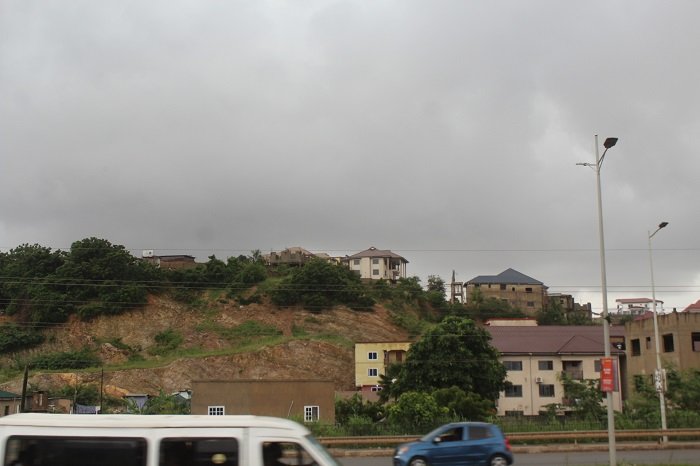
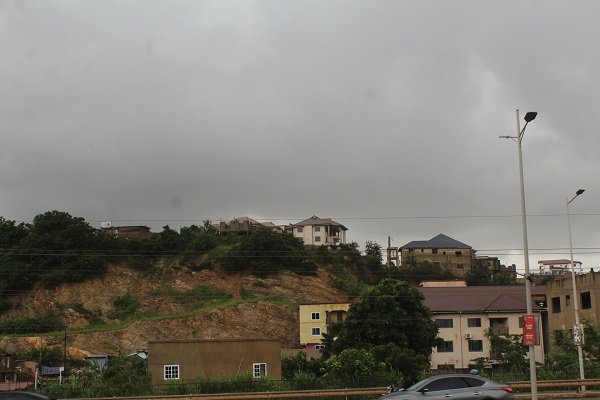
Referring to recent mudflow incidents at Amedzofe in the Volta Region, Prof. Oteng-Ababio warned that the consequences could be far more devastating if unchecked development on hill-tops continues.
He further observed that many of the hills currently being developed for housing were located within or near earthquake fault zones, heightening the risks.
Even without seismic activity, he noted, the country was already struggling to manage flood disasters during heavy rains.
He added that the situation could become far worse if landslides were to occur alongside an earthquake.
Prof. Oteng-Ababio pointed out that countries that permit development on hilly terrain do so under carefully designed and strictly enforced planning frameworks.
Citing research findings, he indicated that between 92 and 95 per cent of some hilly landscapes in Accra were unsuitable for residential development, yet construction continues in such areas.
On the issue of perennial flooding in Accra, he said it could no longer be blamed solely on heavy rainfall or indiscriminate waste disposal.
He stressed that the destruction of hillsides and wetlands had become a major contributor to the problem.
He explained that the removal of vegetation accelerates stormwater runoff, while silt from degraded slopes clogs drains and waterways, reducing their capacity and worsening flooding.
The situation, he said, was compounded by weak enforcement of planning regulations and poor coordination among institutions responsible for land administration, including metropolitan, municipal and district assemblies, the Environmental Protection Agency, the Water Resources Commission, the Forestry Commission and traditional authorities.
Prof. Oteng-Ababio also noted that wetlands, which naturally absorb excess runoff, were increasingly being reclaimed for development, leaving floodwaters with limited drainage pathways.
He rejected the view that refuse was the primary cause of flooding, explaining that waste becomes a major issue only when it mixes with large volumes of silt washed down from degraded hillsides.
He therefore called for stricter enforcement of planning laws, the restoration of degraded hill-tops and wetlands, and sanctions against officials who approve developments in environmentally sensitive areas.
By Stephanie Birikorang
Follow our WhatsApp Channel now! https://whatsapp.com/channel/0029VbAjG7g3gvWajUAEX12Q

