


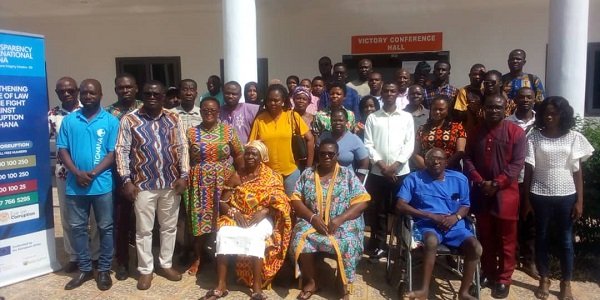
Transparency International Ghana (TIG) has called on citizens to actively support the government in the fight against corruption, which has become a major obstacle to national development. The organisation noted that corruption is a key factor behind stalled projects, as funds meant for infrastructure and other development initiatives are often diverted into private accounts.
The Finance Manager of TIG, Mr. Benedict Doh, made the call at a sub-national training for Civil Society Organisations (CSOs) and media practitioners in Ho, Volta Region, focusing on strategies to combat corruption. He described corruption as the number one enemy of national progress.
Mr. Doh emphasised that financial malpractice is widespread, not limited to public institutions but also prevalent in the private sector. Traders, for instance, inflate prices beyond reasonable limits, creating additional challenges. He urged collective action from citizens to prevent these practices.
Highlighting public sector involvement, Mr. Doh explained that officials are often implicated in conflicts of interest, embezzlement, and financial misappropriation. These corrupt practices slow national development efforts, particularly in critical sectors such as education and healthcare.
He stressed that the fight against corruption cannot rest solely on the government. Citizens must understand what constitutes corruption and how to prevent it. In addition to financial misconduct, he warned against the growing issue of “sexetortion,” where officials demand sexual favours in exchange for services—a practice that must be stopped.
Mr. Doh said TIG aims to equip CSOs with skills to educate the public about the devastating effects of corruption, with the goal of reducing or eradicating it nationwide. He also highlighted factors driving corruption, such as low salaries, economic pressures, weak legal systems, and cultural practices, calling instead for accountability and fairness in public office.
He added that corruption disproportionately affects women, children, and people living with disabilities, eroding public trust and normalising bribery in the country. Participants at the training identified weak public systems as a major enabler of corruption and urged government enforcement of Article 35(8) of the Constitution, which mandates decisive action against corrupt practices.
BY SAMUEL AGBEWODE, HO
🔗 Follow Ghanaian Times WhatsApp Channel today. https://whatsapp.com/channel/0029VbAjG7g3gvWajUAEX12Q
🌍 Trusted News. Real Stories. Anytime, Anywhere.
✅ Join our WhatsApp Channel now! https://whatsapp.com/channel/0029VbAjG7g3gvWajUAEX12Q

