



The Ghana Investment Promotion Authority (GIPA) has called on food and agro-processing companies, particularly those operating within free zone enclaves, to take advantage of the abundant raw materials in the cashew sector by establishing processing plants in the country.
The move, the authority underlined, would help transform raw cashew apples into value-added products such as fruit juices and jams, while reducing the huge post-harvest losses recorded annually.
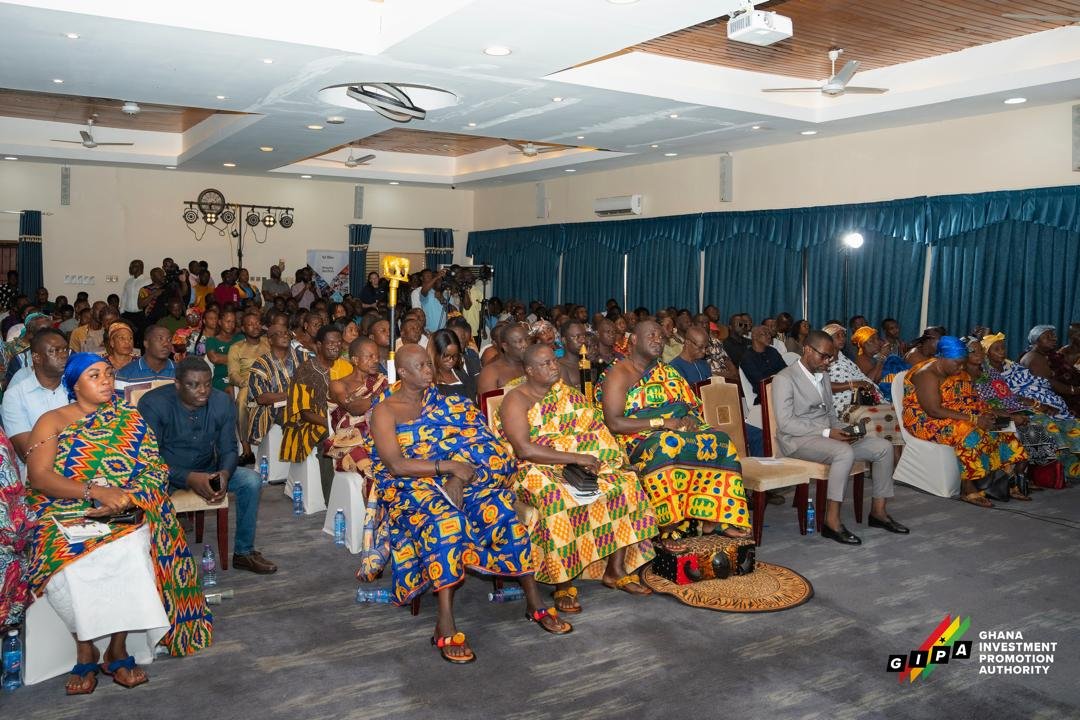
Speaking at the Bono Regional Investment Roadshow in Sunyani yesterday, the Deputy Chief Executive Officer of GIPA, Mr Abdul Razak Abass, disclosed that about 1.8 million cashew apples go to waste each year on farms across the region.
The roadshow, held on Tuesday and attended by industry players and members of the business community, was on the theme: ‘Driving Local Investment — Unlocking Regional Potential: Mapping Opportunities and Mobilising Growth in the Bono Region.’
Mr Abass stated that the government was prepared to offer tax incentives to companies willing to invest in the numerous opportunities available in the region.
He presented data from the authority which revealed a significant imbalance in the distribution of investments across the country.
Out of the $54 billion in direct investments recorded nationwide between 1994 and 2025, the Bono Region attracted only GH¢54 million.
He described this as a negligible 0.003 per cent of total investments, despite the region’s vast economic potential.
For his part, the Ashanti Regional Director of the Ghana Free Zones Board dismissed the notion that companies operating within free zone enclaves were predominantly foreign-owned.
He explained that of the 358 registered companies operating under the free zones scheme, 169 were wholly owned by indigenous Ghanaian entrepreneurs.
In a welcome address, the Bono Regional Minister, Mr Joseph Addae Akwaboah, said the region was richly endowed with raw materials such as cashew, maize and timber, but stressed the urgent need for industrial value addition.
He noted that agriculture and agro-processing remained critical sectors that could drive the socio-economic development of the region.
Mr Akwaboah stated that transforming these resources through industrialisation would not only support farmers and reduce post-harvest losses but also create jobs and strengthen the economic base of communities across the region.
The Paramount Chief of the Sunyani Traditional Area, Ogyeamansan Boahen Korkor, who chaired the event, commended GIPA and its partners for highlighting the investment opportunities in the region.
He assured that traditional authorities were ready to collaborate with institutions that were committed to advancing the region’s development agenda, and urged Ghanaians to embrace discipline, hard work and positive attitudes to help transform the country.