


For decades, Ghana has grappled with stubborn governance challenges, including corruption, illegal mining (galamsey), environmental degradation, counterfeit medicines, land disputes, bureaucratic inefficiencies, and weak regulatory enforcement. Successive governments have introduced reforms, established specialised agencies, and enacted numerous laws, yet many of these problems persist with alarming regularity.
The uncomfortable truth is that many of these institutions remain overly centralised, with decision-making and operational authority concentrated in Accra and a handful of regional capitals. Consequently, communities where these challenges are most prevalent are often left waiting for intervention from offices located hundreds of kilometres away.
As former United States President Barack Obama aptly stated during his historic address in Ghana, “Africa doesn’t need strong men; it needs strong institutions.” Nearly two decades later, those words remain profoundly relevant. Strong institutions, however, cannot effectively serve a nation when they are physically distant from the people they are mandated to protect. If Ghana is serious about winning the fight against corruption, environmental destruction, land fraud, and threats to public health, then decentralising key national institutions must become a national priority rather than a political slogan.
A compelling model for such restructuring already exists within the Ghana Police Service. The Police Service operates through a tiered system in which divisional commands supervise and coordinate district commands, ensuring swift communication, effective oversight, and rapid response. Adopting a similar framework for other public institutions would allow district offices to report to regional offices, which would, in turn, report to the national headquarters. Such an arrangement would enable problems to be detected and addressed at their source, rather than waiting to be identified in Accra.
Ghana itself has already demonstrated that decentralisation can improve service delivery. The Ghana Health Service, through its district health directorates, has significantly enhanced access to primary healthcare and disease surveillance across the country. Likewise, the Electoral Commission’s district offices have brought voter registration, electoral education, and election administration closer to citizens, improving participation and reducing administrative bottlenecks. These examples demonstrate that when institutions are taken closer to the people, efficiency, responsiveness, and public confidence improve.
The fight against corruption, for instance, will remain inadequate if the Office of the Special Prosecutor (OSP), the Economic and Organised Crime Office (EOCO), and the Audit Service continue to operate primarily from Accra and a few regional capitals. Decentralising these institutions to the district level would make them more accessible to citizens seeking justice while creating a stronger culture of accountability. Public officials would be less inclined to engage in corrupt practices if they knew oversight institutions were actively operating within their districts. Ghana cannot successfully fight a nationwide problem with a system whose reach remains largely centralised.
Environmental degradation caused by illegal mining and pollution also persists partly because the Environmental Protection Agency lacks the operational presence to monitor every river, forest, and mining community. Establishing well-resourced district offices staffed with trained professionals would transform environmental protection from a distant policy objective into an everyday reality across the country. Such a system would also improve collaboration with Metropolitan, Municipal and District Assemblies (MMDAs), traditional authorities, and local communities in safeguarding the environment.
Likewise, the health and safety of Ghanaians remain under threat from the circulation of expired food products and counterfeit pharmaceuticals. A stronger, decentralised Food and Drugs Authority would significantly improve market surveillance at the grassroots level, protecting consumers from dangerous products that often find their way into communities far from the capital.
Land administration, another major source of litigation and conflict, equally requires decentralisation. The Lands Commission should maintain functional district offices to facilitate land registration, title verification, and record management. With regional offices providing supervision and quality assurance, the system would become more transparent, efficient, and less susceptible to fraudulent land transactions and protracted ownership disputes.
Admittedly, such an ambitious reform requires careful planning and substantial investment in human resources. Government must adopt a deliberate policy to recruit, train, deploy, and retain qualified personnel to staff these district offices. Capacity-building initiatives should ensure that decentralised institutions are not merely physical offices but effective centres of public service delivery. Equally important is the provision of adequate logistics, modern digital infrastructure, and sufficient budgetary support to guarantee their effectiveness.
Finally, institutions responsible for civic education, particularly the National Commission for Civic Education (NCCE) and the Information Services Department (ISD), must also be strengthened. They should be adequately resourced and well-coordinated to educate citizens about their constitutional rights and responsibilities. An informed citizenry remains the strongest safeguard against corruption and administrative abuse, serving as the ultimate watchdog over public institutions.
The path forward is clear. Ghana’s development challenges cannot be solved solely from the national capital. Effective governance must be visible and accessible in every district, where citizens live, work, and interact with public institutions daily. Decentralising key oversight and regulatory bodies will not only improve service delivery but also strengthen transparency, accountability, environmental protection, public health, investor confidence, and ultimately national development.
As Ghana pursues economic transformation and sustainable development, strengthening institutions through genuine decentralisation should become a national priority rather than a political slogan. It is only by bringing government closer to the people that the country can build stronger institutions, restore public trust, and secure lasting national progress.
The time for half-measures has passed. The urgent need is now.
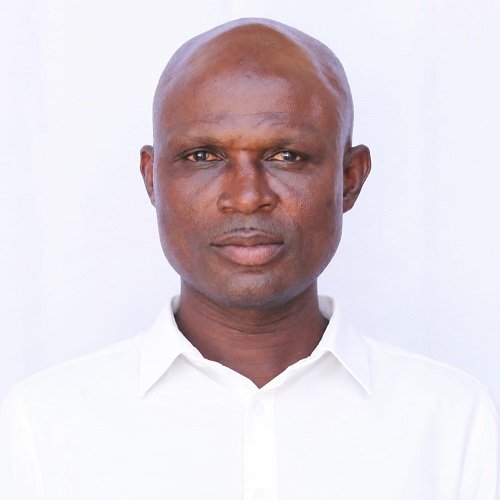
By Adjei Worlanyo Frank
Follow our WhatsApp Channel now! https://whatsapp.com/channel/0029VbAjG7g3gvWajUAEX12Q

