


THE World Bank has secured a $20 million grant from the Dutch government to support tomato production in Ghana under the West Africa Food System Resilience Programme (FSRP).
The initiative aims to boost local production and reduce the country’s reliance on imported tomatoes, while strengthening the broader agricultural value chain.
Speaking at a stakeholders’ engagement in Accra yesterday, the World Bank’s Agriculture Economist, Dr Ashwini R. Sebastian, disclosed that the funding would be used to promote cluster farming in order to enhance large-scale tomato production.
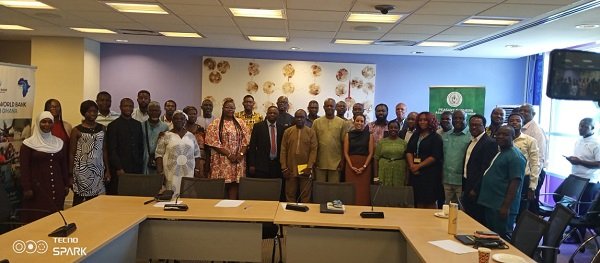
The programme, organised by the World Bank in collaboration with the Economic Governance Platform and the Peasant Farmers Association of Ghana, brought together key actors within the agriculture sector to deliberate on challenges and opportunities within the value chain.
Dr Sebastian explained that in addition to the $20 million facility, the Dutch government had also committed a separate $1 million grant to support tomato seed production.
She noted that global geopolitical tensions and ongoing conflicts posed significant risks to agricultural production, particularly in relation to fertiliser supply and food security.
“These developments could have far-reaching implications for West African countries, especially those heavily dependent on imports,” she said, adding that regional ministers of agriculture had recently met under ECOWAS to deliberate on such concerns.
Dr Sebastian emphasised the need for Ghana to prioritise implementation of existing agricultural policies, stressing that the country had already undertaken critical preparatory measures, including the use of satellite data to map rice-growing areas for targeted interventions.
On tomato production, Dr Sebastian described it as a “topical issue” and expressed concern that Ghana was still unable to meet its domestic demand despite favourable conditions.
“It is not that difficult to solve the tomato problem. With targeted investments and proper coordination, we can significantly reduce imports and even position Ghana for exports,” she stated.
She said cluster-based farming was crucial to the country’s agriculture, noting that scattered interventions had limited impact over the years.
According to her, a more focused approach involving large tracts of land, ranging between 10,000 and 20,000 hectares, would yield better results.
Dr Sebastian further revealed that additional funding from development partners, including Norway, had been used to test improved seed varieties, promote dry-season farming and pilot irrigation solutions such as solar-powered boreholes.
A member of the Parliamentary Select Committee on Food, Agriculture and Cocoa Affairs, Mr Isaac Ashai Odamtten, acknowledged the concerns raised by stakeholders and assured that Parliament would take steps to address them.
He indicated that he would file urgent parliamentary questions to demand accountability on key agricultural programmes, including the utilisation of available grants and challenges affecting policy implementation.
The Coordinator of the Economic Governance Platform, Mr Abdulkarim Mohammed, also expressed concern over the limited attention given to agriculture under Ghana’s programme with the International Monetary Fund (IMF).
He argued that agriculture could serve as a critical anchor for economic recovery and urged government and development partners to prioritise the sector.
BY KINGSLEY ASARE
Follow our WhatsApp Channel now! https://whatsapp.com/channel/0029VbAjG7g3gvWajUAEX12Q
Follow our WhatsApp Channel now! https://whatsapp.com/channel/0029VbAjG7g3gvWajUAEX12Q

