


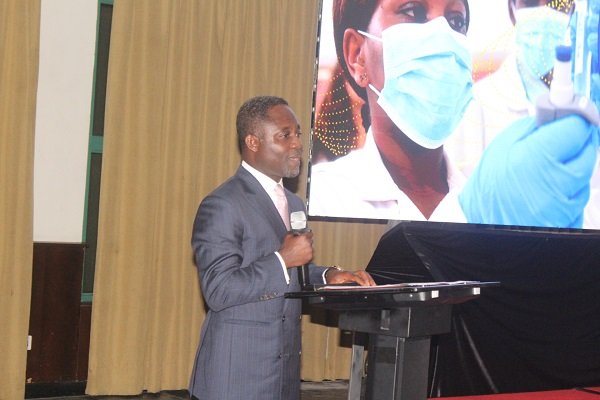
The Minister of Health, Mr Kwabena Mintah Akandoh, has called for an urgent shift from Ghana’s dependence on imported medicines and vaccines to a strong local pharmaceutical manufacturing system.
He said the country’s ability to produce essential medicines and vaccines locally was no longer simply an industrial ambition but a national health security imperative.
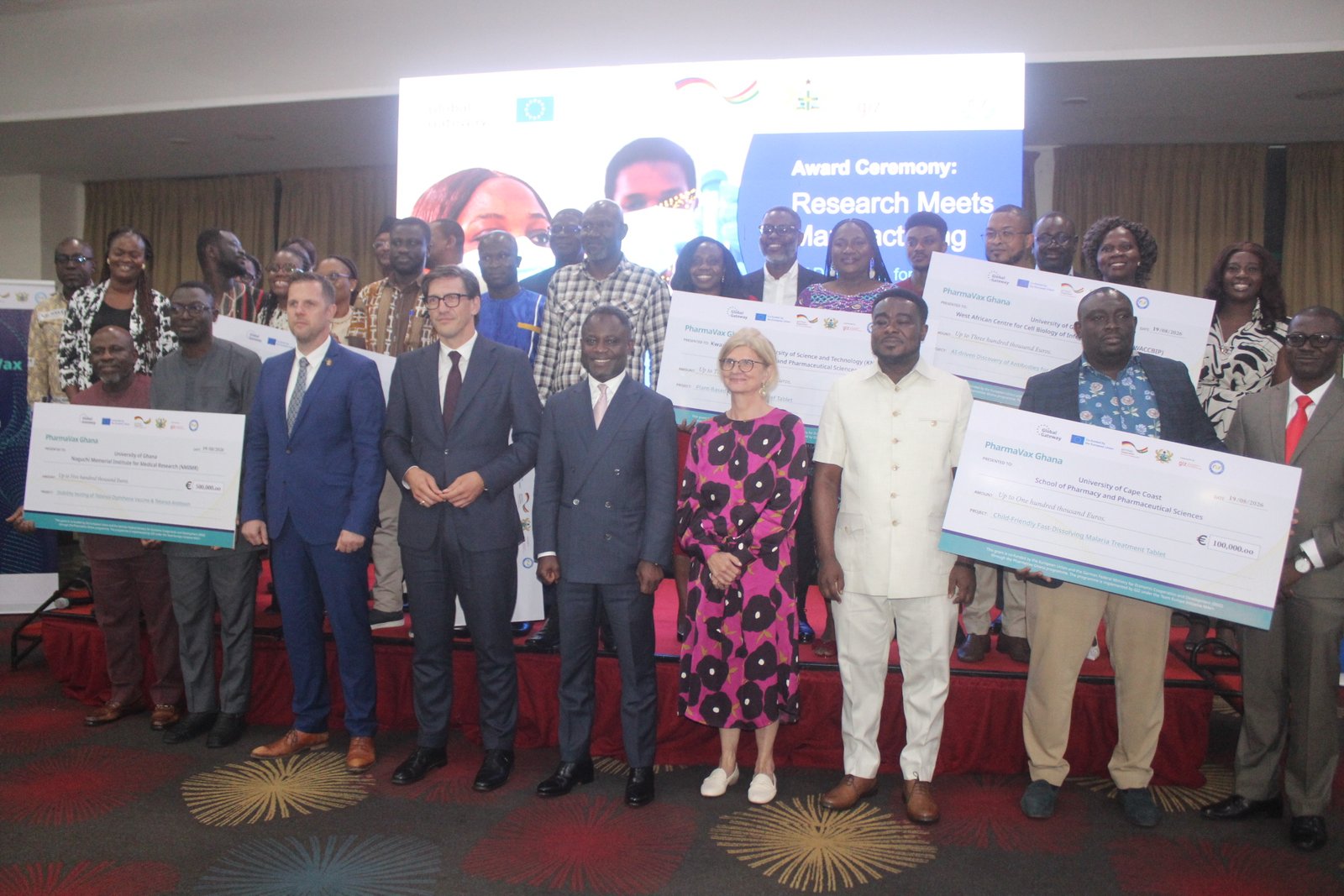
Mr Akandoh made the call in Accra on Wednesday at the Research Meets Manufacturing award ceremony, where eight research projects received grants under the PharmaVax Ghana programme.
He said the COVID-19 pandemic had exposed the risks associated with relying on other countries for critical health products, particularly vaccines.
“When there is an outbreak, health sovereignty is not when we have to wait at the back of the queue for vaccination,” he said.
The Minister recalled how some countries prioritised vaccinating their own populations before supplying vaccines to others during the pandemic.
He said Ghana needed to learn from that experience by developing the capacity to meet a meaningful share of its health needs locally.
Mr Akandoh stressed that health sovereignty did not mean cutting ties with international partners.
“We need partnership, but partnership with dignity and respect,” he said.
He said Ghana needed strategic and mutually beneficial partnerships that would provide technology, expertise, financing and knowledge while strengthening local capacity.
Mr Akandoh said the Government was committed to strengthening the entire pharmaceutical innovation ecosystem through research funding, technology transfer, regulatory reforms, skilled human resources, financing and procurement arrangements that would create a predictable market for quality locally manufactured products.
He disclosed that the Government’s framework contract for medicines and related products was estimated at about GH¢159 million, with plans to increase the amount.
He said such arrangements could provide a stronger market for locally manufactured medicines and encourage further investment in the sector.
Mr Akandoh said the true measure of the PharmaVax initiative would not be the number of grants awarded but the number of research projects that progressed into commercially viable products.
“Your research must not end on laboratory shelves or in academic journals. It must travel the full distance towards products that improve lives,” he told the beneficiaries.
He said increased local pharmaceutical production would also strengthen the economy by reducing the country’s need for foreign exchange to import medicines and vaccines.
According to him, increased local production would retain more value within the economy, create jobs and reduce Ghana’s vulnerability to external supply disruptions.
The keynote speaker, Dr Evelyn Biriwaa Ofei, General Manager of Entrance Pharmaceuticals and Research Centre, said Ghana could only develop a globally competitive pharmaceutical industry if universities and manufacturers worked together.
She said research should be designed with manufacturing in mind from the outset.
“Is this manufacturable? Can we scale up? Are the raw materials available? Will regulators approve it? Will patients be able to afford it?” she asked.
Dr Ofei called for stronger intellectual property protection, technology transfer and closer collaboration between universities and pharmaceutical companies.
She also urged industry to open its facilities to students and researchers to gain practical experience and help address real manufacturing challenges.
The German Ambassador to Ghana, Mr Frederik Landshöft, said the eight projects demonstrated the potential of Ghana’s growing research and pharmaceutical sector.
He said the projects included child-friendly malaria medicines, local vaccine production, herbal treatments and the use of artificial intelligence to develop antibodies and diagnostics for malaria and Mpox.
He said Germany was proud to support Ghana’s ambition to become a pharmaceutical hub for West Africa.
Mr Landshöft said €2 million was being provided through the grants, while Ghanaian partners were contributing an additional €425,000.
He urged the beneficiaries to move their ideas beyond laboratories into clinical trials, production lines, hospitals and pharmacies.
The EU Chargé d’Affaires and Head of Political Section, Mr Jonas Claes, said the European Union remained committed to strengthening Ghana’s capacity for research, innovation and pharmaceutical manufacturing.
He said the PharmaVax Ghana programme formed part of the Team Europe Initiative on Manufacturing and Access to Vaccines, Medicines and Health Technologies, which had so far provided more than €40 million for interventions in Ghana.
The eight projects were selected from 43 proposals by an independent committee of nine Ghanaian experts.
The projects cover malaria, hypertension, herbal medicine, Mpox, vaccines and other health priorities, with the overall objective of turning Ghanaian research into locally manufactured health products for the domestic and regional markets.
BY ENOCH NTIAMOAH SIAW