


The United States International Development Finance Corporation (DFC) has reaffirmed its commitment to expanding investments across Africa, with more than US$14.5 billion in investment commitments on the continent and plans to mobilise additional private capital into key sectors.
The investments are expected to support digital infrastructure, transportation, agriculture, healthcare, energy, critical minerals and financial services, while creating jobs and strengthening local economies.
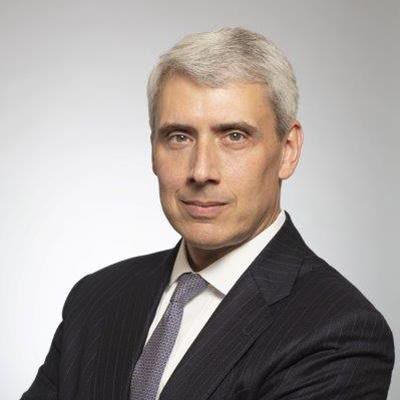
Addressing the press at a digital press briefing on Monday, the Global Head of Business Development at the DFC, Mr Jim Kelly, said the corporation was seeking to identify investment opportunities across the continent that would deliver economic benefits to local communities while advancing US strategic interests.
He said the corporation’s mandate was reauthorised in December 2025, increasing its investment capacity from US$60 billion to US$205 billion over the next five years and giving it greater flexibility to invest across different levels of the capital structure.
Mr Kelly explained that the expanded mandate would enable the DFC to support more projects, attract private sector investment and address financing gaps in markets where commercial investors might be reluctant to commit funds.
He cited the corporation’s recent investment in the West Indian Ocean Cable Company (WIOCC), describing it as the DFC’s largest equity commitment to date.
WIOCC, a Pan-African digital infrastructure company operating in more than 30 African countries, is expected to use the investment to expand its fibre networks, submarine cables and data centre capacity across the continent.
The investment, he said, would improve reliable internet connectivity for businesses, entrepreneurs and households, while creating employment opportunities and supporting economic growth.
He added that the transaction was expected to mobilise up to US$400 million in private capital during its investment period, with the DFC investing alongside Vision International Investment Company and the African Finance Corporation.
Mr Kelly said the corporation would maintain a disciplined investment approach based on three key considerations: generating appropriate returns for American taxpayers, advancing economic development and supporting US strategic interests.
He stressed that the DFC was not established to compete with private investors but to complement their activities by providing patient capital and financing for projects that might otherwise struggle to attract commercial funding.
He noted that the corporation could provide loans of up to 25 years, equity financing, guarantees, political risk insurance and other financial instruments to help make projects commercially viable.
On the Lobito Corridor, Mr Kelly said the railway was already operational, with rehabilitation and capital improvement activities ongoing to increase its capacity and efficiency and reduce transportation costs.
He said the DFC was also pursuing a broader investment approach beyond mining, with particular attention to healthcare, financial services, agriculture and agricultural supply chains.
On critical minerals, he said the corporation’s objective went beyond extracting natural resources to strengthening supply chains and supporting broader economic activities that would deliver lasting benefits to host countries.
Mr Kelly further identified transportation and logistics, technology and telecommunications, energy and digital banking as priority investment areas.
He said the DFC was strengthening its business development capacity to identify investment opportunities proactively and work with private sector partners who had the expertise and resources to develop projects across the continent.
He added that the corporation also supported project development through feasibility studies and guarantees to help local businesses and financial institutions access funding.
Mr Kelly said Africa remained a critical region for the DFC, adding that its investments were intended to build sustainable economic ecosystems that would benefit both the United States and the countries in which the projects were undertaken.
BY STEPHANIE BIRIKORANG