


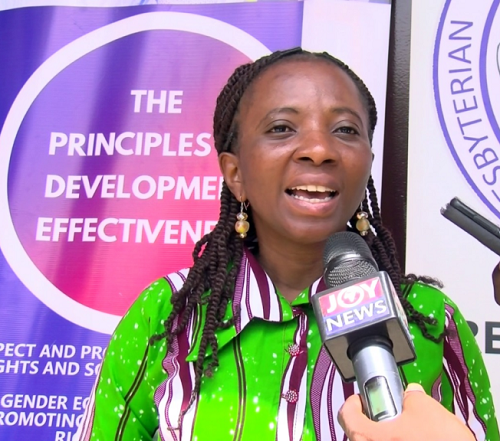
Dr. Lawrencia Osae‑Nyarko of the Public Health Research Unit of the Water Research Institute of the Council for Scientific and Industrial Research (CSIR‑WRI) has called on the government to channel part of the Ghana Medical Care Trust Fund, popularly known as ‘Mahama Cares,’ into air quality monitoring.
She proposed that five per cent of the Fund, amounting to about GH¢2.9 billion, be dedicated to purchasing high‑grade monitors to safeguard citizens against rising health risks.

Dr. Osae‑Nyarko made the proposal in an interview with The Ghanaian Times on the sidelines of a stakeholders’ meeting on air pollution and e‑waste injustice in urban slums on Friday. The meeting was organised by the Presbyterian Relief Services and Development (PRESED) in collaboration with the Clean Air Fund, UK.
She warned that non‑communicable diseases were increasingly being linked to environmental risk factors, describing air pollution as a “silent killer.”
“For us to gather sufficient data to make informed decisions, it is appropriate to invest in monitors that provide evidence for policy and action,” she said, and urged individuals and private organisations to support government efforts to acquire the devices.
Although the Environmental Protection Authority (EPA) is mandated to lead air quality monitoring in the country, Dr. Osae‑Nyarko noted that the authority faced resource constraints due to the wide range of environmental issues it handled.
“Air pollution affects everybody, though some people are more impacted than others,” she mentioned.
She outlined some immediate effects of exposure to polluted air, including cough, phlegm, headaches, and chest tightening, and cautioned that long‑term exposure could be carcinogenic. She added that studies had linked air pollution to hypertension, as well as pregnancy‑related conditions such as preeclampsia and low birth weight.
Dr. Osae‑Nyarko observed that although Ghana had standards for monitoring environmental conditions, enforcement remained weak.
“Implementation is always a challenge,” she underlined, pointing to gaps in citizen‑level monitoring that limited the ability of individuals to make informed decisions. She, therefore, called for stronger citizen science initiatives to empower communities.
On livelihoods, she drew attention to the health risks associated with smoke from fishmongering and advocated the adoption of clean cooking stoves and ovens that reduce the use of charcoal and firewood. She also appealed to researchers to develop technologies that rely on cleaner fuels.
She further stressed the need for stronger collaboration between the EPA and key ministries, including the Ministry of Health, and expressed concern over the lack of a direct data‑sharing system.
“As we progress towards mitigation, surely a time will come where data is synchronised between ministries,” she said.
The meeting brought together stakeholders to address the twin challenges of air pollution and e‑waste injustice in urban slums, and highlighted the need for evidence‑based policies, active citizen participation, and cleaner technologies to safeguard lives and livelihoods.
For his part, the Project Coordinator, Mr. Emmanuel Nyarko Ankama, called for the prosecution of persons who engage in open burning of waste, saying it would serve as a deterrent to others. He also urged the government to support institutions to acquire bins for plastic waste collection, and reaffirmed PRESED’s commitment to tackling air pollution and protecting the environment.
FROM KINGSLEY E. HOPE, KUMASI
Follow our WhatsApp Channel now! https://whatsapp.com/channel/0029VbAjG7g3gvWajUAEX12Q

