



Vice President Prof. Jane Naana Opoku-Agyemang on Monday hosted a delegation from the Kayayei Association, led by the Minister for Gender, Children and Social Protection, Agnes Naa Momo Lartey, to discuss challenges facing head porters and what government must do to improve their livelihoods.

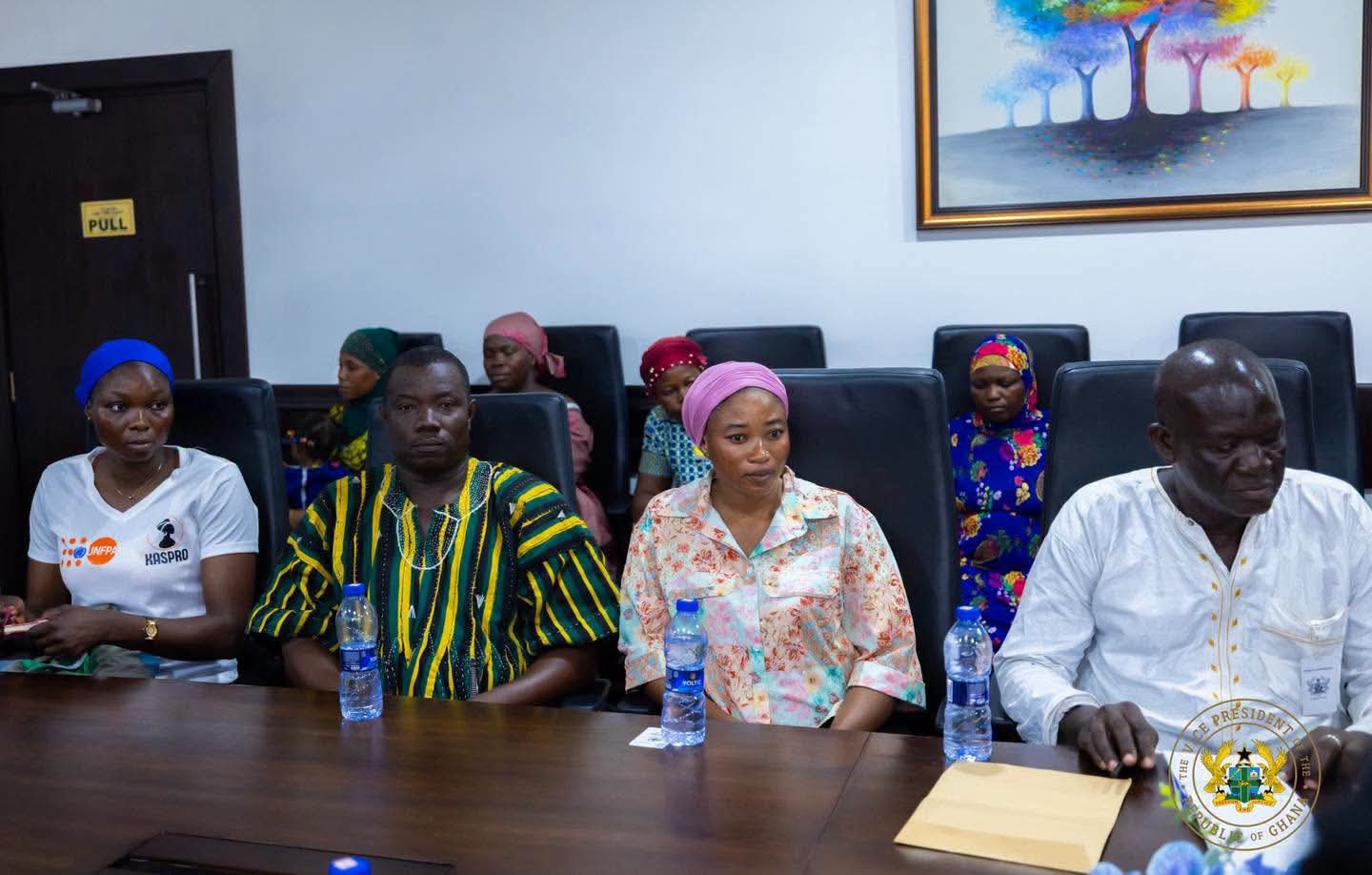
The meeting built on earlier engagements that highlighted key concerns of kayayei, including exploitation, limited access to skills training, lack of opportunities to start sustainable businesses, and the welfare of women and children in the sector.
Address the root causes of migration
The Vice President said the kayayei phenomenon cannot be treated in isolation.
She stressed that it must be understood within the broader context of migration, inequality and development.
“Both push and pull factors drive people to leave their communities,” Prof. Opoku-Agyemang noted.
She added that “We must address the underlying conditions that make them vulnerable when they arrive in the cities.”
The Vice President emphasized that while skills development is important, it must be purposeful and tied to real outcomes.
“Training must be informed by the aspirations of the women themselves,” she said.
She further added that “It must also be linked to the tools, capital and opportunities needed to turn those skills into sustainable livelihoods.”
The Vice President expressed particular concern about children in kayayei communities, and said their welfare must remain central to any long-term intervention.
Prof. Jane Opoku-Agyemang also called for stronger measures to protect women from exploitation in markets and workspaces.
Commending the Ministry and the Kayayei Association for their continued engagement, Prof. Opoku-Agyemang reaffirmed government’s commitment to a more holistic response, one that creates opportunities, strengthens protection, and enables every person to realize their full potential.
Agnes Naa Momo Lartey said the Ministry will work with the Association to design interventions that reflect the lived experiences of kayayei and deliver measurable impact.