


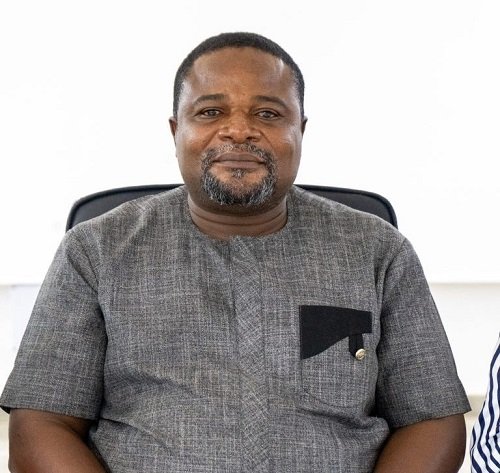
Ghana’s water quality recorded a marginal improvement in 2025, rising from 57.4 per cent in 2024 to 60.6 per cent, the Acting Executive Secretary of the Water Resources Commission (WRC), Dr Mawuli Lumor, has disclosed.
The improvement, based on data collected from 41 water quality sampling stations across the country, places the country’s water quality within the “fairly good” category.
Speaking in an exclusive interview with The Ghanaian Times on Monday, Dr Lumor said the assessment, conducted in February and July 2025, showed improvements at 25 sampling stations, while water quality declined at 16 others.
He attributed the gains largely to the operations of the National Anti-Illegal Mining Operations Secretariat (NAIMOS) and the Blue Water Guard initiative, particularly in mining communities where many of the monitoring stations are located.
According to him, efforts by NAIMOS to remove illegal miners from river bodies had significantly contributed to the improvement in water quality.
“The operations of NAIMOS, for instance, have improved some of our river bodies. There are some places that we have seen a decline, but generally, there has been improvement across,” he stated.
Despite the progress, Dr Lumor said inadequate resources had limited NAIMOS’ ability to extend its operations to all illegal mining hotspots across the country.
He, therefore, appealed to the government to adequately resource the Secretariat to enable it to sustain and expand its operations.
“As a Commission, we would have wished that NAIMOS is everywhere, especially where there are illegal mining activities. But I am also a pragmatic person who believes that that possibility is virtually difficult to achieve.
“So, we only hope that they are stationed at specific locations or hotspots where they can stay for a long period and sanitise the area before moving on,” he said.
Dr Lumor disclosed that the WRC was piloting a local water governance committee initiative in selected river basins within mining communities to encourage residents to actively protect water bodies from pollution.
He said the Commission had also sanctioned some industries for discharging untreated waste into rivers and streams, but noted that enforcing regulations against illegal miners remained challenging because of their mobile operations.
Dr Lumor further identified inadequate personnel, logistics and funding as key constraints affecting the Commission’s work despite ongoing collaboration with the Environmental Protection Agency and other stakeholders.
He said the WRC required about GH¢500 million annually to strengthen monitoring, enforcement and water resource protection across the country.
BY BENJAMIN ARCTON-TETTEY
Follow our WhatsApp Channel now! https://whatsapp.com/channel/0029VbAjG7g3gvWajUAEX12Q

