


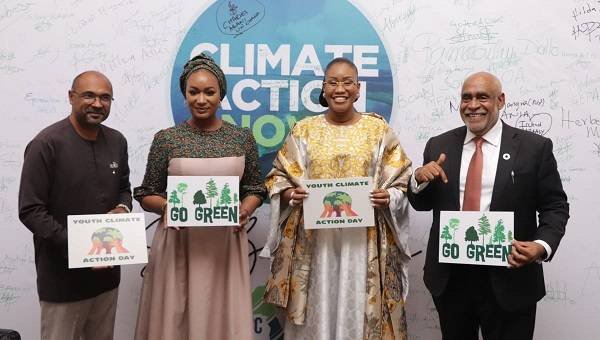
Participants at the maiden edition of the Africa Women and Children Conference (AFRIWOCC) in Accra have urged African nations to ensure that their delegates to climate change conferences are gender balanced, with female representatives who understand the issues at play.
According to them, Women and children must first be represented at national-level discussions for their voices to be heard internationally.
This was contained in an eight-point communique issued at the end of a two-day AFRIWOCC, an initiative by the Second Lady, Mrs Samira Bawumia.
It was to deliberate on practical and realistic programmes to address the adverse effects of climate change on women and children.
The conference documented indigenous knowledge and innovation in climate change; and has set the pace to coordinate a network of organisations focused on women.
It also brought together approximately 450 participants from across Africa and held on the theme; ‘Amplifying the Voices of Women and Children in Climate Action.’
The communique said countries should adopt indigenous and locally-led interventions that can be implemented at the grassroots with little technology and training.
It also called for effective capacity building, awareness creation, training, and education for all stakeholders needed to achieve desired climate action outcomes that positively influence women and children.
“Traditional authorities, particularly women leaders, must be involved in climate mitigation given their significant standing in community governance and processes, governments must ensure that policies have holistic, coherent, and aligned messaging on women and children’s issues and ensure inclusive climate action,” it said.
Additionally, it advocated that climate education be integrated into teacher training curricula prior to enable them to create general awareness of climate change in understandable and relatable language relevant to the African context to their students.
Earlier during the opening, Mrs Bawumia called on stakeholders to make conscious and deliberate efforts to create a space for women and young people’s voices especially on climate change to be heard.
“You cannot make progress without leveraging the full resources of the majority of our population who are women and children especially in decision making,” she said.
According to her, climate change was increasingly inducing migration and heightening political insecurity threats across the sub-region, further impacting economic stability, especially of women and children.
She said climate action must be “holistic, inclusive and intersectional” in addressing the diversities and challenges faced by all especially women and children from different backgrounds, including those in rural areas, urban centres, indigenous communities and persons with disabilities.
BY AGNES OPOKU SARPONG