Ghana spends over $3 billion annually on imported food, raising concerns over the growing reliance on food imports in the country, the Minister of Food and Agriculture, Mr Eric Opoku, has announced.
According to him, the growing dependence on imported food was a challenge while local production remained underdeveloped despite having abundant agricultural resources.
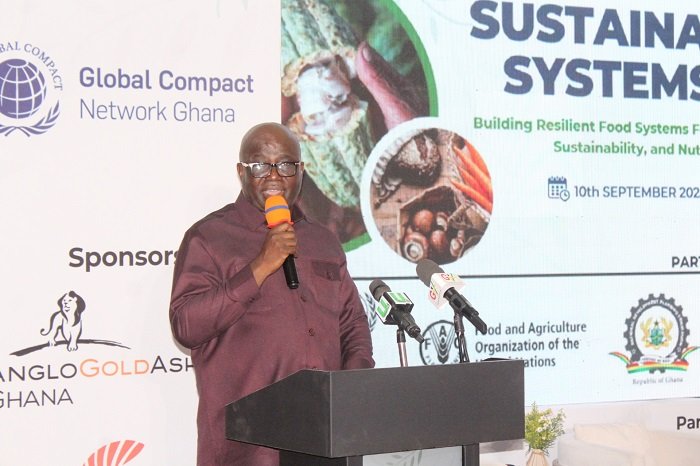
Speaking at a sustainable food system summit yesterday in Accra, Mr Opoku described the situation as a ‘paradox,’ pointing out that although Ghana has fertile land, water resources, and a large youth population, it continues to struggle with food self-sufficiency.
“We are unable to feed ourselves. If that $3 billion were invested in local production, it would create jobs for our idle youth and boost the economy,” he said.


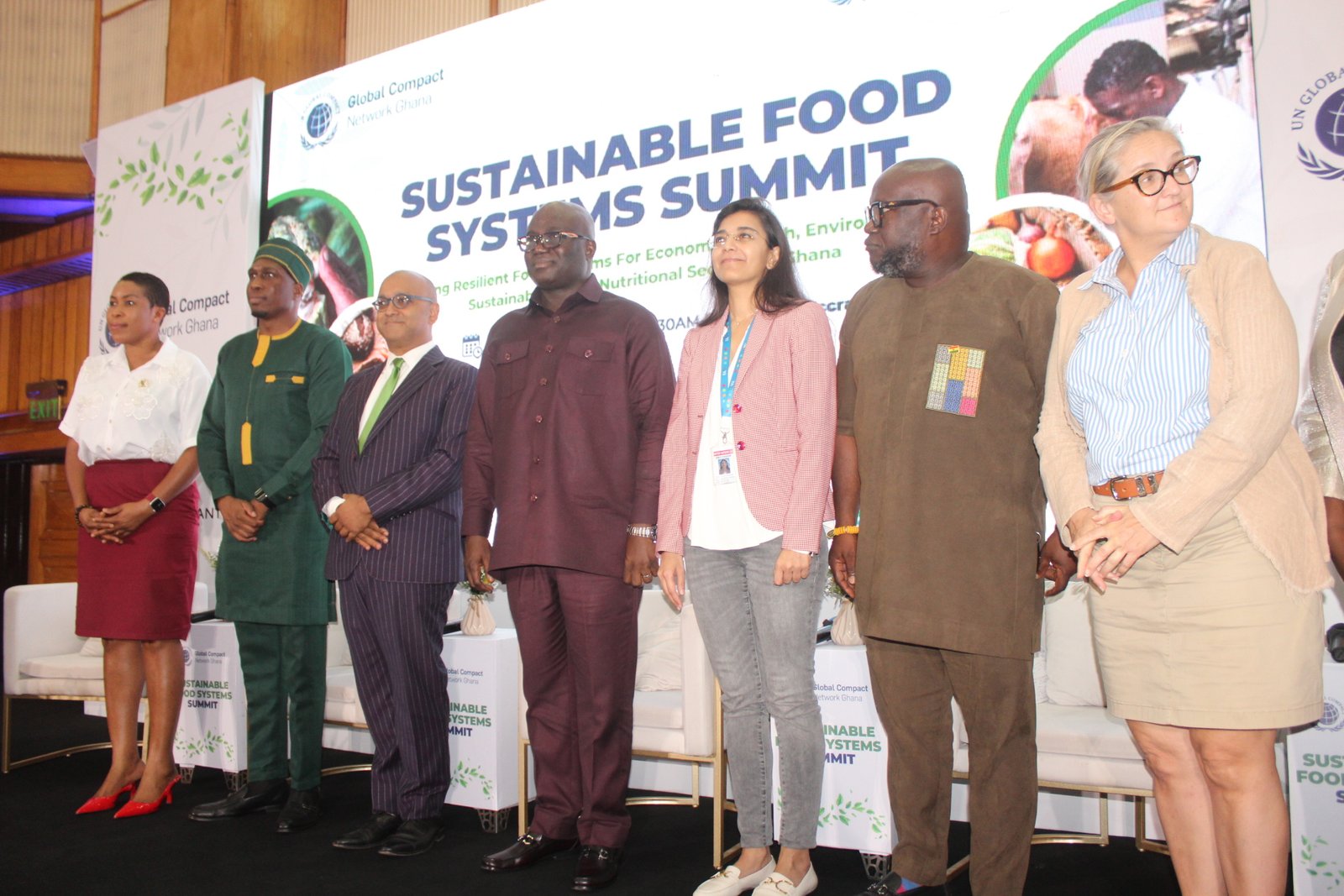
Under the theme, “Building resilient food system for economic growth, environmental sustainability, and nutritional security in Ghana,” the summit forms part of a broader strategic focus on transforming its agricultural sector into a robust and sustainable foundation for national development.
Mr Opoku attributed the country’s vulnerability to its heavy dependence on rain-fed agriculture, which he called unsustainable.
He said despite having 1.9 million hectares of irrigable land, only 229,000 hectares are currently irrigated.
“Some irrigation systems operate below 10 per cent capacity or are completely non-functional,” he added.
Mr Opoku highlighted the Government plans to bring 100,000 hectares of land under irrigation within four years.
This includes rehabilitating old irrigation sites, building 10 new dams, and installing 250 solar-powered boreholes to support year-round production of vegetables like tomatoes and onions.
In addition, the Minister revealed the rolling out of 47 automated weather stations and launching a Management Information System to provide accurate weather forecasts to farmers.
Also, Mr Opoku announced a revamp of the poultry sector, where local production accounts for just 4.6 per cent of national demand.
Under the “Nkoko Nkitinkiti” initiative, the government plans to produce over 10 million birds by supporting commercial, medium, and backyard poultry farmers,” Mr Minister said.
He revealed plans for a major poultry processing facility between Ashanti and Bono regions, set to begin construction in October.
To boost nutrition and food availability, the Ministry is promoting school farms and forming over 65,000 farmer cooperatives nationwide.
“We must shift from talking to acting. The future of our agriculture, our economy, and our youth depends on it,” the Minister urged.
The United Nations Resident Coordinator, Mr Zia Choudhury, emphasised the need for urgent action to address food insecurity in the country, citing the struggles of farmers and market women.
He highlighted the global crisis of hunger and food insecurity, with over 780 million people going hungry every day.
The Coordinator noted that global food systems are broken, and “billions of people are paying the price,” with Africa being disproportionately affected.
Mr Choudhury, therefore, called for investment in sustainable and resilient food systems, building systems that put people over profit, and ending the “war against our planet.”
He further reaffirmed the UN’s commitment to support the government’s efforts to improve food systems in the country.
BY CYNTHIA ASAMPANA
🔗 Follow Ghanaian Times WhatsApp Channel today. https://whatsapp.com/channel/0029VbAjG7g3gvWajUAEX12Q
🌍 Trusted News. Real Stories. Anytime, Anywhere.
✅ Join our WhatsApp Channel now! https://whatsapp.com/channel/0029VbAjG7g3gvWajUAEX12Q