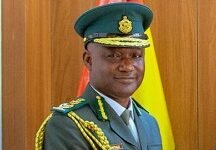
Abdul-Mumin Harun (II), Ashanti Regional Chief Imam, passes away
In the evening of December 17, 2024, barely three weeks after the national elections, the nation learnt of the sudden demise of one of its illustrious sons: Imam Abdul Mu’min Harun, the Ashanti Regional Chief Imam and the very spiritual aide to the Otumfuor of Ashanti (Ohenekramoh). Through mobile and the internet the news spread like wildfire in Ghana and the rest of the world. I received news of the demise at about 10 o’clock in the night the same day. So early in the morning the following day I went to his office and residence at Suame Asantenkramom where I found every available space in front and inside his house filled to capacity with mourners.
I straight entered his room, where his body had already been prepared for burial. I then offered supplications for the dead to Allah.
In front of his house there was a long queue of mourners, with sadness written all over their faces, entering into his room to either show their last respect or offer prayers for him.
At about 4 o’clock in the evening the National Chief Imam, Sheikh Sharubutu, the Vice President, Dr Mahamud Bawumia, Dr Mathew Opoku Prempeh (running mate to Bawumia), Chairman Wontumi (NPP) and other dignitaries etc. arrived. They entered to show their last respect, whilst Sheikh Sharubutu offered prayers for him. After that the body was put into a casket then put into an ambulance and driven to the Asawasi Central Mosque where the large space surrounding the mosque was filled to capacity with mourners and security personnel. The National Chief Imam then led his funeral prayers (janazat), after which the body was conveyed to the Muslim section of the Tafo Cemetery for final burial at about 4pm. So abruptly ended the life of an illustrious son of Islam to the nation.

On January 4, 2025 the final funeral prayers, called Adua (Supplications), was organised at the same Asawasi Mosque Complex. Present was the general public and state dignitaries: The President, Nana Addo Dankwa Akufo-Addo, the Vice Dr Bawumia, the Nsumankwahene representing the Asantehene, Catholic and other Christian sect leaders, Imam of Bontuku in the Ivory Coast, Muslim leaders etc. After swearing into office the successor to the deceased Imam (Sheikh Zakariyya Abdur Rahman) Dr Bawumia delivered the closing address. The National Chief Imam then delivered the closing prayers and the meeting, attended by a huge crowd of Muslims and non-Muslims, came to an end.
He was born at Suame on May 15, 1950 to Agya Haruna, a Muslim cleric and acting Imam and Nana Adjoa Shetu. At a very early age he learnt to recite and memorise the Quran from the Quranic school (Makaranta) of his father, Agya Haruna. From there he went on to study Islam and Arabic from Shaikh Appiedu, founder of Islamic Secondary School, Ampabame. Then from a Madrasah attached to the Suame Central Mosque. There he studied Arabic from Ustaz Abdallah and Tallahat.
He also studied English from Mr Adjei. These studies spanned the years 1960 – 1964. While studying as a student he was also teaching as a pupil teacher (1964- 1970). After that he left teaching at the school to sell cosmetics (1970-1972). In 1975 he left selling and began to train in panel beating at the Suame Magazine from Mallam Issah and Mr Manuh. In 1977 he left for Nigeria to continue his Islamic Studies.
At Maiduguri he enrolled in an Islamic Night Institute (Ma’had Lailiiyat) at the Bornu College of Islamic Law and legal studies. In 1991 he left Bornu for Ghana to assume the vacant Asantenkramon seat created after the death of his uncle Al- Hajj Ismail. In September 1991 he was appointed as the Santenkramom Imam. For the next nine years he acted as the Imam during the Imamate of Ahmad Chiroma at the Kumasi Central Mosque. On December 13, 2008 he was appointed to the office of deputy Imam. In 2011 he became the Regional Chief Imam of Ashanti in addition to his traditional role of Ohenekramo that saw him going to the Asantehene’s palace in Kumasi every Friday to pray for the protection and the well being of the king of Ashanti in addition to the welfare of Ashanti and the nation. Imam Abdul Mu’min was very energetic and executed all these onerous duties efficiently. Besides, he was at the funeral of Muslims to pray for the welfare of their souls. Not only Muslims but the funerals of non-Muslims as well. His prayers for the dead, derived from the sunnat (Practices) of the Prophet, were very moving and emphasized the phrase ‘’Allahuma Thabit hu’’ (Oh Lord confirm and enable him to answer questions put to him in the grave by the Angels).
Two years my junior he was personally known to me from youth to death. He was popularly called Nana and was a perfect gentleman who hardly expressed anger in public. However, he would not condone and connive at evil doing. His Friday sermons (Khutbat) were directed at keeping the community in check from social vices that have become so prevalent in our days – lotto and gambling, wee smoking, free sex, crimes etc. He was always kind, affable and approachable and would not refuse to give financial aid to one who asked for it, provided he had the means. He was very confident in the acceptance of his prayers by God.
Once at a prayer organised for the dead at Suame Asantekramom the rain began to fall. I was sitting close to him when he assured us that the rains would not disrupt the prayers. He then began reciting some Quranic verses familiar to me, but which I have forgotten and the threatening rains were abated. At another time he led Muslims in prayers at the Central Mosque, for rains in what is known as ‘’Dua’a Istisqua’’ (prayer for rains). That was during a period of drought. On learning that I went to him personally and enquired it from him, which he confirmed. I then left for my village in the Manso District of Ashanti. The following day I learnt of a heavy down pour of rain at Kumasi. The heavy rains and thunders also extended to Manso the next day to end the drought. These are not mere stories but that I have recorded these events with dates in my diaries.
He was the great grandson of Mallam Usman popularly called Kramoh Tiaa for his tallness and slenderness. Kramoh Tiaa, a Gonjah (Kamaghatey) hailed from Daboya in the North and was brought to Ashanti to pray for them in their war efforts. For his efficient harnessing and use of spiritual powers he earned the title of Ohenekramoh from the then Asantehene.
Since that time up to date the term Ohenekramoh has been used by succeeding Imams: Imam Usman, Imam Abubkar, Imam Abdul Mu’min (I), Imam Ismail, Imam Abdul Mu’min (II).
In the end may Allah have mercy on his departed soul and grant him a lofty place in paradise Amin!!!
BY KHALID KOFI AHMAD