
Africa and Japan: Co-creating a future through youth, innovation, and partnership
As the 9th Tokyo International Conference on African Development (TICAD9) convenes in Yokohama, the world turns its attention once again to Africa—a continent rich in diversity, resilience, and promise. This year’s conference arrives at a critical juncture. Global challenges such as climate change, geopolitical fragmentation, and economic inequality are intensifying. In this context, TICAD9 offers a vital platform to reimagine development cooperation—one rooted in mutual respect, innovation, and strategic partnership.
At the heart of this vision lies Africa’s youth. By 2050, one in four people globally will be African. This demographic shift presents a historic opportunity: a “demographic dividend” powered by a young, dynamic workforce. But this potential can only be realised through sustained investment in education, healthcare, and job creation. Without it, the same demographic forces could deepen poverty and instability.
JICA’s vision: Homegrown development and human security
Since the launch of Japan’s Official Development Assistance (ODA) in 1954, the Japan International Cooperation Agency (JICA) has worked in over 190 countries, fostering development through infrastructure, human resource development, and technical cooperation. Japan’s ODA, led by JICA, has long championed the principle of “homegrown development.” This approach emphasizes empowering local communities to create their own solutions, rather than imposing external models.
JICA’s programmes in Africa exemplify this philosophy. The Coalition for African Rice Development (CARD), launched at TICAD IV in 2008, doubled rice production across the continent in a decade. Now expanded to 32 countries, CARD aims to double production again to 56 million tonnes by 2030—transforming Africa from a food-dependent region to one of self-sufficiency.
Other initiatives like SHEP (Smallholder Horticulture Empowerment and Promotion) and KAIZEN (a productivity improvement method adapted from Japanese business practices) have empowered farmers and workers to improve their livelihoods and productivity with minimal resources. These programs are now led by African trainers, spreading sustainable development across the continent.
Underlying all of JICA’s efforts is the concept of human security—a guiding principle reaffirmed in Japan’s revised Development Cooperation Charter in 2023. Human security means ensuring that individuals are free from fear and want, and can live with dignity. In a world facing compounded crises, from pandemics to climate shocks, this principle is more relevant than ever.
Innovation and Entrepreneurship: A New Era of Collaboration
Africa’s youth are not just beneficiaries—they are innovators. Across the continent, young entrepreneurs are leveraging digital technologies to solve local problems and launch startups. Recognising this, JICA launched Project NINJA (Next Innovation with Japan) in 2020, connecting African startups with Japanese investors and expertise. In 2025, JICA signed its first Grant Aid agreement with Nigeria to support local startups, marking a new chapter in Africa-Japan innovation collaboration.
At TICAD9, JICA will unveil the IDEA (Impact Investing for Development of Emerging Africa) Initiative, designed to mobilise private capital for socio-economic development and climate action. Complementing this, Japanese government amended the JICA Act in April 2025, enabling JICA to take financial risks and catalyze private investment—an unprecedented move in Japan’s development cooperation history.
Youth Exchange: Building trust and shared futures
Human exchange is central to the Africa-Japan partnership. Since 2013, the ABE Initiative (African Business Education Initiative for Youth) has enabled over 1,900 African students to study in Japan and intern with Japanese companies. One standout alumna is Ms. Pelonomi Moiloa from South Africa, who founded “Lelapa AI” to develop language technologies for under-resourced African languages. Her work earned her a spot on TIME’s 100 AI talents of 2023.
Building on ABE, JICA will launch TOMONI Africa at TICAD9. “Tomoni” means “together” and “friends” in Japanese, symbolising the spirit of mutual learning and collaboration. TOMONI Africa will expand face-to-face exchanges between African and Japanese youth, fostering friendships and joint ventures.
This spirit is already alive. In May 2025, JICA and Sapporo Kaisei High School hosted the “Japan-Africa Youth Camp,” where 300 Japanese students met 20 African peers to discuss culture, development, and future cooperation. Such interactions break down barriers and build lasting understanding.
Volunteers and multilateralism: A legacy of partnership
Since 1965, over 16,000 Japanese Overseas Cooperation Volunteers (JOCV) have served in Africa, contributing across sectors from education to agriculture. Many return to Japan with renewed purpose, launching social enterprises and revitalizing local communities. One example is Ms Aya Tsuboi, who founded SUNDA Technology after her service as a JOCV in Uganda. Her IoT-based water payment system ensures sustainable access to clean water in Africa and was recognized by Forbes Japan NEXT 100 in 2023.
TICAD’s multilateral format— bringing together governments, civil society, and international organisations—remains a cornerstone of its success. JICA’s partnership with the African Continental Free Trade Area (AfCFTA) Secretariat, signed in 2022, aims to create a unified trade zone across the continent. JICA also promotes Corridor Development, connecting cities to boost economic activity, and supports One Stop Border Posts to streamline trade.
Beyond Africa, JICA facilitates triangular cooperation with countries like Egypt and Brazil to share their expertise across continents. In 2024, JICA and Indonesia signed a memorandum to jointly support African development, highlighting the growing potential of South- South collaboration.
A shared future built on respect and co-creation
Africa stands at a crossroads. Its challenges—poverty, conflict, governance—are real. But its opportunities—youth, innovation, resilience—are equally powerful. For Japan, engaging with Africa is not charity, but a strategic investment in a shared future.
As TICAD9 unfolds, the message is clear: Africa and Japan can co-create solutions to global challenges. Guided by human security, powered by youth, and built on mutual respect, this partnership offers a model for inclusive, sustainable development.
The future is not something to be given—it is something to be built, together.
(message from Chief Representative of JICA Ghana)
In Ghana, JICA has been active over 60 years since 1963. We have been working in various fields including Infrastructure, Agriculture, Industry/SME, Health, Education and Governance. Throughout our operation and in all our projects, JICA has continuously valued people centered approach and emphasized the importance of capacity development, self-reliance and sustainability.
More than 300 Ghanaians have benefited from JICA’s scholarship program (ABE Initiative, JDS, etc.) and studied in Japanese Universities. More than 33,000 SMEs has received KAIZEN trainings to enhance their business. KAIZEN is also introduced in hospitals, and public sectors to improve their service delivery. Since 1977, 1,554 JOCV has been dispatched to Ghana. These are just a few examples of JICA beneficiaries.
As development issues becomes more global and complex, it is our hope that these beneficiaries of JICA projects will become the bridge bringing Ghana and Japan together, to co-create innovative solutions, as this TICAD 9 theme promotes.
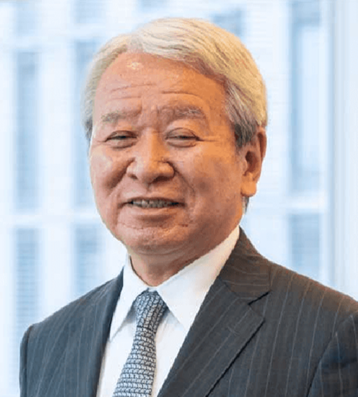
The writer is President, Japan International Cooperation Agency (JICA)
BY TANAKA AKIHIKO
🔗 Follow Ghanaian Times WhatsApp Channel today. https://whatsapp.com/channel/0029VbAjG7g3gvWajUAEX12Q
🌍 Trusted News. Real Stories. Anytime, Anywhere.
✅ Join our WhatsApp Channel now! https://whatsapp.com/channel/0029VbAjG7g3gvWajUAEX12Q
