Building peace through the press: UNDP’s training shaping conflict – sensitive reporting in northern Ghana
Journalism cannot be treated as usual business, especially in regions where conflict is simmering just beneath the surface. In such environments, journalism must go beyond the simple reporting of facts. It requires context, caution, and a deep sense of responsibility. This is the core of conflict-sensitive reporting, a model Ghanaian journalist must embrace without delay.
Having reported for nearly two decades on conflicts in volatile areas like Bawku with the Ghana News Agency and The Ghanaian Times, I understand the delicate balance between informing the public and unintentionally inflaming tensions.
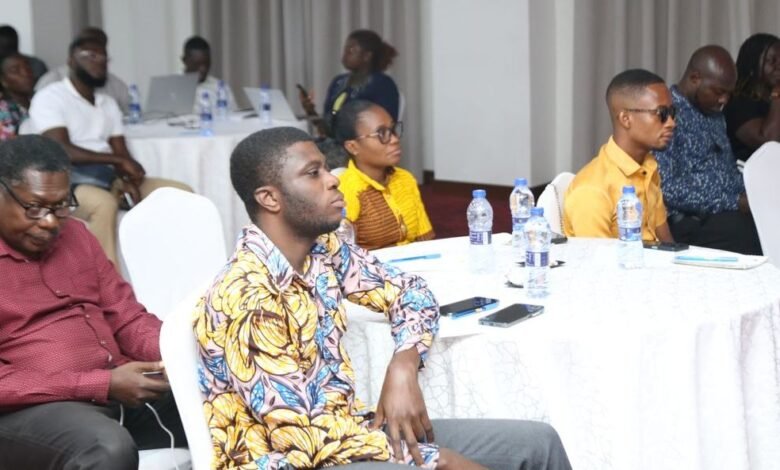
This dedication was further deepened during the United Nations Development Programme (UNDP)’s recent Fact-Checking and Conflict-Sensitive Reporting training workshop held in Tamale, in the Northern Region of Ghana.
Funded by the governments of Japan, Korea, Luxembourg, and Denmark, and organised under the UNDP’s Prevention Facility for the Gulf of Guinea initiative, the workshop brought together 25 journalists and bloggers from the Northern, Savannah, Upper East and Upper West regions of Ghana.

These areas are particularly susceptible to extremist narratives, misinformation, and ethnic conflicts. The capacity-building training was designed to equip media professionals with the tools needed to report responsibly in sensitive situations and to use their craft to promote peace.
When headlines
can harm or heal
One of the key lessons from the workshop was the immense power of headlines. It is crucial to emphasize that in today’s fast-paced media environment, many readers engage only with headlines, making editorial decisions more impactful than ever.
A headline devoid of context or sensitivity can deepen mistrust, fuel stereotypes, and even incite violence.
As a veteran journalist, I underscored the point during the training that the media can either be a conduit for peace or a conveyor belt for violence. When reporting on conflict, it is critical for journalists, bloggers, and editors to ask themselves before publishing: Will this headline build peace or deepen division?
The importance
of contextual knowledge
One of the facilitators, Mr Eugene Yirbuor, emphasized that journalists must have a thorough understanding of conflict dynamics to report effectively without inflaming passions or exacerbating tensions.
He noted that stories risk oversimplifying issues and escalating conflicts when reporters lack insight into the historical antecedents, as well as the political, ethnic, and economic causes of conflict.
Mr Yirbuor’s sessions on peace journalism and ethical storytelling challenged us as journalists to look beyond surface events and highlight pathways to peace. In fragile environments, ethical reporting is not optional. It is an essential commodity.
Combating
misinformation with facts
Ms Roselena Ahiable, Project Manager at DUBAWA West Africa, highlighted the growing threat of disinformation and misinformation, especially on social media. She trained participants on fact-checking tools and verification strategies, crucial for maintaining media integrity in conflict-prone regions like Northern Ghana.
“In areas where literacy levels vary and online rumours spread quickly, traditional media remains a trusted source. Journalists have a vital role in verifying facts before they reach the public, preventing false narratives from sparking unrest,” she stressed.
As journalists and bloggers, it is especially important to adhere to these principles when reporting on conflict.
In an interview with one of the participants, Mr Joshua Asah, the News Editor of A1 Radio, he remarked that the training programme has been very impactful and indicated “I have learnt a lot and hope to put the knowledge acquired into practice to help change the narratives”
Changing harmful narratives, promoting inclusion
Another important takeaway from the workshop was the realisation that journalists must challenge harmful stereotypes, particularly those targeting minority groups like the Fulani.
Instead of portraying communities through a narrow lens of conflict, we can humanise and amplify stories of resilience and coexistence, thereby contributing to social cohesion.
A call to the
media ecosystem
This workshop reinforced my belief and that of many colleagues that conflict-sensitive reporting must become standard practice in Ghanaian newsrooms. Media houses should embed conflict-aware frameworks into their editorial policies.
Journalists and bloggers need ongoing training in conflict dynamics, ethics, and misinformation. Editors must evaluate stories not just for accuracy, but for their potential impact on peace.
With the current pockets of conflict across Ghana, amid rising regional insecurity, this training is more critical than ever. Without deliberate action, the media risks becoming an unintentional amplifier of conflict, rather than a pillar of democracy and stability.
Conclusion
In conclusion, the Ghanaian media has long championed democracy and accountability, but the stakes have never been higher. We must move beyond traditional reporting models and embrace ethical, inclusive, and sensitive storytelling, especially in conflict-prone regions like Bawku and others across the country.
As I emphasized during the Tamale training workshop, journalism is not just about what we say, but how and when we say it. We face a choice: to be agents of escalation or architects of peace. The future of our communities depends on the path we choose.
The writer is a Communication Lecturer, Bolgatanga Technical University
BY SAMUEL ADADI AKAPULE (PhD)