Comb Your Hair – A Unique Forensic Trace Evidence
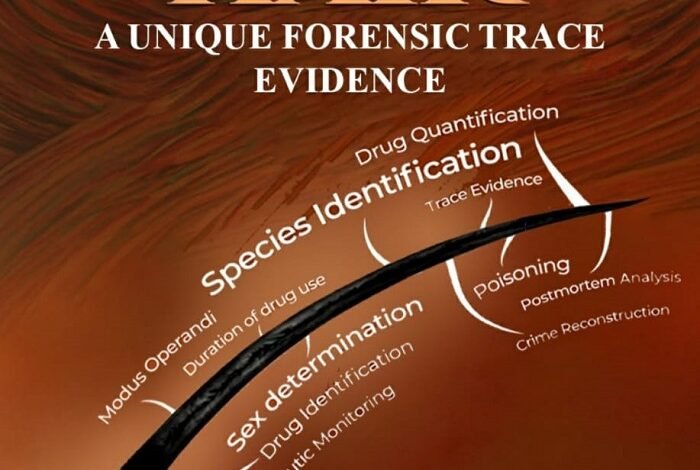
Hair is deceptively simple yet extraordinarily powerful as forensic evidence. Comb Your Hair explores how strands of hair can break alibis, confirm contact, and uncover hidden acts of drugging or poisoning, proving that even the smallest trace can tell the largest story.
Hair as a Silent Witness of Crime
The book begins with a historical and scientific overview, showing how hair has been one of the earliest forms of forensic trace evidence. Long before DNA, investigators relied on hair’s morphology, color, texture, and growth patterns to link people to crime scenes. Each strand grows in phases—anagen, catagen, and telogen—recording a timeline of exposure to drugs, toxins, environmental factors, and even stress. Hair is not just biological material; it is a chronological record of life events.
Collection and Preservation
Hair is fragile and easily contaminated, yet it is frequently found on clothing, bedding, weapons, and victims’ hands. The authors detail how hair should be collected with sterile tools, packaged in paper containers, and fully documented for chain-of-custody. Proper handling ensures hair remains powerful evidence rather than useless debris.
Microscopy: The First Layer of Truth
Before DNA testing, microscopic analysis reveals a wealth of information. By studying medullary patterns, cuticle scales, pigmentation, and shaft diameter, forensic scientists can distinguish human from animal hair, determine the body region, and even infer cosmetic treatments. This foundational morphological profiling remains crucial, especially in resource-limited laboratories.

DNA Analysis from Hair
Even hair without roots can yield mitochondrial DNA (mtDNA), enabling identification, suspect exclusion, and linking hair to maternal lineages. Case studies in the book demonstrate how hair DNA has solved cold cases and identified disaster victims, despite challenges like degradation or low DNA yield.
Chemical and Toxicological Analysis
One of the book’s most innovative sections is forensic hair toxicology. Hair traps chemicals over weeks and months, making it a long-term biomarker. Dr. Acheampong’s pioneering research in Ghana shows how ante-mortem and post-mortem hair analysis can reveal drug use, poisoning, or exposure to toxic substances—patterns invisible in blood or urine.
Comparative and Statistical Analysis
Hair evidence gains strength when questioned samples are compared with known standards. Microscopic, chemical, and DNA comparisons, supported by statistical modeling, allow forensic scientists to quantify the evidential value rather than rely on speculation.
Emerging Technologies
Automated microscopy, AI, machine learning, and hair databases are transforming hair analysis into a high-precision science. The book advocates for national and international hair databases to support missing person identification, disaster recovery, and criminal investigations.
Ethics and Forensic Governance
Hair contains sensitive genetic, substance-use, and ancestry information. The authors emphasize the importance of privacy protection, informed consent, and ethical oversight in forensic practice.
Training the Next Generation
Specialized forensic hair examiner certification programs and interdisciplinary collaboration are key to harnessing hair’s full potential. The expertise behind the analysis determines the strength of the evidence.
Conclusion
Comb Your Hair elevates hair from an overlooked trace to a forensic gold standard. Every strand carries a story of identity, exposure, and movement. In an era of rising drug abuse, transnational crime, and unexplained deaths, hair analysis offers a scientifically robust, ethically grounded, and legally defensible path to the truth. This book is essential reading for forensic experts, students, pathologists, toxicologists, crime investigators, legal professionals, and anyone curious about the smallest traces that can carry the loudest voice of justice.
By Dr. Lawrence Kofi Acheampong, Dr. S. Nwodo & Rev. Prof. Francis Agyemang Yeboah, Esq.
Follow Ghanaian Times WhatsApp Channel today. https://whatsapp.com/channel/0029VbAjG7g3gvWajUAEX12Q
Trusted News. Real Stories. Anytime, Anywhere.
Join our WhatsApp Channel now! https://whatsapp.com/channel/0029VbAjG7g3gvWajUAEX12Q