Political leaders have been implored to adopt national development strategies that transcend partisan divides to ensure sustained progress.
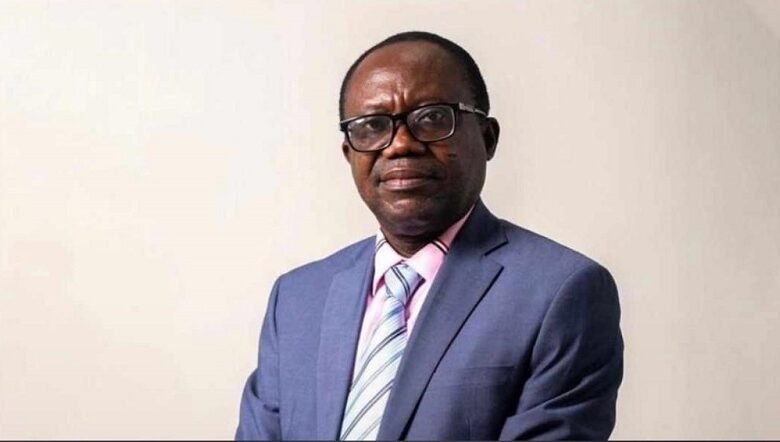
According to Professor Stephen Owusu Kwankye, an Associate Professor at the Regional Institute for Population Studies (RIPS) at the University of Ghana, the prevailing tendency for each political party to vilify and discard the initiatives of its predecessor is detrimental to advancement.
He articulated this perspective in an exclusive interview with The Ghanaian Times in Accra on Thursday.
“We require a coherent national vision, rather than a cyclical pattern where each new administration forsakes the endeavours of the previous one,” he asserted.


“Nation-building should resemble the construction of a skyscraper; each generation contributes a new level, rather than demolishing the existing structure.”
He drew a parallel to the construction of a house, wherein each successive government should build upon the foundation laid by its predecessor, rather than commencing anew.
“It’s akin to erecting a house. Your father may construct the ground floor. Then you might add the gallery. Subsequently, the children will come and continue the work,” he elaborated.
Furthermore, Prof. Kwankye underscored the need to develop a national policy that would ensure coordinated development and continuity of various projects in the country, devoid of any political divide.
“There should be some kind of a national policy that all political parties should sign on to and thoroughly discuss, so that there is some kind of continuity,” Prof. Kwankye said.
This initiative, he asserted, would not only facilitate the nation’s advancement but also enable the attainment of its goals, irrespective of the population growth rate.
Unless the country embraces this paradigm, he cautioned, it will continue to grapple with progress, notwithstanding its burgeoning population.
“The population could cease to expand, and yet we may still fail to realise our objectives,” he warned.
Prof. Kwankye has also called on the government to prioritise investment in education, skills training, and entrepreneurship to harness the country’s growing youth population for economic development as Ghana marked World Population Day.
“The government’s responsibility should not be to directly create jobs but to strengthen educational systems that equip graduates with the skills and mindset to be self-sufficient,
With the right training and a supportive environment, he argued, young people can create their jobs and contribute meaningfully to national growth, reducing dependence on government employment,” he said.
He noted that about 76 per cent of Ghana’s population was under the age of 35, a demographic structure commonly referred to as a “youth bulge.”
He said that while this presented opportunities, it also posed significant challenges if left unaddressed.
He warned that youth unemployment and underemployment, if not tackled, could trigger social unrest and make the youth vulnerable to political manipulation. “When you have idle youth, they become tools for politicians who use them for violence during elections,” he said.
BY CYNTHIA ASAMPANA