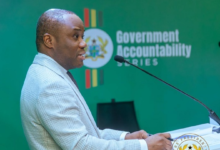
Out of 94 private universities operating in the country, only 24 have successfully obtained a charter as required under the Education Regulatory Bodies Act, 2020 (Act 1023), the Minister of Education, Mr Haruna Iddrisu, has revealed.
Describing the situation as deeply worrying, the minister stated that the slow pace of charter acquisition poses serious regulatory and quality assurance challenges for Ghana’s tertiary education sector.
Addressing stakeholders at a high-level engagement on the implementation of the charter policy in Accra, Mr Iddrisu stressed that while private universities continue to play an indispensable role in expanding access to higher education, government cannot overlook the need for strict adherence to minimum academic standards.
He noted that the stakeholder meeting was critical and significant, explaining that its outcomes would shape the next steps in government’s effort to reform the charter regime without compromising quality.


According to him, the ministry is currently considering two key policy options — granting a 10-year moratorium on enforcing the charter requirement or making the charter optional, the latter of which would necessitate an immediate amendment to Act 1023.
He commended the committee for its comprehensive review of Ghana’s five-year journey under the charter regime and added that inputs from stakeholder engagements would guide government in determining the final policy direction.
Moreover, the minister assured private tertiary institutions of government’s commitment to their sustainability but insisted, he underlined that such support must be rooted in a regulated environment that protects quality in teaching, research and outreach.
“Government will continue to partner with you in the provision of higher education for Ghanaians. Let us work together to refine the law so that the sector is strengthened and protected,” he added.
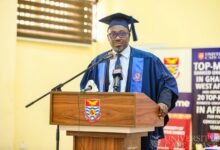
Chairman of the meeting and former Vice-Chancellor of the University of Ghana, Prof. Emeritus Ivan Addai-Mensah, cautioned against the indiscriminate granting of charters, warning that it could lead to a flood of honorary degrees, professorships, doctorate titles and chancellorships “thrown around like confetti.”
He said such developments could undermine Ghana’s academic credibility, especially if some institutions begin to exploit awards as fundraising tools.
Prof. Addai-Mensah added that although these concerns are valid, the existing Mentorship and Affiliation model has also become increasingly ineffective, burdening private institutions with high fees, staffing constraints and limited oversight.
He argued that a more rigorous and transparent accreditation framework, covering both institutional and programme levels, would provide a firmer foundation for safeguarding academic standards.
He then urged stakeholders to work collaboratively to identify a balanced policy direction that supports institutional growth while protecting national educational standards.
BY EUGENE AMPIAW
🔗 Follow Ghanaian Times WhatsApp Channel today. https://whatsapp.com/channel/0029VbAjG7g3gvWajUAEX12Q
🌍 Trusted News. Real Stories. Anytime, Anywhere.
✅ Join our WhatsApp Channel now! https://whatsapp.com/channel/0029VbAjG7g3gvWajUAEX12Q