About $500,000 worth of essential family planning commodities donated by the United Nations Population Fund (UNFPA) continue to be stuck at the country’s ports more than two years after their arrival.
The consignment, which formed part of the initial $2.1 million worth of medical supplies, was left uncleared after the Minister of Health at the time issued a directive for all such donations to be cleared.
While a significant portion of the shipment—about 142 containers valued at $1.6 million—were cleared following public backlash, the remaining containers have stayed uncleared to date.
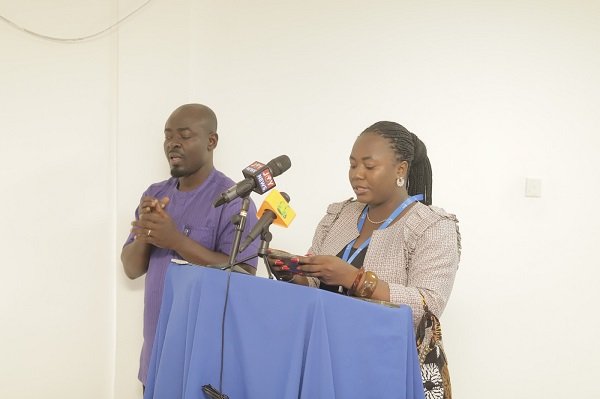
At a news conference in Accra yesterday, the Ghana CSOs Platform on SDGs raised concern over some of the products nearing expiry, urging the government to immediately intervene to protect the lives of women and girls and sustain sexual and reproductive health gains made in the country.


“With every passing week, the stock levels at our national and regional medical stores continue to decline, leaving clinics across this country at increasing risk of running out of contraceptives that Ghanaian women rely on, whilst stocks are nearing expiry at the port,” Henrietta Kaakyire Ataah, Advocacy and Youth Coordinator at Marie Stopes Ghana, who read the statement on behalf of the coalition, said.
She warned that the situation threatens gains made in expanding access to contraception and promoting sexual and reproductive health rights in the country.
Ms Ataah emphasised that family planning remains one of the most cost-effective interventions for reducing maternal mortality, noting that Ghana’s maternal mortality ratio currently stands at 310 deaths per 100,000 live births.
“When women cannot access modern contraception, unintended pregnancies rise and with them, the rate of unsafe abortions,” she said.
While welcoming the President’s directive to the Ministries of Finance and Health to resolve the matter, she urged the immediate clearance and distribution of the commodities, as well as contingency measures to prevent stock-outs at health facilities.
She also called for a review of import classification systems affecting health commodities and urged government to prioritise domestic financing for family planning to ensure uninterrupted supply.
“What is before us is not simply about contraceptives. It is about institutional accountability and what happens when systems meant to serve Ghana’s citizens fail them in silence, without consequences, for almost two years,” she said.
“We call on every Ghanaian who believes in the right of women to plan their families, and in the right of citizens to hold these institutions accountable, to raise their voice alongside ours.”
The National Coordinator of the CSOs Platform on SDGs, Levlyn Asiedu, said the ongoing shortage of family planning commodities is already affecting service delivery, with providers resorting to short-term methods.
“Because there are no long-term methods in the system, providers tend to rely on short-term options, or clients have to pay out of pocket for long-term methods. This undermines informed choice and quality of care,” she said.
Ms Asiedu urged swift government action to prevent further harm.
“What is the point of keeping the goods at the port when people need the services and you let them expire?” she asked, warning that continued delays could lead to unintended pregnancies, unsafe abortions, and increased maternal deaths.
BY ABIGAIL ANNOH
Follow our WhatsApp Channel now! https://whatsapp.com/channel/0029VbAjG7g3gvWajUAEX12Q