Farmers in Northern Regions Push for Irrigation Expansion
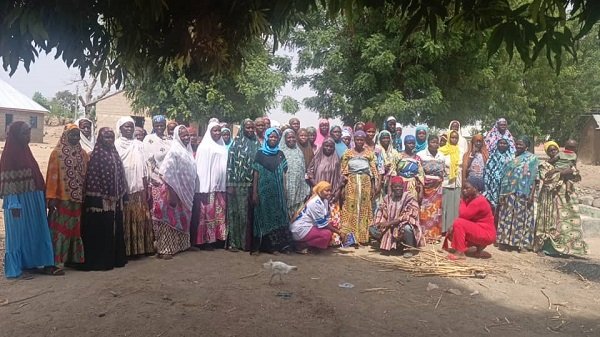
Farmers at Mandago in the Pusiga District of the Upper East Region have called on the government to prioritise the development of irrigation dam infrastructure across the five northern regions of Ghana.
They said this would enable farmers, who were keen on tomato production, to cultivate the crop on a large scale to meet growing consumer demand.
The call follows a decision by the Burkina Faso government to ban the export of fresh tomatoes to Ghana. In a communiqué issued recently, the Burkinabè authorities explained that the decision, which has since been reversed, was intended to protect local tomato processing factories.
Speaking to journalists on the sidelines of a tour to assess the impact of the Building Resilience Against Violent Extremism (BRAVE II) Project, being implemented by the Belim Wusa Development Agency (BEWDA) across five communities in the Bawku enclave on Tuesday, the farmers stressed the need for urgent government investment in tomato production.


The BRAVE II Project, according to the Executive Director of BEWDA, Mr Peter Asaal, is a three-year social intervention initiative being implemented in the border districts and municipality namely Pusiga, Garu, Bawku West, Binduri and Bawku Municipality to enhance social cohesion among locals, migrants and refugees who have fled neighbouring Burkina Faso due to rising terrorist attacks.
After one year of implementation, with financial support from Starr Ghana Foundation, Mr Asaal said a total of 14,818 people comprising 1,204 refugees, 1,017 Fulanis (Fulbe) and 39 persons with disabilities have benefited from the project, with women forming the majority (10,079).
“The beneficiaries are being trained in economic empowerment skills, including rice parboiling, soap making, weaving, tailoring, leatherworks, electrical installation and dry-season farming,” he said.
A tomato farmer at Mandago, Mr Alhassan Bukari, lauded BEWDA and Starr Ghana Foundation for the initiative but noted that the acute lack of water during the dry season was hindering efforts to engage in dry-season farming.
He said the situation had rendered many young men and women interested in agriculture unemployed during the dry season.
“I can tell you that there are thousands of farmers here in Pusiga who are interested in tomato production, but we are facing a serious lack of water. We alone can produce enough tomatoes for the entire northern part of Ghana if supported with irrigation dams and farming inputs,” he indicated.
Mr Bukari added that farmers in the area currently grow tomatoes, pepper, onions and other vegetables in small quantities mainly for domestic consumption.
“If the government provides the needed support—even mechanised boreholes—we will be able to produce tomatoes for a large part of the country,” he said.
Another farmer, Ms Amina Musah, said it was unacceptable for Ghana to experience tomato shortages and rising prices at a time when many people were willing to go into agriculture to improve their livelihoods.
She attributed the situation to the neglect of farmers by successive governments, noting that the failure to construct irrigation dams for dry-season farming had worsened the problem.
“Through the BRAVE II Project, we have been provided with quality tomato seeds, and we also have arable land. What we need now are dams so we can go into full production; otherwise, we will continue to depend on rain-fed agriculture. Government must act now,” she appealed.
Providing further details on the project, Mr Asaal said the five communities—Nware, Mandago, Bansi, Sapeliga and Kugri—were selected because they are border communities hosting refugees and other migrants.
From Francis Dabre Dabang.
Follow our WhatsApp Channel now! https://whatsapp.com/channel/0029VbAjG7g3gvWajUAEX12Q