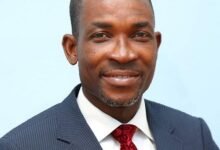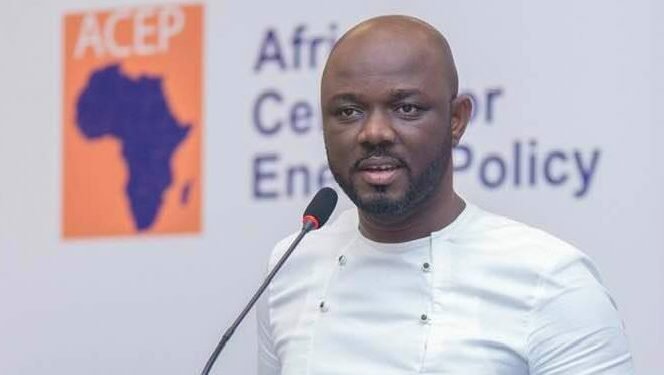
The Executive Director of the Africa Centre for Energy Policy (ACEP), Ben Boakye, has warned that Ghana’s energy sector remains structurally fragile and heavily dependent on the national budget, despite the absence of public agitation from Independent Power Producers (IPPs).
Speaking during a NorvanReports and Economic Governance Platform (EGP) X Space discussion on “Energy Sector ‘Reset’: Will It End the Circular Debt or Recreate It?”, Mr. Boakye said the apparent stability in the sector is largely sustained by direct fiscal intervention from the Ministry of Finance, rather than operational efficiency.
He revealed that the cost of gas supplied to the power sector is almost entirely absorbed by the Finance Ministry, with the state paying between $70 million and $75 million every month to cover fuel costs that should ordinarily be recovered through tariffs.
“We have engines running and recovering investment costs, fuel, and profits, but the fuel component is still borne by the finance minister,” he explained, noting that the monthly burden is financed through the budget as well as levies and margins imposed on liquid fuels.


Mr. Boakye stressed that the current calm among IPPs should not be mistaken for sector sustainability, cautioning that the system survives on the personal commitment of sector ministers to keep cash flowing. “If those individuals are no longer there and another person decides to prioritise roads, schools or other investments, we will return to the same crisis where gas suppliers are unpaid and costs begin to accumulate,” he warned.
Beyond gas payments, he disclosed that the Finance Ministry also shoulders about $400 million annually in negotiated outstanding IPP debts, further deepening the sector’s reliance on the state.
He identified inefficiencies within the Electricity Company of Ghana (ECG) as a major contributor to the problem, citing weak revenue collection and persistent power theft. “ECG is doing relatively well in accounting for what it collects, but not in improving efficiency or advancing collection. People continue to bypass meters and consume power without paying,” he said.
Mr. Boakye emphasized that addressing gas costs in tariffs does not necessarily require tariff hikes, but stronger enforcement and improved revenue mobilization by ECG to ensure the sector pays for its own inputs.
He cautioned that repeated tariff increases without corresponding efficiency gains risk worsening power theft, as more consumers are priced out and pushed into illegal consumption. “Tariff adjustment alone is not enough. The more we increase tariffs when people cannot pay, the more credible customers slip into power theft, deepening ECG’s collection challenges and increasing pressure on the Finance Ministry,” he explained.
Concluding, Mr. Boakye underscored that Ghana’s energy sector remains vulnerable because it depends on discretionary state payments rather than operating as a self-sustaining business. “We are not out of the woods. The sector should be paying its own gas bills. Until efficiency improves and revenues are fully recovered, we will remain stuck with a budget-dependent energy sector,” he said.
BY BEN BOAKYE
Trusted News. Real Stories. Anytime, Anywhere.
Join our WhatsApp Channel now! https://whatsapp.com/channel/0029VbAjG7g3gvWajUAEX12Q

Follow the latest videos and updates on the official YouTube channel of Ghanaian Times.