Fnglish, French will remain integral to Ghana’s education system – Dep. Education Minister
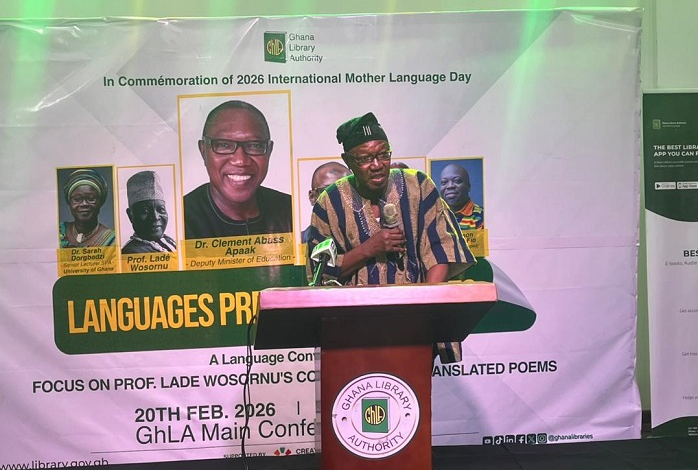
DEPUTY Minister of Education, Dr Clement Apaak, has reaffirmed that English and French will remain integral to Ghana’s education system.
He said English will become the principal language of instruction from Primary Four.
His statement follows renewed debate over its policy to prioritise mother tongue-based instruction in the early years of schooling.
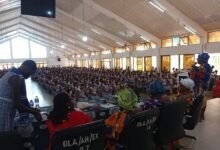
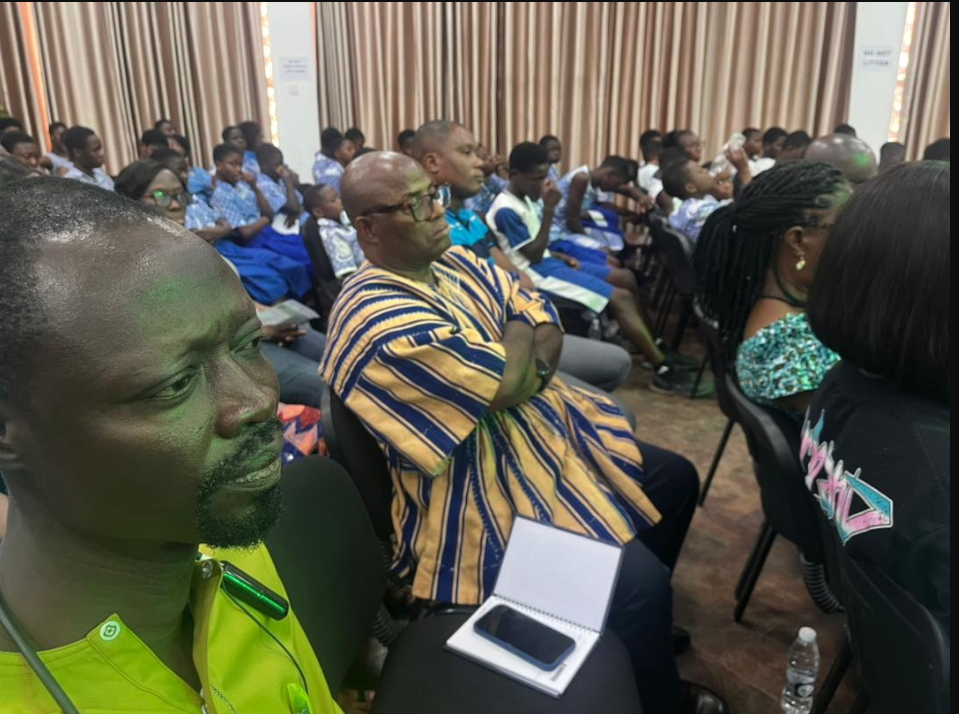
Addressing a national language convention, organised by the Ghana Library Authority to mark International Mother Tongue Day in Accra yesterday, the Deputy Minister stated that the policy mandates the use of Ghanaian languages for 70 per cent of teaching and learning from kindergarten to Primary Three.


Dr Apaak rejected suggestions that the Minister of Education, Mr Haruna Iddrisu, had proposed abandoning English or French.
“He did not say we should stop using English or French,” the Deputy Minister emphasised.
“From KG to Primary Three, English and French will be taught as subjects. From Primary Four, English becomes the language of teaching and learning,” he said.
He also explained that the policy was underpinned by research indicating that children learn more effectively when taught in a language they understand, particularly at foundational stages.
“Early exposure to unfamiliar foreign languages,” he argued, “could impede comprehension and limit creativity. Strengthening indigenous languages in classrooms would improve learning outcomes, reduce early-grade learning poverty and promote equity in access to education,” he added.
As part of implementation measures, the Ministry of Education is collaborating with the Bureau of Ghana Languages and academic institutions to translate core teaching materials, particularly in mathematics and science, into selected Ghanaian languages.
The Ghana Education Service is also promoting initiatives such as inter-school competitions featuring Ghanaian language renditions of the National Anthem and National Pledge to deepen pupils’ civic understanding.
Dr Apaak further disclosed that an implementation, headed by Professor George K.T. Oduro, had been established within the ministry to oversee reforms arising from the President’s National Forum on Education.
He urged parents, educators, publishers and lawmakers to support the promotion of indigenous languages in homes, schools and public institutions, noting that Members of Parliament were permitted under standing orders to make submissions in local languages.
The Executive Director of the Ghana Library Authority, Mr Alhassan Ziblim, described language preservation as central to national identity and cultural continuity, warning that several Ghanaian languages face extinction without deliberate intervention.
He said the authority would expand indigenous language collections in libraries, support translation projects and collaborate with language institutions to document and promote local languages.
Community reading festivals and storytelling events in Ghanaian languages were also planned.
The Country Representative of UNESCO to Ghana, Mr Edmond Moukala, called for the preservation of Ghanaian languages in both print and digital formats.
The Secretary-General of the Ghana National Commission for UNESCO, Professor Osman Tahiru Damba, said multilingual education aligned with global commitments to inclusive and equitable quality education under the Sustainable Development Goals.
BY NSAMI HILDA
Join our WhatsApp Channel now! https://whatsapp.com/channel/0029VbAjG7g3gvWajUAEX12Q

Follow the latest videos and updates on the official YouTube channel of Ghanaian Times.