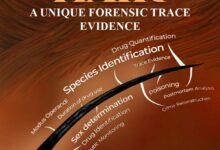
Forensic, legal medicine practice in Ghana: Bridging medicine, law, justice for the ordinary citizen

FORENSIC and legal medicine represents the invisible bridge between medicine and justice. It is the specialised application of medical knowledge to legal questions. It helps courts, police and society determine truth in cases involving injury, assault, sexual violence, poisoning, mental illness, unexplained death etc.
In the scholarly chapter published in the Encyclopedia of Forensic and Legal Medicine, Acheampong et al provided one of the most comprehensive analyses of the current state of forensic medicine practice in Ghana. The work highlights a critical gap in public understanding, noting that many Ghanaians equate forensic medicine solely with autopsy and pathology, without appreciating its broader role in examining living victims, assessing injuries, interpreting medical evidence, investigating malpractice and supporting the justice system.
To the ordinary Ghanaian, forensic medicine is often associated only with autopsies. Yet, it extends far beyond examining the dead—it protects the living, strengthens justice delivery and ensures accountability.
c. Forensic toxicology (studying poisons and drugs)
d. Forensic psychiatry (assessing mental state)
e. Forensic odontology (using dental evidence)
f. Forensic Anthropology/ Archeology (analysing human remains)
g. Forensic Microbiology (Entomology — analysng microorganisms, insects, arthropods etc.)
h. Forensic Epidemiology (investigating disease outbreaks)
i. Forensics in Secure, Custody and Detention (assessing prisoners)
j. Forensic genetics (DNA analysis)

death resulted from natural causes, accident, suicide or homicide. This ensures that innocent people are not wrongly accused and criminals do not escape justice.
The current reality: Structural gaps and misunderstanding
Other developing fields include forensics in organ, tissue or cell transplant, fertility, road traffic, sports, AI biometrics etc. Each of these contributes to uncovering truth and ensuring justice.
Legal foundations: The laws governing forensic practice in Ghana
Understanding forensic and legal medicine: Beyond autopsy
Forensic and legal medicine refers to the use of medical science to answer legal questions. This includes but not limited to; examining victims of assault, documenting injuries, assessing mental competence, analysing toxic substances, investigating malpractices, determining causes of death etc.
For example, when someone is assaulted in Accra or Tamale, a forensic medical practitioner carefully examines the victim and documents injuries in a medically and legally acceptable way. This documentation becomes critical evidence in court.
To simplify for the ordinary Ghanaian: forensic medicine is like the “medical detective work” that helps courts understand what truly happened in cases involving harm or death.
It includes several sub-specialties, but not limited to areas such as:
a. Forensic pathology (investigating causes of death)
b. Clinical forensic medicine (examining living victims)
Forensic medicine operates within Ghana’s legal framework, particularly under the Coroners Act of 1960, which governs investigations into unexplained deaths. Additionally, the Criminal Procedure Code and the Evidence Act recognise medical experts as essential witnesses whose professional opinions help courts determine guilt or innocence.
In practical terms, when a suspicious death occurs—for example, someone found dead under unclear circumstances, the coroner orders a medical examination. The forensic medical expert determines whether the death resulted from natural causes, accident, suicide or homicide.
Despite its importance, forensic medicine in Ghana faces serious structural challenges. One major issue is the widespread misconception that forensic medicine is the same as only pathology. In reality, pathology is only one aspect of forensic medicine.
Currently, most forensic medical work is handled by Anatomical Pathologists, General Psychiatrists, Medical Officers without specialised forensic training. This creates significant problems. For example, when victims of sexual assault report to hospitals, they may be examined by doctors who lack specialised forensic training. This can result in incomplete or poorly documented reports, which weakens the case in court and sometimes allows perpetrators to go free.
For the ordinary Ghanaian victim, this means justice may be delayed or denied—not because the crime did not occur, but because the medical evidence was not properly handled. Financial barriers also exist. Victims are often charged high fees for forensic medical reports, discouraging many from pursuing justice.
Training deficiencies: A critical weakness in the system
One of the most significant challenges is the lack of formal forensic medicine education in Ghana. Currently:
a. Forensic medicine is not fully taught as a dedicated specialty in medical schools.
b. Most doctors graduate without adequate forensic training.
c. There are very few formally trained forensic physicians in the country.
This creates anxiety among doctors when called to testify in court because they may not fully understand legal procedures or evidence standards.
For the ordinary citizen, this affects the quality of justice delivery. A poorly written medical report can lead to wrongful acquittal or wrongful conviction. Forensic medicine requires not only medical knowledge but also legal understanding, proper documentation and courtroom skills.
Also this specialty shall provide accurate investigative answers to recent issues generating public outcry on how medical malpractices including negligence are investigated in healthcare systems.
Institutional role: Who provides forensic services in Ghana?
Despite limitations, several institutions contribute to forensic medicine practice in Ghana, including:
A. Ghana Police Hospital.
B. Ghana Police Forensic Crime Laboratory.
C. Teaching Hospitals.
D. Ghana Prisons Service Hospitals.
E. Psychiatric Hospitals.
These institutions assist courts by examining victims, suspects, and deceased persons. For example, when an inmate dies in custody, forensic medical experts determine whether the death was natural, accidental, or due to violence or neglect. This protects both human rights and institutional accountability.
The Way Forward: Strengthening Ghana’s forensic medicine system
Experts strongly recommend several reforms to strengthen forensic medicine in Ghana. These include:
a. Establishing forensic medicine departments in universities; this will ensure proper training of future forensic physicians.
b. Creating a National Forensic Authority, a centralised body that will coordinate forensic services, set standards and improve quality.
c. Developing clear legal frameworks and specific laws to govern clinical forensic practice beyond death investigations.
d. Increasing public awareness to understand the importance of forensic medicine in justice delivery.
Conclusion: Forensic medicine as Ghana’s silent pillar of justice
Forensic and legal medicine is not merely about examining the dead—it is about protecting the living, defending the innocent and ensuring that justice prevails. In Ghana, although the discipline exists, it remains underdeveloped due to lack of training, limited awareness and inadequate institutional structures.
For the ordinary Ghanaian, strengthening forensic medicine means: faster justice, fairer trials, better protection of victims and greater trust in the justice system.
A strong forensic medicine system ensures that truth is guided not by suspicion or emotion, but by scientific evidence. As Ghana advances its justice and healthcare systems, forensic and legal medicine must be recognised not as a luxury, but as a national necessity—one that safeguards truth, protects human dignity and upholds justice for all.
(Acheamponglawrence13@ gmail.com)
BY DR. LAWRENCE KOFI
ACHEAMPONG
Follow Ghanaian Times WhatsApp Channel today. https://whatsapp.com/channel/0029VbAjG7g3gvWajUAEX12Q
Trusted News. Real Stories. Anytime, Anywhere.
Join our WhatsApp Channel now! https://whatsapp.com/channel/0029VbAjG7g3gvWajUAEX12Q