Ghana hosts ECOWAS consultation on gender parity in politics
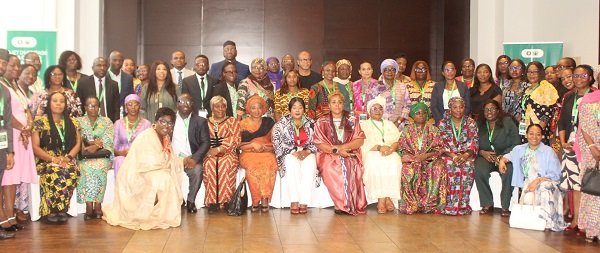
A two-day expert meeting on regional consultation on the political participation and leadership of women and youth in West Africa has been opened in Accra.
The meeting, scheduled for February 17 and 18, forms part of the 50th Anniversary Legacy Project of the Economic Community of West African States (ECOWAS) on gender parity in elected bodies in ECOWAS Member States (2025–2035), which seeks to strengthen women’s and youth representation in political leadership across the sub-region.
Organised under the auspices of the Ministry of Gender, Children and Social Protection, in collaboration with the ECOWAS Gender Development Centre (EGDC), the consultation aims to assess the current state of political participation of women and young people in West Africa, advance dialogue on gender parity in elected bodies, and contribute to the development of a regional model law or guide to promote inclusive governance and leadership by 2035.
In a speech, read on her behalf by the Chief Director of the Ministry, Dr Hafisa Zakaria, the Minister of Gender, Children and Social Protection, Dr Agnes Naa Momo Lartey, reiterated the commitment of the government of Ghana to advancing the political participation and leadership of women and young people as a foundation for inclusive governance and sustainable development in West Africa.

She noted that although women and young people constituted the majority of the population in West Africa and played significant roles in innovation and development, their representation in political leadership, executive government and decision-making bodies remained limited.
The minister said the government of Ghana, in line with the Sustainable Development Goals, the African Union Agenda 2063 and the ECOWAS Gender Policy, had demonstrated its commitment through policy and legislative reforms, including the enactment of the Affirmative Action Act, 2024, which provides a legal framework to promote women’s participation and accountability in public and private institutions.
She added that the ongoing review of the National Gender Policy (2025–2034) and the implementation of the National Youth Policy (2022–2032) were aimed at positioning young people, particularly young women and other under-represented groups, as active partners in governance.
Dr Lartey urged the participants to engage constructively and propose practical solutions to expand political space for women and youth across the West African region.
The Director of the ECOWAS Centre for Gender Development, Mrs Sandra Oulaté Fattoh, on her part, called for harmonised and binding legislative reforms to ensure equal political participation of women and young people in West Africa by 2035.
She again underlined that although women and youth constituted more than 60 per cent of the region’s population, their representation in political leadership and decision-making bodies remained disproportionately low, undermining inclusive governance and sustainable development in the sub-region.
Mrs Fattoh cited findings from a 2024 study by the Economic Community of West African States (ECOWAS), which showed that women occupied only 18.4 per cent of parliamentary seats across member States, while young people under the age of 35 were poorly represented in legislative assemblies.
She underscored the need for the region to move beyond symbolic quota systems towards an institutionalised parity framework that would guarantee 50/50 representation in elective bodies at both national and local levels, in line with ECOWAS vision 2050.
The President of the Regional Organisation of Youth and Women Leaders (ROAJELF), Senegal Chapter, Dr Zipporah Dione, emphasised the need for sustained regional collaboration to deepen the political participation of women and young people in West Africa.
She noted that meaningful inclusion of women and youth in decision-making processes could only be achieved through coordinated efforts involving regional institutions, civil society organisations, women and youth networks, as well as technical and financial partners.
Dr Dione explained that the project was designed as a platform for accompaniment, capacity building and advocacy to support effective political engagement of women and young people across the sub-region.
He said the initiative focused on developing transformational leadership, promoting responsible and structured political engagement, and creating stronger links between institutional actors and youth organisations, with the aim of transforming mindsets, access to power and political representation in West Africa.
BY CLIFF EKUFUL
Follow Ghanaian Times WhatsApp Channel today. https://whatsapp.com/channel/0029VbAjG7g3gvWajUAEX12Q
Trusted News. Real Stories. Anytime, Anywhere.
Join our WhatsApp Channel now! https://whatsapp.com/channel/0029VbAjG7g3gvWajUAEX12Q