Ghana must invest in elderly care – Prof. Ackah
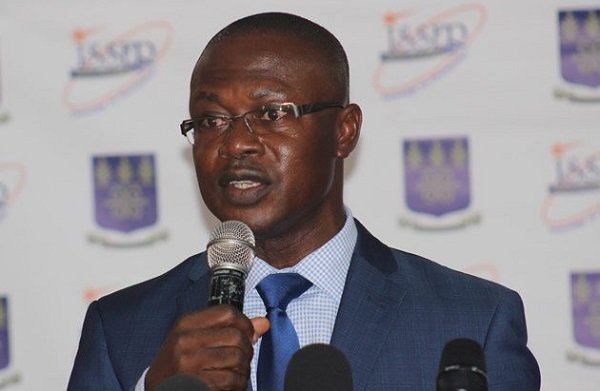
A Professor at the Institute of Statistical, Social and Economic Research (ISSER), Professor Charles Ackah, has urged the government to invest in elderly care, describing it as an area with significant economic potential that has not received the needed attention.
He said that while considerable focus has been placed on child and maternity care, elderly care remains largely overlooked by policymakers and other stakeholders.
Additionally, Prof. Ackah noted that the situation was negatively affecting labour force participation, especially female labour force, as many women were compelled to juggle paid work with caring for elderly relatives.
Prof. Ackah made these remarks during a media interview on the sidelines of a workshop held in Accra on Friday.


The workshop formed part of the second phase of a research project aimed at identifying priority problem areas and jointly exploring co-created solutions for building a sustainable and inclusive long-term care service system for older adults in Ghana, including the costs involved and the quality of services offered by caregivers.
The research, titled “Developing Ghana’s Care Economy: Case and Potential,” is being conducted by the University of Ghana with support from the Danish Fellowship Centre through Aarhus University, Denmark.
“There is a lot of attention on child and maternity care. But as a nation, we have not paid attention to an emerging serious issue that had to do with elderly care. We have realised that there is no state and community intervention when it comes to elderly care, and so it is mostly informal care that is provided by family members,” Prof. Ackah said.
“Apart from the National Health Insurance Scheme that gives some exemptions to elderly people, the cost of providing elderly care is quite huge,” he added.
He further expressed concern about the absence of a consistent national policy on elderly care and said he hoped the ongoing research would contribute to the development of such a policy framework.
Prof. Ackah underscored the need to train specialists in elderly care, explaining that most people currently providing such services are not professionally trained.
“There is some emerging market, but they are very few and they are only in the cities and they are quite expensive. Even in the labour force, we are depending on nurses, but they are not necessarily trained to provide elderly care. So we need to navigate to train people who specialise in the area of elderly care,” he stressed.
He said the research team had relied on data from the Ghana Statistical Service and had, over the past five years, visited households to interview elderly persons across the country.
The data and interviews, he explained, had provided deeper insight into elderly care in Ghana.
According to Prof. Ackah, it is difficult to estimate the exact number of jobs the elderly care sector could generate due to population growth.
“We have not done an assessment to know the number of jobs that could be generated through elderly care, but it could potentially be large. We have to look at the latest population census by the GSS to know the growth in the number of elderly people in the country. The data we used was about six years ago,” he said.
BY BENJAMIN ARCTON TETTEY
Follow Ghanaian Times WhatsApp Channel today. https://whatsapp.com/channel/0029VbAjG7g3gvWajUAEX12Q
Trusted News. Real Stories. Anytime, Anywhere.
Join our WhatsApp Channel now! https://whatsapp.com/channel/0029VbAjG7g3gvWajUAEX12Q