THE Ghana Institute of Freight Forwarders (GIFF) has urged the Finance Minister to undertake an urgent, evidence-based review of recent transit policy measures following a high-profile enforcement episode linked to Bill of Entry (BOE) 80226125039.
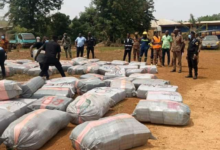
The call comes in the wake of the interception of 18 articulated trucks declared as transit cargo bound for Niger, an incident that has sparked debate within Ghana’s trade and customs sector and renewed calls for policy review and structured stakeholder engagement.
In an intelligence-led operation on February 18, 2026, officers of the Ghana Revenue Authority Customs Division intercepted the convoy along the Dawhenya–Tema Road over suspicions that proper transit procedures had not been followed.
The trucks, electronically cleared by the Integrated Customs Management System (ICUMS), had been declared through the Akanu and Aflao border posts and were carrying edible cooking oil, tomato paste, and spaghetti. The initial declared tax liability was approximately GH¢2.62 million.


However, subsequent post-interception assessments reportedly uncovered discrepancies in declared unit values, tariff classifications, and cargo weights.
These findings revised the suspended revenue exposure from about GH¢2.6 million to over GH¢85 million, raising concerns about possible undervaluation or misclassification within the transit regime.
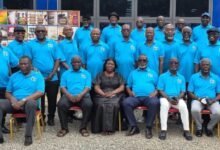
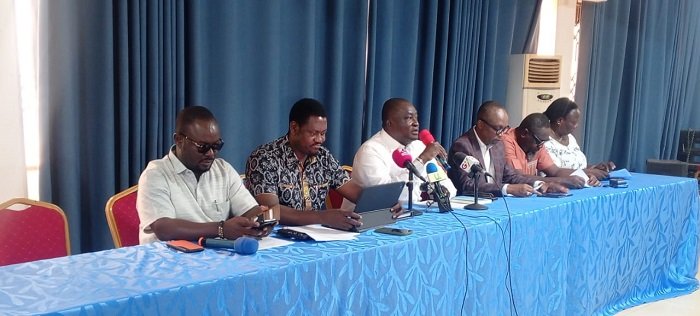
Addressing a press conference in Tema yesterday, GIFF President Stephen Adjokatcher stressed that the Institute’s intervention was not meant to excuse illegality, but to ensure a balanced policy that protects government revenue while safeguarding Ghana’s reputation as a preferred transit gateway to the Sahel region.
According to Mr Adjokatcher, evidence suggests that the electronic control framework functioned as designed, with route deviation alerts triggered only after the trucks were diverted by enforcement authorities to the Tema Transit Yard, which lies outside the declared transit corridor.
He cautioned against broad restrictions that could inadvertently penalise compliant operators and introduce regulatory uncertainty into Ghana’s transit regime.
“Proportionality in enforcement is essential to avoid undermining confidence in the country’s transit framework,” he said.
On traders’ commercial rights, Mr Adjokatcher noted that international trade practice recognises the right of operators to optimise cost, time, and routing within the confines of the law.
To strengthen compliance while maintaining trade facilitation, he proposed measures including real-time ICUMS tracking and reconciliation dashboards, strengthened transit bond reviews, the establishment of a joint Customs–Ghana Link anomaly review cell, and targeted sanctions strictly against proven offenders.
The Institute has respectfully invited the Finance Minister to commission an independent technical reconciliation of the BOE incident and review the proportionality of current measures.
Meanwhile, the government has announced a ban on the land transit of commercial quantities of cooking oil through Ghana’s borders, directing that all such consignments must henceforth be routed exclusively through the country’s seaports.
Under the new measure, cooking oil consignments entering Ghana for onward transit to landlocked countries will no longer be permitted to move through land border collection points.
FROM KEN AFEDZI, TEMA
Join our WhatsApp Channel now! https://whatsapp.com/channel/0029VbAjG7g3gvWajUAEX12Q

Follow the latest videos and updates on the official YouTube channel of Ghanaian Times.
https://www.youtube.com/@ghanaian_times