Greater Accra RCC, KoKMA, RUDN University Conclude Training Programme on Sustainable Urban Development in Moscow
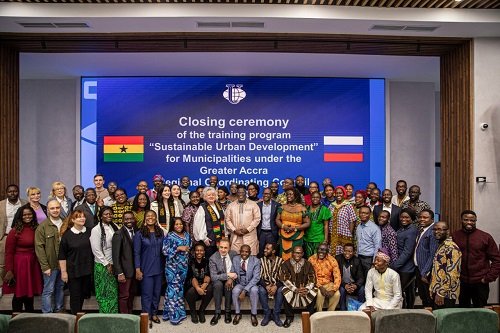
The Greater Accra Regional Coordinating Council (GARCC) and the Korle Klottey Municipal Assembly (KoKMA), in partnership with the Peoples’ Friendship University of Russia (RUDN University), have successfully concluded the Autumn School on Sustainable Urban Development in Moscow.
Conducted from November 24 to December 12, 2025, the programme was designed as a comprehensive capacity-building initiative for municipal officials from Metropolitan, Municipal and District Assemblies (MMDAs) across the Greater Accra Region. Its overarching objective was to strengthen institutional, technical and strategic capacities for sustainable urban governance, digital transformation and international cooperation.
The programme was jointly developed by Mr Emmanuel Baisie, Municipal Coordinating Director of KoKMA, and Dr Anna Popkova, Deputy Director for International Affairs at the Institute of Environmental Engineering, RUDN University. It received strong endorsement from the Greater Accra Regional Minister, Hon. Linda Obenewaa Akweley Ocloo, and the Chief Director of GARCC, Madam Lilian Baeka, underscoring its regional relevance and strategic importance.
International collaboration and capacity building
The Autumn School served as a high-level platform for professional learning, knowledge exchange and international collaboration between Ghanaian municipal officials and leading Russian experts in urban management, digital governance, smart city technologies and circular economy systems.
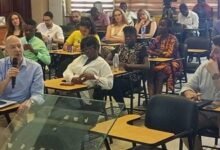
Through expert-led lectures, policy dialogues, interactive sessions and technical study visits, participants examined global urban development models while contextualising lessons for Ghana’s municipal environment. The training emphasised integrated urban planning, data-driven decision-making, institutional coordination and inclusive service delivery.
Exposure to practical case studies from Moscow demonstrated how smart technologies, integrated governance frameworks and circular economy principles can enhance urban liveability and quality of life.
Sustainable urban development and expert engagements
A core module focused on sustainable urban development management, equipping participants with competencies in assessing and managing urban systems using internationally recognised models, indicators and targets.
Expert master classes highlighted practical municipal solutions. Ms Yulia Voloshina of the MosSportObject State Budgetary Institution shared Moscow’s experience in planning and managing urban sports infrastructure, emphasising interdepartmental coordination, public–private partnerships and facility maintenance as tools for improving urban well-being.
Participants also engaged with the Moscow City Situation Centre, hosted by the Moscow Department of Information Technology, where they were introduced to Smart City initiatives, digital twin technology, intelligent transport systems and integrated urban management platforms.
Technical visits to the Moscow Museum of Municipal Economy and the Smart City Pavilion at VDNKh further showcased how digital ecosystems support transport, healthcare, education and municipal service delivery.
A visit to Skolkovo Technopark exposed participants to cutting-edge innovations in smart infrastructure, artificial intelligence, Internet of Things (IoT) applications and eco-friendly urban solutions, demonstrating how innovation hubs can support resilient and future-ready cities.
Digital governance and smart city perspectives
Digital governance formed a major thematic pillar of the programme. Expert lectures examined the historical and contemporary foundations of smart city development, highlighting the importance of real-time data integration, decentralised systems, human capital development and intersectoral collaboration.
Participants explored emerging trends such as digital twins, artificial intelligence in public administration, predictive analytics, robotics and smart construction. Sessions on state digitalisation and megatrends provided strategic insights into how cities can leverage technology to navigate future challenges.
Cybersecurity featured prominently, with experts outlining global threat landscapes, resilience-based security frameworks and strategies for protecting critical public infrastructure and citizen data.
A strategic session on the Smart City Standard 2030 emphasised a human-centric and holistic approach to digital urban development. Municipal officers subsequently developed preliminary smart city frameworks tailored to their respective assemblies.
The visit to Moscow’s flagship My Documents public service centre highlighted a citizen-focused service delivery model integrating administrative services, digital literacy, health initiatives and cultural engagement.
Municipal solid waste management and environmental sustainability
Municipal solid waste (MSW) management constituted a significant practical component of the programme. Participants examined modern approaches to waste classification, processing, recycling and disposal, with strong emphasis on environmental protection and public health.
Technical visits to advanced waste processing and waste-to-energy facilities demonstrated closed-loop systems that reduce landfill dependency while generating energy and reusable resources.
Environmental sustainability and urban ecosystem services were also addressed, including the economic value of ecosystem services, urban environmental risks and green infrastructure planning. Practical GIS-based training equipped officials with tools for inclusive, data-driven urban planning.
Housing, public utilities and urban mobility
The programme further covered sustainable housing systems, public utilities optimisation and emergency management, with emphasis on energy efficiency, climate neutrality and waste-to-energy solutions.
Industrial visits to wastewater treatment facilities demonstrated advanced surface water treatment methods, while a tour of the Moscow Traffic Management Centre showcased the use of artificial intelligence and real-time monitoring to improve traffic flow, safety and congestion management.
Institutional commitment and the way forward
The closing sessions reaffirmed the commitment of all partners to sustained collaboration. RUDN University highlighted the importance of university–municipality partnerships in addressing urban challenges through education, research and applied innovation.
The Ghanaian Ambassador to the Russian Federation, H.E. Dr Koma Steem Jehu-Appiah, described the programme as a practical model of international cooperation supporting technology transfer and sustainable development.
In his address, the Municipal Chief Executive of KoKMA, Hon. Alfred Allotey-Gaisie, expressed appreciation to RUDN University and Russian partners, reaffirming the Assembly’s commitment to adopting innovative and sustainable urban management practices.
The programme concluded with a joint commitment to expand capacity-building initiatives, deepen international collaboration and translate acquired knowledge into practical, resilient and inclusive urban development outcomes. The 2026 cohort is expected to include 100 participants, further scaling the programme’s impact.
The writers: H.B. Nii Ofori-Quaye is Head of Public Affairs and International Relations at KoKMA and Ghana Programme Coordinator. Dr Anna Popkova is Deputy Director for International Affairs at the Institute of Environmental Engineering, RUDN University.
By H.B. Nii Ofori-Quaye & Dr Anna Popkova
Follow Ghanaian Times WhatsApp Channel today. https://whatsapp.com/channel/0029VbAjG7g3gvWajUAEX12Q
🌍 Trusted News. Real Stories. Anytime, Anywhere.
✅ Join our WhatsApp Channel now! https://whatsapp.com/channel/0029VbAjG7g3gvWajUAEX12Q