GSA, German Institute Train Artisans to Improve Concrete Quality
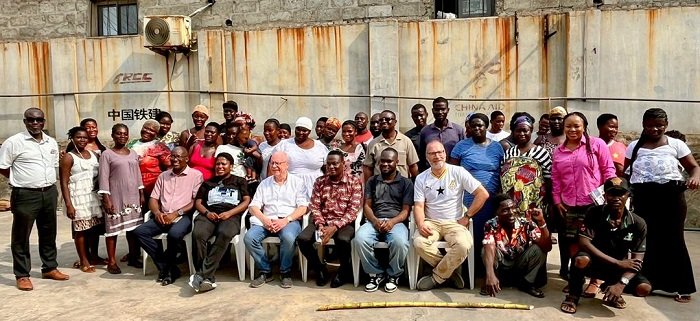
The Ghana Standards Authority (GSA) has launched a week-long training programme to equip masons and artisans with practical knowledge on producing high-quality concrete for construction projects.
The initiative is a collaboration with the German Federal Institute for Materials Research and Testing (BAM) and the Federal Ministry for Economic Affairs and Energy, aimed at improving construction practices in Ghana, especially within the informal sector where much building activity takes place.
Addressing the press in Jamestown, Accra, the Deputy Director General in charge of General Services at GSA, Mr Samuel Abdulai Jabanyite, explained that the training would help artisans understand the correct cement mixture proportions to produce durable concrete structures.
A practical handbook, developed jointly by GSA and BAM, guides artisans on testing cement quality, determining clinker levels, and using correct mixing ratios. The handbook is intended to reduce structural weaknesses caused by improper mixing techniques.


Mr Jabanyite noted that the informal construction sector constitutes a significant portion of Ghana’s workforce. Empowering these artisans with technical knowledge will improve the durability and safety of buildings and infrastructure nationwide.
He also highlighted the programme’s promotion of locally available materials, such as calcined clay, which could reduce reliance on imported clinker and lower construction costs.
Dr Wolfram Schmidt, a researcher at BAM, said the collaboration with GSA has lasted about three years, focusing on understanding the concrete market and optimizing the use of cement and chemical admixtures.
He explained that although cement quality is regulated, construction in the informal sector often lacks proper technical guidance, resulting in weak concrete structures. The handbook provides practical methods to produce safer concrete at lower costs and with reduced environmental impact.
One major challenge in concrete production, Dr Schmidt noted, is the excessive addition of water to make mixtures workable, which weakens the final product. The training demonstrates how concrete can remain workable with less water and lower cement content without compromising strength.
“Improving these practices will reduce costs for builders, lower carbon emissions, and contribute to safer, more reliable construction across the country,” Dr Schmidt added.
The training, running until Friday, brings together engineers, industry players, and artisans to share ideas and contribute to the development of improved national standards for concrete production in Ghana.
Join our WhatsApp Channel now! https://whatsapp.com/channel/0029VbAjG7g3gvWajUAEX12Q
Follow our WhatsApp Channel now! https://whatsapp.com/channel/0029VbAjG7g3gvWajUAEX12Q