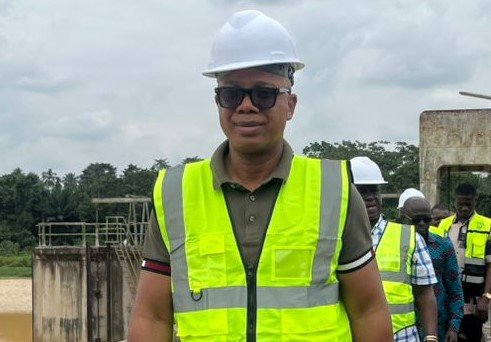
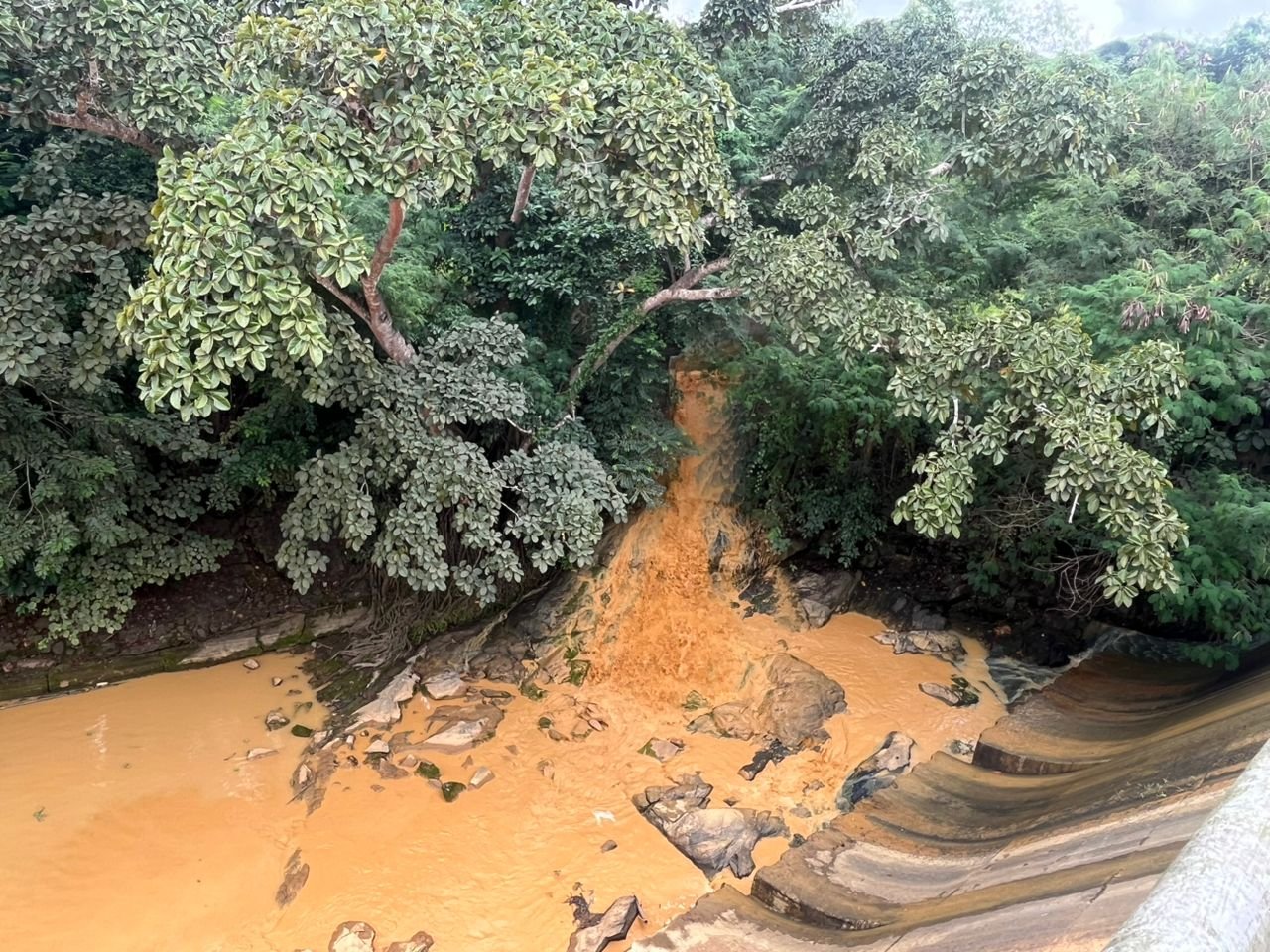
The Kwanyarko Headworks of the Ghana Water Limited (GWL) in the Central Region risk being closed down due to high turbidity levels in the Ayensu River.
Due to the over rising water pollution in the headworks pumping site in the Ayensu River, the turbidity of the water can rise as high as 10 times the threshold the plant’s equipment were designed for.
According to the Acting Managing Director of GWL, Mr Adam Mutawakilu, the Headworks which serves about 30 districts in the region may face imminent operational challenges if urgent measures were not taken.

During a working visit to the Headworks on Monday, he disclosed that turbidity levels in the water had reached dangerous thresholds, far above the plant’s design capacity.


“Last week the turbidity was as high as 32,000 Nephelometric Turbidity Unit (NTU), and today it is about 11,000, yet the plant was designed to operate at just 2,500 NTU. That means even today we are working at nearly five times the acceptable design level,” he explained.
Mr Mutawakilu stressed that high turbidity threatens both the quality of treated water and the longevity of equipment, “If this continues unchecked, the plant may be forced to shut down completely.”
“That would not only be costly but would deprive millions of people in Winneba, Swedru, Kasoa and surrounding areas of water,” he noted.
To forestall such an outcome, the Acting MD revealed that the company was adopting an intermittent production strategy that was producing when turbidity levels drop and shutting down when they spike.
This approach, he emphasised though inconvenient, but was necessary to protect the integrity of equipment and sustain some level of water delivery.
One of the major causes of the rising turbidity, he explained, was illegal mining activity upstream.
Mr Mutawakilu announced that GWL, working with its regional office, would deploy drones to trace the exact sources of pollution.
“We cannot just report that turbidity is high. To be able to back evidence with claims, we will be sending drones upstream to identify the exact locations of illegal mining. Once that is done, we will engage the Minister of Lands and Natural Resources and the Minister of Science and Technology for decisive action,” he said.
He made it clear that without urgent intervention to stop the pollution at its source, operations at the Kwanyarko Headworks could be crippled, affecting water supply to thousands of households and institutions across the region.
Turning to water supply issues in Accra, the Acting MD explained that the recent disruptions were the result of repair works at the Kpone and Weija treatment plants.
He noted that some of the equipment at Kpone dates back to 1965, while parts of Weija still use asbestos pipelines, which were outdated and prone to leakage.
“At Weija, we had a major leakage in one of our huge pipes, while at Dodowa Booster Station some power cables got burnt. These faults had to be fixed immediately. As of today, both Kpone and Weija are working fully, and water production is being ramped up to restore supply to Accra and its environs,” Mr Mutawakilu assured.
On the broader challenges of water supply in Accra, he admitted that demand was higher than the supply.
“The current demand in Accra is about 220 million gallons a day, but our production capacity is just 140 million gallons. This leaves a deficit of about 80 million gallons daily,” he disclosed.
Mr Mutawakilu highlighted ongoing engagements with government to secure new treatment plants and replace aged infrastructure
FROM CECILIA YADA LAGBA, KWANYARKO