How Telecel Foundation is equipping women in agribusiness with digital, financial skills

When Francisca Asiedu first walked into the premises of the Ministry of Agriculture years ago as a budding journalist to cover a group of young agriculture graduates staging a sit-in protest for jobs, little did she know that assignment would change her life forever.
During the interviews with the picketing graduates, she realised how much potential agriculture had and how young people were not being encouraged to see it that way.
“With the deep knowledge of agriculture the protesting graduates had, I thought that they could use it to become farmers and not wait for the ministry to create jobs for them,” Ms Asiedu recalled.
She began advocating online for youth-led agriculture, urging young people to consider farming as a viable career.

Advocacy soon felt insufficient, so she decided to try it herself. Starting with four acres of land from her mother in the Bono Region, she left the media to set up a small farm in the family’s backyard in Sunyani.
Today, that modest beginning has grown into Eco Harvest Farm & Hub, a 25-acre operation involved in crops, livestock and food processing, with plans to expand into mushrooms, snails and eventually export markets.
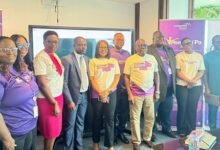
However, growing a modern agricultural business requires digital and financial skills and that motivated her to join more than 230 women working in the agribusiness value chain at a training programme organised by the Telecel Ghana Foundation and Wan-Hive Ghana, a community of female entrepreneurs, in the Bono region.
The two-day workshop in Sunyani brought together farmers, processors, traders and foodstuff retailers from communities across the Bono Region.
There were sessions on online marketing, setting up business pages, using social media to reach new buyers, and adopting financial habits that help small businesses stay afloat.
Participants also learned to use Telecel Cash for safer transactions and record-keeping, with each receiving a SIM card bundled with data, voice and SMS, meant to help them apply what they learned immediately.
Ms Asiedu plans to redesign her online marketing strategy to expand her reach to more buyers outside of the region and use her new skills from the training to support others in the agribusiness value chain.
“I didn’t know how well platforms like Instagram and Pinterest could help with visibility. Now I understand how to position the farm online and attract customers beyond Ghana,” she said.
Rita Agyeiwaa Rockson, Head of Telecel Foundation, Sustainability and External Communications said, “The Bono Region is a major food basket, and women form a large part of that value chain so by equipping them with digital and financial tools, we’re helping them access wider markets, contribute to food security and strengthen their livelihoods.”
At Eco Harvest Hub, Ms Asiedu runs Farm Clubs in schools across Dormaa West.
The clubs introduce students to agriculture through simple activities: planting in containers and learning basic agribusiness concepts through digital tools. Her approach is meant to close the gap between young people and farming, a sector often dismissed as for the uneducated.
BY TIMES REPORTER
Follow Ghanaian Times WhatsApp Channel today. https://whatsapp.com/channel/0029VbAjG7g3gvWajUAEX12Q
🌍 Trusted News. Real Stories. Anytime, Anywhere.
✅ Join our WhatsApp Channel now! https://whatsapp.com/channel/0029VbAjG7g3gvWajUAEX12Q