IMF revises Ghana’s 2026 economic growth to 4.8%
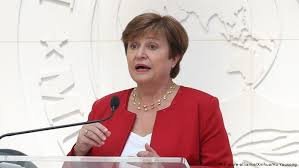
THE International Monetary Fund (IMF) has revised the Ghana’s 2026 economic growth to 4.8 per cent, from an earlier estimate of 4.6 per cent. The marginal increase, it said reflected stronger-than-expected performance under the ongoing IMF-supported programme, as well as sustained fiscal discipline and improving macroeconomic conditions.
According to the IMF’s latest Regional Economic Outlook for sub-Saharan Africa, Ghana was expected to maintain a steady disinflation path, with inflation projected to end 2026 at 7.9 per cent.
The revision of Ghana’s economic growth outlook comes on the back of a remarkable turnaround in 2025, when the economy expanded by an estimated 6.0 per cent, driven largely by robust activity in the non-oil sector and agriculture.
Recent data indicate that inflation, which exceeded 23 per cent in 2024, has declined sharply to single-digit levels, reaching about 3.2 per cent as of March 2026. The easing inflationary pressures have created room for monetary policy adjustments, with the Bank of Ghana beginning a cautious shift towards easing.


The Ghana cedi has also demonstrated significant resilience, appreciating by more than 40 per cent against the US dollar in 2025, with relative stability sustained into the first quarter of 2026. This has contributed to improved investor confidence and a more predictable business environment.
In the area of public finances, the IMF said Ghana had made notable progress, indicating that the country’s debt-to-GDP ratio declined to 45.3 per cent at the end of 2025, surpassing initial restructuring targets. It said improvement in public finances followed successful bilateral debt restructuring agreements, including key arrangements with external creditors.
“Fiscal consolidation efforts have equally yielded results, with the government recording a primary surplus of 2.6 per cent of GDP in 2025, compared to a deficit of 2.9 per cent in the previous year,” the IMF said.
Ghana’s international reserves have also strengthened, providing cover for approximately 5.8 months of imports, thereby enhancing the country’s external buffers.
Despite the strong macroeconomic gains, the IMF cautioned that Ghana’s outlook was still vulnerable to external shocks, particularly in the context of heightened global uncertainty.
It said emerging market and developing economies, including Ghana, were likely to feel the impact more acutely through volatile commodity prices, tighter financial conditions, and elevated borrowing costs.
The IMF further said high cost of living remains a concern for households in Ghana, even as macroeconomic indicators improve, adding that there were also lingering risks related to domestic financing needs and the sustainability of recent gains.
The Fund said there was consensus among international financial institutions was that Ghana was firmly on a path to recovery and continued adherence to prudent fiscal policies, structural reforms, and strengthened institutional frameworks would be critical to sustaining the momentum.
“As global uncertainties persist, maintaining economic resilience while safeguarding social spending will be essential to ensuring that the benefits of recovery are broadly shared,” the IMF stated.
On the global economy, the IMF said the global economy was facing renewed strain following the outbreak of conflict in the Middle East, which was expected to dampen growth and fuel inflationary pressures. It said global growth was projected to slow to 3.1 per cent in 2026 before inching up to 3.2 per cent in 2027.
BY KINGSLEY ASARE
Follow our WhatsApp Channel now! https://whatsapp.com/channel/0029VbAjG7g3gvWajUAEX12Q