India’s Modi woos farmers ahead of election
The governing Bharatiya Janata Party (BJP) has released its election manifesto, which promises a slew of welfare schemes to India’s farmers – a key vote bank in a country where nearly half the population is engaged in agriculture.
A farmers’ income scheme that targeted only small farmers (those who owned up to two hectares of land) has now been expanded to all farmers in the country – they will each now receive 6,000 rupees ($86; £66) yearly.
Small farmers and traders will also now receive a pension from the government; and the party has renewed its earlier promise of doubling farmers’ incomes by 2022.
National security is a major part of the manifesto – India’s home minister Rajnath Singh repeatedly referred to India’s “zero tolerance against terror” while speaking after the manifesto was released.


The document includes other welfare measures, from permanent housing for the poor to piped water in every household to water management and recycling.
It isn’t surprising that the BJP manifesto targets farmers because Indian agriculture, blighted by a depleting water table and declining productivity, is in crisis. And protests by farmers have regularly made headlines in the past five years.
Like the Congress, the BJP has also promised to reserve per cent of seats in the parliament and state legislatures for women. Both parties had committed to this ahead of past elections as well.
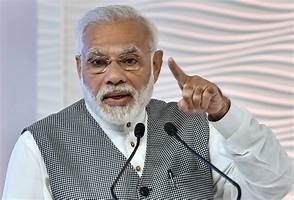
Some have said the manifesto makes no major promises or announcements that will be hard to deliver. Current Prime Minister Narendra Modi, who leads the BJP, is hoping to stay in power.
His biggest challenge is likely to come from Congress and its leader, Rahul Gandhi.
However, Mr Modi faces a second challenge from a consortium of regional parties called the Mahagathbandhan (which translates from the Hindi into massive alliance).
The BJP’s manifesto also underlines some of the party’s core pledges, which are popular with its right-wing supporters. These include cancelling the “special status” granted to Kashmir by the Constitution; and building a Hindu temple at a disputed site where a mosque once stood but was demolished by Hindu mobs in the early 1990s.
–BBC