Informal sector workers pay more taxes – Study reveals
A NEW research has revealed that most traders in the informal economy pay taxes and market fees, with many low-income workers spending a significant share of their earnings on taxes.
The study was commissioned by Women in Informal Employment: Globalising and Organising (WIEGO) on the topic; Improving the Efficiency of Tax and Fee Collection in the Informal Sector.
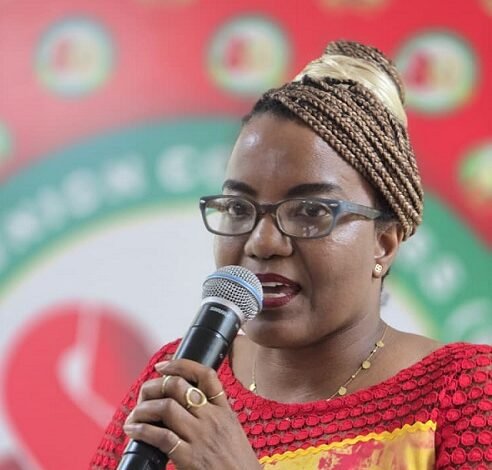
Presenting the research findings at a policy dialogue in Accra yesterday, a representative from the Institute of Statistical, Social and Economic Research (ISSER), Nana Akua Anyidoho, said the survey conducted in 2022 and 2025 showed that informal workers in Ghana contributed to the tax system despite the common belief that they did not.
She explained that the 2022 survey involved different categories of informal workers including home-based workers, street vendors and traders.


“The 2025 survey focused mainly on traders in markets across Accra,” she said.
According to her, the surveys covered large numbers of workers and were carefully designed to produce statistically representative data.
“The important point is that informal workers pay taxes, in many cases, the taxes and fees they pay form a significant part of what they earn,” she said.
Prof. Anyindoho said the research found that about 66 per cent of informal workers in the 2022 survey paid some form of tax or fee.
However, she said when the study focused specifically on market traders; about 95 per cent said they paid taxes, levies or other market-related fees.
“When payments for rent, waste collection and other services were added, the financial burden on traders increased further,” Prof. Anyindoho said.
She explained that study also found wide differences in earnings among informal workers, ‘‘saying in the 2022 survey, some workers earned about GH¢200 a month while others earned close to GH¢4,000″.
Professor Anyidoho said this difference meant tax payments affected lower-income workers more heavily.
“If someone earns GH¢200 and pays GH¢10, it affects them much more than someone earning GH¢4,000 paying the same amount,” she explained.
According to her, traders often struggle to find clear information about how much they were expected to pay, who collected the money and how the funds were used.
“While some traders said they could identify the officials collecting the fees, far fewer believed there was enough transparency regarding how the revenue is spent,” she said.
Professor Anyidoho noted that many traders indicated they would be more willing to pay taxes if they could clearly see the benefits.
“If people understand what is being collected and how it is used, and if they see improvements in services in the markets, they will be more willing to pay,” she said.
To improve the system, she suggested increasing the minimum tax threshold so that workers earning very low incomes were not taxed.
Prof. Anyidoho recommended improving transparency and information sharing, as well as strengthening coordination between the Ghana Revenue Authority and local assemblies responsible for collecting market levies.
Speaking at the event, the Country Representative of WIEGO, Dorcas Ako Mensah said the dialogue was meant to create a platform for collaboration between workers, researchers and policymakers.
She expressed hope that the discussions would lead to practical steps to improve livelihoods while strengthening Ghana’s tax collection system.
BY AGNES OPOKU SARPONG
Join our WhatsApp Channel now! https://whatsapp.com/channel/0029VbAjG7g3gvWajUAEX12Q
Follow our WhatsApp Channel now! https://whatsapp.com/channel/0029VbAjG7g3gvWajUAEX12Q