Let’s collectively tackle regional challenges – Ahmed Ibrahim
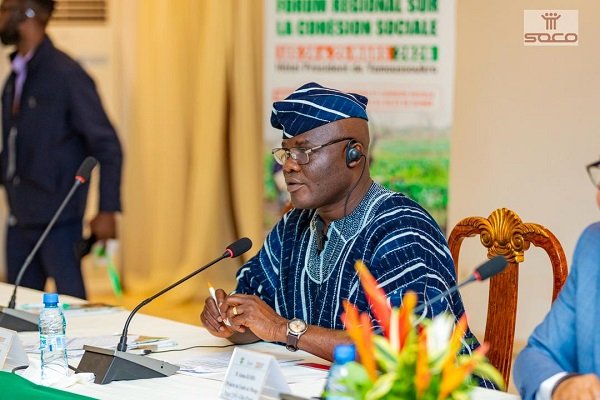
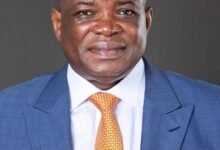
The Minister for Local Government, Chieftaincy and Religious Affairs, Ahmed Ibrahim, has underscored the urgency of collective action in tackling shared regional challenges, including insecurity, climate change, and limited economic opportunities in border communities.
According to him, development and security are inseparable, noting that vulnerable communities, particularly in northern Ghana and across the Sahel, face increasing pressure from climate variability, cross-border migration, and extremist threats.
He said the recent attack on Ghanaian tomato traders travelling to Burkina Faso in search of livelihood opportunities by terrorists highlights the need for cross-border cooperation to tame what has become a canker creeping slowly across the region.
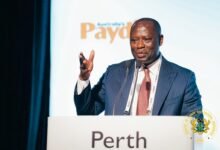
“Their experience serves as a reminder that if insecurity in one country is not contained, it reverberates across borders, affecting communities whose lives depend on movement and trade. No nation can confront these risks alone. Our collective safety rests on cooperation, shared responsibility, and coordinated regional action,” Mr Ibrahim said at the ongoing Gulf of Guinea Northern Regions Social Cohesion (SOCO) Conference in Abidjan, Côte d’Ivoire.

The SOCO project is a multi-country initiative (Ghana, Benin, Côte d’Ivoire, and Togo) designed to prevent conflict spillover from the Sahel by strengthening social and economic resilience in border-zone communities.
The Minister said with many young people facing limited employment opportunities, where livelihoods have become uncertain and hope fragile, extremist groups find space to recruit and influence vulnerable youths.
“Addressing insecurity, therefore, goes beyond security operations. It requires investment in people, jobs,” he stressed.
He reported that over 1.5 million people across 48 districts in six regions of the north have benefited from the SOCO project. The project, he said, has delivered nearly 950 infrastructure subprojects, including schools, health facilities, water systems, and climate resilience initiatives.
Mr Ibrahim added that Ghana’s Local Economic Development interventions have supported over 46,000 beneficiaries through more than 1,500 community groups, nearly 80 per cent of whom are women and youth engaged in agriculture and small-scale enterprises.
The Minister pointed out that such investments are already yielding results by improving livelihoods, strengthening trust in local governance, and reducing vulnerability to extremist influence.
BY JULIUS YAO PETETSI
Follow our WhatsApp Channel now! https://whatsapp.com/channel/0029VbAjG7g3gvWajUAEX12Q
Follow our WhatsApp Channel now! https://whatsapp.com/channel/0029VbAjG7g3gvWajUAEX12Q