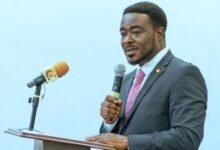
Pres Mahama rallies continental support for reparative Justice , development
The President, Mr John Dramani Mahama has called on Africans on the continent and people of African descent across the world to unite around a shared agenda of reparative justice, narrative reclamation and collective development.
He urged them to be more deliberate about unity than historical forces were about division.
Speaking at the recent Diaspora Summit 2025 in Accra , President Mahama said Africa had reached a defining moment where it could no longer allow distorted narratives and historical amnesia to undermine its future.
The two-day summit, held under the theme “Resetting Ghana: The Diaspora as the 17th Region,” seeks to reposition the African diaspora as a central stakeholder in the national development while advancing the global reparations discourse.


The President said false narratives that once justified slavery, colonialism and systemic exploitation had lost their power and must now be confronted and dismantled.
He urged Africans and the diaspora to deliberately reverse the structures and strategies that were historically used to divide them, stressing that unity remained Africa’s strongest tool for transformation.
President Mahama said Africans forcibly taken into the diaspora had always sought ways to reconnect with the continent, preserving African identity through culture, music and resistance.
He paid tribute to leading Pan-Africanists, including Marcus Garvey and Ghana’s first President, Dr Kwame Nkrumah, whose vision cemented Ghana’s Black Star as a global symbol of African unity and self-determination.
Reaffirming the country’s leadership on reparative justice, President Mahama announced his intention to table a motion at the United Nations General Assembly next year to recognise the transatlantic slave trade as the greatest crime against humanity.
He said such recognition was critical to securing global accountability and advancing reparations for centuries of exploitation.
According to him, reparations must go beyond symbolism and include concrete measures such as debt cancellation, monetary compensation, the return of stolen cultural artefacts, institutional reform and transformative changes within the global economic system.
Africa, he said, could not afford the “luxury of forgetting” the bloodshed, lives lost and years sacrificed in the struggle for freedom, particularly at a time when racist rhetoric and dehumanising language against Africans persisted in global discourse.
President Mahama noted that Ghana’s forts and castles stood as painful reminders of a shared history linking the continent and its diaspora.
He said divisions along colonial borders, ethnicity and geography were deliberately engineered to sustain domination and must now be consciously dismantled.
The President of the Council of Ministers of Togo, Mr Faure Gnassingbé, described reparations as a forward-looking demand essential to Africa’s development and global stability.
He said slavery and colonisation structured today’s global inequalities by creating productivity gaps, trade imbalances and institutional weaknesses that continued to disadvantage Africa.
Mr Gnassingbé called for concrete actions, including debt cancellation, multilateral funds for education and innovation, and new legal commitments at the United Nations to translate historical memory into law and progress.
He underscored the strategic importance of the diaspora, describing it as a critical lever for Africa’s sovereignty and long-term growth.
African Union High Representative for Silencing the Guns, Dr Mohamed Ibn Chambas, said President Mahama’s leadership had helped elevate reparations from moral advocacy to a structured continental agenda embedded within the AU’s Agenda 2063 framework.
He said meaningful engagement with the diaspora was essential to unlocking Africa’s trade, innovation and development potential.
The Minister for Foreign Affairs, Mr Samuel Okudzeto Ablakwa, said the country’s recognition of the diaspora as the 17th Region was a practical expression of Pan-Africanism, aimed at moving reparations from symbolism to coordinated global action through diplomacy and policy reforms.
U.S. civil rights attorney, Mr Benjamin Crump, said the summit signalled that Africa and its diaspora were no longer waiting for justice but organising collectively to claim it.
BY CECILIA YADA LAGBA