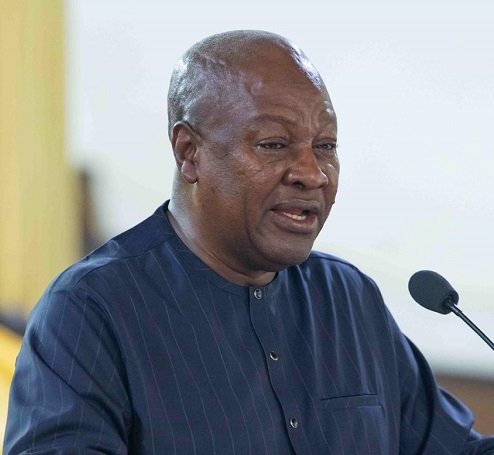
Ghana yesterday marked Constitution Day in commemoration of the establishment of the Fourth Republican Constitution, popularly known as the 1992 Constitution, which came into effect on January 7, 1993, as well as the first year of President John Mahama in office.
The Ghanaian Times sampled public opinions on how far the country has come and the way forward. After several years of constitutional governance, many believe the country has made significant progress, although more remains to be done.
The Communications Officer of Green African Youth Organisation (GAYO), Mr Collins Kumi Yeboah, acknowledged that Ghana has made notable progress in upholding the rule of law as enshrined in the constitution, but stressed that there is still room for improvement. He noted that while constitutional principles continue to guide governance and democratic practice, deeper public engagement is required to support national development.
Another citizen, Ms Jasmine Adjei, emphasised the need for sustained civic education to enhance public understanding of the constitution. According to her, an informed citizenry is better positioned to demand accountability, defend democratic values and contribute meaningfully to national progress.


On his part, the Director of Public Affairs of the University for Development Studies (UDS), Mr Abdul Hayi Moomen, said the first year of President John Dramani Mahama’s administration has been marked by a return to calm, measured governance and a reassuring sense of direction.
“One of the most impressive developments within this period has been the relative stability of the cedi against major international currencies, particularly the US dollar. In a global economic environment still fraught with uncertainty, this steadiness has restored a degree of confidence among businesses, investors and ordinary citizens,” he noted.
He, however, expressed concern about the persistent non-payment of contractors who have been owed for several years, some even predating the current administration.
“While the fiscal constraints inherited by the government are well acknowledged, the continued delay in settling these arrears is troubling. Paying contractors would inject much-needed liquidity into the economy, revive stalled projects, safeguard jobs and restore confidence in government commitments,” he stated.
On employment, Mr Moomen indicated expectations in that area have not yet been met, adding that many young people continue to struggle to find decent and sustainable work, fuelling frustration and uncertainty about the future.
A Catholic Priest in Tamale, Very Rev. Fr. Thaddeus Kuusah, commended the President for what he described as “massive economic growth seen in the stability of the Ghana cedi and drop in inflation which has positively affected the price of petroleum products.” He noted that there were also improvements in peace and stability of the country as a result of good governance and economic growth, praying that these gains would eventually lead to a better quality of life for citizens.
From Ho, the Volta Regional capital, residents of the Ho Municipality lauded the growth of democracy and the role of the constitution in promoting democratic practices. They, however, noted that more needed to be done for Ghanaians to fully benefit from constitutional governance.
A businesswoman, Mrs Victoria Normesi, called for a review of certain provisions of the constitution to ensure it continues to serve the best interests of citizens. She argued that some portions were outdated and needed amendment to reflect current societal realities. She particularly stressed the need for tougher sanctions against persons who misappropriate state resources, saying political interference in such prosecutions undermined accountability.
Mrs Normesi said: “I am not a lawyer, but I think the portions in our criminal code in the constitution which stressed on stealing and subsequent punishment should be changed with the type of punishment since the word stealing covered all manners of thieves, including those in the offices, and people who steal plantain and orange.”
The Volta Regional Director of the National Commission for Civic Education (NCCE), Mr Kenneth Kponor, underlined that the constitution had greatly supported democratic practice in the Fourth Republic, but emphasised that more work must be done. “We all have a role to play in advancing constitutional development,” he added, calling for a collective national effort to deepen democracy and strengthen constitutional rule.
A retired civil servant, Mr Eric Agbanu, commended constitutional democracy for helping maintain peace in the country, but expressed concern over electoral-related violence recorded in some elections. He urged government and relevant institutions to work to prevent such incidents to uphold the true values of democracy.
The Editor of the Ghanaian Chronicle, Mr Emmanuel Akli, said the one year of President Mahama’s governance has been laudable.
“We have all enjoyed the period with inflation going down, exchange rate also gone down, including the abolition of some taxes which were considered not necessary. We hope this should continue under President Mahama and pray that after we are done with the International Monetary Fund (IMF) conditionality, the government through the good policies it has started would prevent us from going back to the IMF,” he outlined.
Sharing his perspective with The Ghanaian Times, a Lecturer at the School of Public Health, University for Development Studies, Dr Abdul Karim Mohammed said it was difficult to appreciate the rationale behind the holiday given the already significant number of public holidays in the country.
Touching on the constitutional review process, Dr Mohammed stated that there was widespread agreement that the 1992 Constitution no longer fully reflected the nation’s current governance aspirations. He acknowledged that most recommendations from the review process appeared reasonable, though some generated public concern.
He welcomed plans for further engagement, stressing the need for broader public debate to help citizens understand how the recommendations were developed and assess their relevance. “Granting the public another opportunity to scrutinise and debate the proposals would help build consensus. Transparency is critical to sustaining public confidence,” he concluded.
🔗 Follow Ghanaian Times WhatsApp Channel today. https://whatsapp.com/channel/0029VbAjG7g3gvWajUAEX12Q
🌍 Trusted News. Real Stories. Anytime, Anywhere.
✅ Join our WhatsApp Channel now! https://whatsapp.com/channel/0029VbAjG7g3gvWajUAEX12Q