Strengthening Ghana’s Food Systems: AGRA Calls on Media to Amplify Agricultural Priorities
The media has been urged to play a more active role in amplifying the voices and priorities of Ghana’s agri-food sector to drive investment, support smallholder farmers, and shape inclusive policies.
Director for Communications, External Engagement, Innovations and Advocacy at AGRA, Agnes Asiimwe Konde, said food and agriculture must become central in national conversations if Ghana is to build a resilient and food-secure future.
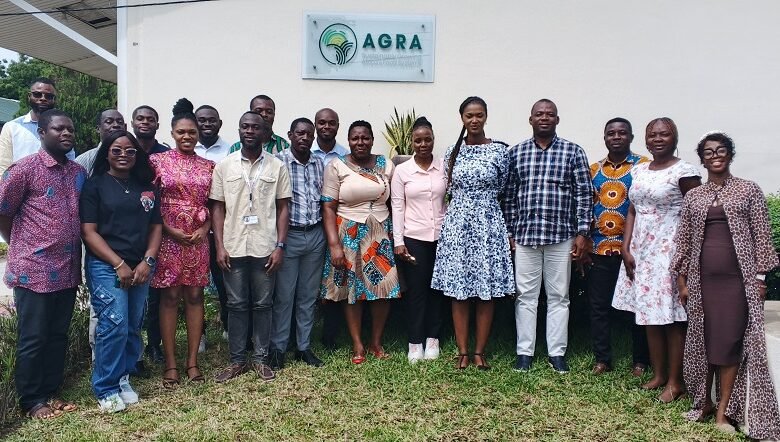
She made the call during a dialogue on Africa’s food systems, held in Accra on Thursday and organised by AGRA, which brought together journalists from various media houses to explore strategies for building resilient, inclusive, and sustainable food systems, and to examine the media’s role in promoting transformation within Ghana’s agri-food sector.
“We need to ensure inclusive policies are being implemented and that smallholder farmers are meaningfully supported,” she said, noting that agriculture rarely dominates headlines despite its critical role in national development.


“How many times do we see agri-food system stories as headline stories in our newspapers, on radio, or on TV?” she asked. “Food is one of the biggest political conversations. Without nourished people, we won’t have the smart brains to innovate and create solutions for the continent.”
Ms Konde also stressed the importance of increasing investment in agriculture, referencing the Comprehensive Africa Agriculture Development Programme (CAADP), which urges countries to commit at least 10 percent of their budgets to the sector. She noted that Ghana currently allocates less than 3 percent.
“There’s a need to attract private sector players to invest in value addition and innovation so that we can feed ourselves with food grown locally and reduce our import bill,” she added.
Ms Konde clarified that AGRA does not formulate policies but supports governments in designing inclusive ones. She urged the media to track policy implementation and hold authorities accountable.
According to AGRA’s Programme Officer, Bashiru Musah Dokurugu, the organisation is now focused on connecting production to markets through digital platforms and partnerships that link farmers to aggregators and processors.
He explained that AGRA’s work has evolved through three strategic phases: Strategy 1.0 focused on research and seed development; Strategy 2.0 on linking farmers to inputs, finance, and markets; and Strategy 3.0 underway since 2022, emphasises value addition.
He said AGRA has trained over 5,000 Village-Based Advisors (VBAs), reducing the extension ratio from 1:1,200 to 1:760, though still far from the ideal 1:150.
Mr Dokurugu added that AGRA is also placing emphasis on youth and women by supporting initiatives that improve access to finance, skills training, and business development opportunities, especially in agro-processing and agritech sectors.
He further noted AGRA’s growing investment in climate-smart agriculture, which promotes sustainable practices such as drought-resistant seeds, soil health management, and water-efficient technologies to help farmers adapt to changing weather patterns and environmental stress.
He suggested creating a media-accessible database of agricultural experts to help improve coverage and public understanding of food systems.
BY STEPHANIE BIRIKORANG