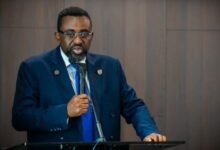
Stronger revenue mobilisation, fiscal discipline needed to sustain gains —Deloitte Ghana

Accounting and auditing firm, Deloitte Ghana has stated that while the Mid-Year Budget and Economic Policy offers optimism regarding a favorable economic outlook, there remain significant areas that necessitate the government’s focus to enhance revenue generation and sustain the initial indicators of growth.
According to Deloitte Ghana, there was the need for the government to intensify domestic revenue mobilisation in order to reduce reliance on borrowing and help bring the public debt under control.
Deloitte Ghana stated this in its analysis of the Mid-Year Budget Review presented to Parliament by the Minister for Finance, Dr Cassiel Ato Baah Forson.
“Despite the strong performance in Non-Oil Tax Revenue, Corporate Income Tax, and Mineral Royalties, the underperformance in grants, petroleum receipts, and import duties presents risks to achieving the 2025 revenue targets,” it said.


The firm explained that the appreciation of the Ghana Cedi, while favourable for price stability, had adversely affected revenue performance in areas such as petroleum receipts and import duties, since those areas were dollar-denominated.
“The Government should either match revenue losses with a commensurate reduction in expenditure or introduce other revenue-enhancing measures to counter the impact of such losses to ensure we consolidate the fiscal gains recorded in half year 2025,” Deloitte Ghana said.
Commenting on economic growth, the firm stated that Ghana’s Gross Domestic Product growth of 5.3 per cent in the first quarter of 2025, which exceeded both the first quarter 2024 growth rate of 4.9 per cent and the 2025 annual target of 4.0 per cent, signaled strong momentum.
It attributed the performance largely to the industry sector, which expanded by 6.8 per cent, and said the figures showed that previous investments in the sector were beginning to yield results.
Deloitte Ghana said initiatives such as the 24-Hour Economy Programme could play a vital role in fostering a conducive business environment to drive private sector participation and promote inclusive, sustainable growth.
“Going forward, we expect policies like the 24-Hour Economy Programme to be key in creating an environment which will enable the Government to work with the private sector to achieve sustainable economic growth with tangible benefits for Ghanaians,” it said.
The report also pointed to signs of fiscal consolidation, with expenditure performance indicating progress in cost efficiency and waste reduction.
Deloitte Ghana urged the government to prioritise public financial management reforms, including strict enforcement of fiscal rules under the Public Financial Management Act across Ministries, Departments and Agencies.
It also lauded the decision of the government to audit and validate existing arrears before disbursement, noting that this had resulted in 61 per cent savings on capital expenditure for the first half of the year.
Deloitte Ghana, however, encouraged the government to accelerate reviews and disbursements to prevent project delays, abandonment by contractors, and potential loss of value through theft or deterioration.
- Mr Nartey (middle) with other dignitaries at the ceremony
- BY KINGSLEY ASARE