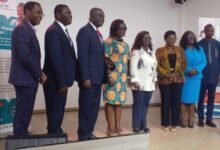
The Director-General of the Inter-Governmental Action Group against Money Laundering in West Africa (GIABA), Mr Edwin W. Harris Jnr, says money laundering, drug trafficking and smuggling continue to impact negatively on the development and governance in West Africa.
The menace, he said, was distorting the region’s macroeconomy and undermining investments needed to develop the region.
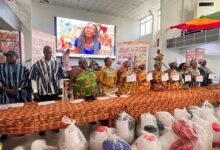
Mr Harris Jnr stated this in Accra yesterday during a two-day international conference organised by GIABA to discuss measures to combat money laundering and drug trafficking in West Africa.

He said the threat posed by transnational crimes extended beyond economic disruption, noting that it had also fuelled insecurity and youth unemployment.


“It also continues to impact on regional and national securities with mass youth unemployment in the states,” he emphasised.
The seminar dubbed “The role of resident representatives in fostering organised Anti Money Laundering /Combating Financial and Transnational compliance in ECOWAS Member States” was organised by GIABA.
Addressing the opening session, Mr Harris said the sub-region could not afford to ignore the growing threat of financial crimes, which hinder social service delivery and overall development.
“There is an undeniable fact that the pressure for transnational crimes continues to prevent basic social services that are critical to making a more functional and wholesome society,” he stated. “Hence, it becomes more pressing that everyone, including you, our distinguished participants found partnership not only with GIABA, but with all stakeholders in fighting this crime.”
Outlining the reforms undertaken since assuming office in 2022, Mr Harris explained that GIABA had undergone significant transformation after being placed under the Financial Action Taskforce Effectiveness Improvement Programme.
Mr Harris also highlighted achievements such as the removal of two member states, Senegal and Mali, from the FATF grey list, and the improved representation of member countries within GIABA’s staff structure.
The Minister of Foreign Affairs, Mr Samuel Okudzeto Ablakwa, in a speech read on his behalf, said financial crimes had a real and devastating impact on the sub-region.
“They are not abstract technical challenges. They weaken public institutions, distort economies and fuel insecurity across borders,” he said.
He reaffirmed Ghana’s commitment to global anti-money laundering standards, saying, “Through the work of the Financial Intelligence Centre and key partner institutions, we have made notable progress in aligning national frameworks with global Anti Money Laundering ML/Combating Financial and Transnational norms.”
He described the seminar as an important step in equipping stakeholders with knowledge and tools to support GIABA’s mandate and called for deeper cooperation.
“I encourage all of us to approach the next two days with openness, collaboration, and resolve,” he added.
The Chief Executive Officer of the Financial Intelligence Centre, Albert K. Boafo, urged GIABA to use its influence and expertise to help promote anti-money laundering and reforms in the region.
He lauded GIABA for the immense role it was playing to build capacity on anti-money laundering and terrorism in the region.
BY KINGSLEY ASARE