The forgotten cousin: Why Ghana must stop neglecting its Prisons Service
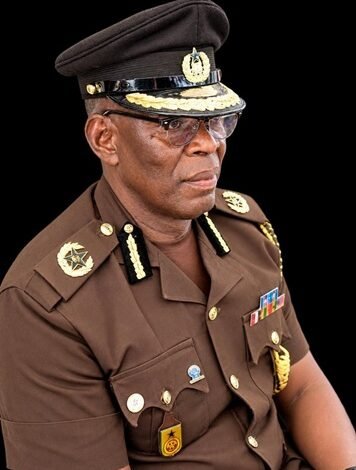
President Mahama and the Interior Minister must turn years of neglect into a new era of correctional reform.
There is a troubling contradiction at the heart of Ghana’s national security architecture. While governments invest in institutions responsible for defending our borders, maintaining public order and combating crime, another essential security institution continues to face concerns about infrastructure, logistics, staffing, personnel welfare and working conditions.
That institution is the Ghana Prisons Service, which for decades has appeared to be the forgotten cousin of Ghana’s security services: indispensable to the administration of justice and public safety, yet insufficiently prioritised in national discussions about security investment and reform.
The recent appearance of the Director-General of the Ghana Prisons Service, Mrs Patience Baffoe-Bonnie, before Parliament’s Public Accounts Committee (PAC) has brought these concerns into sharp focus. Her emotional description of the working environment as “hell” and her warning about the psychological difficulties facing correctional officers should not be dismissed as routine administrative complaints. They should serve as a wake-up call to government, Parliament and the public.
How long must the Service perform its critical national duty without the resources, attention and institutional support it needs?
National security does not end at the prison gate
Public discussion of national security often focuses on the Ghana Armed Forces, the Ghana Police Service and the Ghana Immigration Service. Their personnel deserve the resources, training, remuneration and welfare support required to perform their duties. But national security does not end with an arrest or conviction.
It extends into prisons, where the state must maintain lawful custody, prevent escapes, preserve order, protect lives and create opportunities for rehabilitation. Correctional officers work in demanding environments where tensions can escalate, violence can erupt, infectious diseases can spread and security lapses can have serious consequences for the wider public. Their work requires vigilance, discipline and psychological resilience.
Yet the Service continues to face concerns involving overcrowding, infrastructure, logistics, staffing, healthcare and personnel welfare. Ghana must support all its security services and ensure that one essential institution is not neglected at the expense of another.
The Prisons Service is not an optional appendage of the criminal justice system. It is one of its central pillars. Weakening it through neglect ultimately weakens the entire system.
Who cares for the people who guard our prisons?
One of the most distressing aspects of the Director-General’s appeal is the concern about depression and the psychological wellbeing of correctional officers.
Behind every prison uniform is a person with a family, financial obligations and a need to live with dignity. Officers must remain alert, manage difficult situations and maintain order, even when physically exhausted or emotionally distressed.
Do officers experiencing psychological difficulties have access to confidential counselling? Are the effects of prolonged stress assessed, and do compensation and healthcare reflect the risks of their work?
The psychological wellbeing of correctional officers must not be treated as a private problem for individuals to manage in silence. It is an occupational health concern that requires institutional attention.
Mental health support is not simply an act of compassion; it is an investment in operational effectiveness, institutional stability and public safety.
Risky duties require fair compensation and protection
Correctional officers face risks including assault, infectious diseases and psychological trauma. These hazards demand protective equipment, dependable healthcare, insurance and fair compensation.
The Ghana Prisons Service must no longer be the forgotten cousin of Ghana’s security services.
Where risk allowances or welfare arrangements fail to reflect the demands of correctional work, government should undertake a comprehensive review and make necessary adjustments. Government should review remuneration, risk allowances, accommodation, medical care, insurance, career progression and retirement security. This is a call for fairness, not preferential treatment.
If Ghana expects correctional officers to protect society, the state must also accept responsibility for protecting them.
Successive governments cannot escape responsibility
The Service’s challenges reflect longstanding institutional and resource constraints. Successive governments share responsibility for addressing them. While no single administration can be blamed for every problem, none should allow them to persist without a credible improvement plan.
The state’s responsibility to maintain secure, humane and professionally managed prisons remains constant. Promises to improve conditions or address overcrowding and logistical difficulties must be backed by measurable targets.
Ghana needs a sustained correctional reform programme backed by adequate funding, clear timelines and transparent accountability. Such a programme must recognise that prison security, personnel welfare, inmate rehabilitation and public safety are interconnected.
President Mahama must make correctional reform a priority
President John Dramani Mahama and the Minister for the Interior have an opportunity to address this longstanding national challenge and demonstrate that the welfare of correctional officers matters to the state.
The Director-General’s appeal should trigger a comprehensive assessment of the Service’s operational needs, infrastructure, staffing, funding and welfare arrangements.
The reform programme must be properly costed and measurable.
First, government should review conditions of service, including remuneration, risk arrangements, healthcare, accommodation, insurance and retirement security.
Second, mental health support must be institutionalised. Confidential counselling, professional psychological services and preventive occupational health programmes should be accessible to officers exposed to prolonged workplace stress.
Third, existing prisons must be maintained and rehabilitated, with new facilities developed where operational needs, security and population pressures justify them.
Fourth, logistics and staffing must be strengthened. Officers need appropriate protective equipment, reliable communication systems, adequate staffing and continuous professional training.
Fifth, rehabilitation programmes require adequate funding. Vocational training, education, agriculture and other productive activities can equip inmates with useful skills and improve their prospects of reintegration into society.
Finally, Parliament must ensure that funding produces visible improvements and that progress is transparent. The Interior Minister should lead the development and implementation of a credible plan with the Finance Ministry, Parliament, the Service and other stakeholders.
President Mahama’s administration should make correctional reform a measurable part of its national security and public sector reform agenda.
You cannot reform prisons by neglecting prison officers
Ghana’s prisons must do more than confine offenders. They must maintain security, uphold the law, protect human dignity, support rehabilitation and reduce the likelihood of reoffending. These objectives cannot be achieved sustainably if the officers responsible for delivering them are neglected.
Prisons cannot become effective centres of rehabilitation when personnel lack support or work in conditions that undermine morale, health and effectiveness.
The welfare of inmates and correctional officers should not be presented as competing interests. Both are essential to a secure, lawful and effective correctional system. Prisoners’ rights and dignity must be protected, while officers work in safe and professionally supportive conditions.
The forgotten cousin must no longer be forgotten
Calling the Ghana Prisons Service the forgotten cousin of the country’s security services may sound harsh, but it captures a concern that can no longer be ignored. An institution entrusted with public safety, lawful custody and the administration of justice cannot remain an afterthought in national policy.
Correctional officers are no less important because they work behind prison walls and receive less public attention. They serve the state under demanding conditions and deserve resources, fair compensation, protection and respect.
President Mahama, the Interior Minister, Parliament and all relevant stakeholders must turn concern into concrete action.
Ghana cannot credibly claim to be strengthening national security while allowing one of its essential security institutions to struggle for the resources and welfare support required to fulfil its mandate. Correctional officers deserve more than applause: they deserve the tools to work, support to remain healthy, compensation to live with dignity and the institutional respect their service demands.
Behind every prison wall is not only an inmate serving a sentence, but also an officer serving the nation. The time has come to replace neglect with investment, promises with measurable results, and sympathy with decisive action.
The Ghana Prisons Service must no longer be the forgotten cousin of Ghana’s security services. Our correctional officers deserve better. Our national security demands it. And Ghana must act.
BY ADP VITALIS AIYEH
The writer is a senior correctional administration professional.
SKIP THE QUEUE, TAP THE NEWS

Read the Ghanaian Times and The Spectator newspapers from the comfort of your device via TimesNewsPlus.
Follow our WhatsApp Channel now! https://whatsapp.com/channel/0029VbAjG7g3gvWajUAEX12Q