Veep calls for greater political inclusion in West Africa
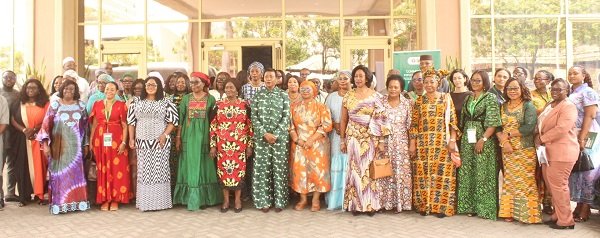
THE Vice President, Prof. Nana Jane Opoku-Agyemang, has noted that the future stability and development of West Africa depend on the meaningful inclusion of women and young people in political leadership and decision-making. Consequently, she warned that their continued exclusion would undermine democratic consolidation and sustainable development.
The Vice President made these remarks at the closing of a four-day high-level ministerial meeting of ECOWAS in Accra on Friday. She stated that despite strong regional commitments to democracy and gender equality, women and young people remain disproportionately underrepresented in political leadership across the sub-region, particularly at national and local levels, creating a gap between policy commitments and reality.
She stressed that inclusive governance is no longer optional but essential for harnessing the full potential of West Africa’s human capital.
The Vice President highlighted Ghana’s deliberate efforts to address the imbalance through legal and institutional reforms, notably the passage of the Affirmative Action Act aimed at promoting women’s leadership in public life. She noted that the law had contributed to increased representation of women in ministerial, parliamentary, judicial, and local government positions.

Professor Opoku-Agyemang emphasised that gender equity under the current administration is a practical governance priority rather than a symbolic gesture, stressing that institutions perform better when leadership reflects the diversity of the society they serve.
On youth participation, she pointed to initiatives by the Ministry of Youth Development and the National Youth Authority that created platforms for young people to engage in policy dialogue, civic education, and local governance, enabling them to contribute meaningfully to national development.
While acknowledging persistent challenges, the Vice President called for accelerated action and closer cooperation among West African states, noting that there is no one-size-fits-all model for inclusion.
On her part, the Vice President of the ECOWAS Commission, Mrs Damtien Tchintchibidja, called for deliberate action to translate political commitments on gender equality into practical and inclusive governance. She stressed that lasting parity could only be achieved by addressing the structural barriers that continue to limit women’s participation in political leadership across the region.
Mrs Tchintchibidja explained that the Legacy Parity Initiative was conceived as a long-term, systemic intervention rather than a short-term response. The initiative seeks to institutionalise inclusion by aligning high-level political will with concrete mechanisms that ensure sustained results within democratic systems.
The Vice President explained that the initiative is anchored on a presidential political declaration and reinforced by jointly developed regional guidelines. She noted that it strengthened the entire ecosystem influencing women’s access to leadership, including legal and electoral reforms, leadership preparation, equitable access to resources, and effective monitoring and evaluation frameworks, alongside sustained efforts to address sociocultural barriers.
She described the approach as comprehensive and forward-looking, aimed at embedding inclusion within the architecture of governance rather than treating it as an optional policy objective.
BY CLIFF EKUFUL
Follow Ghanaian Times WhatsApp Channel today. https://whatsapp.com/channel/0029VbAjG7g3gvWajUAEX12Q
Trusted News. Real Stories. Anytime, Anywhere.
Join our WhatsApp Channel now! https://whatsapp.com/channel/0029VbAjG7g3gvWajUAEX12Q