When the protectors become suspects: Rising concern over criminal conduct among security personnel
The arrest and interdiction of Police Inspector Bright Appiah Dankwah over his alleged involvement in robbery attacks on mobile money vendors in Kumasi has once again drawn national attention to a worrying issue confronting Ghana’s security services, the alleged involvement of some law enforcement officers in criminal activities.
For many citizens, the development represented more than another criminal case. It raised difficult questions about trust, accountability, and professionalism within institutions tasked with protecting lives and property.
Security personnel are expected to uphold the law, maintain order, and serve as examples of discipline and integrity. Their training, authority, and responsibilities place them in positions that demand a higher standard of conduct. Consequently, when officers themselves become suspects in criminal cases, public confidence in the justice system suffers a significant blow.
Inspector Dankwah, who was stationed at the Asuoyeboah Police Station in the Ashanti Region, was arrested following intelligence-led operations by the Ashanti Regional Anti Robbery Unit. According to the police, a search at his residences led to the retrieval of a gas pistol, ammunition, and cash amounting to GH¢9,835.00.

The officer was later arraigned before the Atasemanso Circuit Court and remanded into police custody pending further investigations into the alleged robbery attacks on mobile money vendors in Kumasi.
The case generated widespread concern partly because mobile money vendors have increasingly become targets of violent robberies across the country. Many operators work under vulnerable conditions, often carrying large sums of cash with limited security protection. The suggestion that a serving police officer could allegedly be linked to such attacks intensified public anxiety.
Unfortunately, this is not the first time security personnel in Ghana have been implicated in criminal activities.
Over the years, several security personnel including police officers, soldiers, and individuals posing as security operatives have been implicated in criminal activities ranging from robbery and extortion to corruption and illegal mining related offences.
In one widely reported incident, two police constables, General Lance Corporals Philemon Agbevem and Peter Kwame Badagbor, both stationed at the Accra Central District Police Command were remanded by an Accra Circuit Court for allegedly robbing an Okada rider of GH¢3,700.
Prosecutors alleged that the officers handcuffed and assaulted the victim before forcing him to transfer money from his mobile money account.
Another case involved a military officer, Corporal Bernard Bortey and seven others who were arraigned before court over an alleged fuel tanker robbery and siphoning operation. Prosecutors claimed the suspects hijacked a tanker transporting diesel from Tema to Kumasi, restrained the driver and his mate, and attempted to siphon the fuel for sale.
There have also been incidents where suspected soldiers allegedly joined robbery gangs or used military identities to intimidate civilians and carry out criminal acts.
Beyond robbery related offences, allegations of security personnel protecting illegal mining activities, popularly known as galamsey, have also persisted over the years.
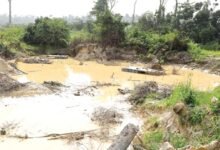
Illegal mining remains one of Ghana’s biggest environmental and security challenges, contributing to the destruction of forests, pollution of water bodies, and loss of farmlands. Successive governments have deployed police and military personnel to clamp down on the menace through various anti-galamsey operations.
Yet despite repeated crackdowns, reports of security officers allegedly colluding with illegal miners continue to surface.
During the operations of Operation Vanguard, a joint military police anti- galamsey task force established in 2017, allegations emerged that some officers deployed to fight illegal mining were instead receiving money to protect operators or selectively enforce the law.
In 2021, the Ghana Armed Forces confirmed that it had launched investigations into claims that some soldiers were providing protection for illegal mining activities. The allegations suggested that certain officers deployed to combat galamsey had compromised their duties by shielding miners from arrest or interference.
A later report by the Global Initiative Against Transnational Organised Crime also alleged that some police officers, customs officials, political actors, and traditional authorities were involved in corrupt arrangements linked to illegal mining activities.
According to the report, some illegal mining sites allegedly escaped security raids because operators paid bribes or had connections with influential individuals.
Anti-galamsey campaigners and civil society groups have repeatedly argued that the continued survival of illegal mining despite heavy security deployments points to insider protection networks involving some rogue officers.
For many observers, these allegations are particularly disturbing because security personnel are expected to defend national interests, not facilitate activities that threaten public safety and the environment.
Security analysts say the involvement of some officers in criminal activities raises broader concerns about ethics, accountability, and institutional discipline within the security services.
Some experts attribute the problem partly to weak internal monitoring systems, abuse of power, corruption, poor welfare conditions, and inadequate psychological evaluations during recruitment and service.
Others argue that easy access to weapons, intelligence, and operational information may embolden certain officers to engage in criminal activities.
However, analysts insist that no economic hardship or institutional challenge can justify criminal conduct by officers trained to enforce the law.
Public confidence in law enforcement institutions largely depends on the integrity of personnel. Citizens are more willing to cooperate with police investigations, share intelligence, and support crime fighting efforts when they trust the officers responsible for maintaining order.
When officers are implicated in criminal conduct, however, that trust becomes severely damaged.
For victims, the betrayal is often deeper because the alleged perpetrators are individuals they are expected to rely on for protection.
Although the Ghana Police Service and the Ghana Armed Forces have consistently maintained that they do not shield officers found culpable of wrongdoing, many Ghanaians believe stronger preventive measures are needed.
Some citizens are calling for stricter vetting processes during recruitment into the security services, arguing that background checks and psychological assessments should be strengthened to identify unsuitable candidates early.
Others advocate periodic lifestyle audits, enhanced internal intelligence systems, and tougher disciplinary measures against officers found engaging in criminal activities.
The swift interdiction of Inspector Dankwah has therefore been viewed by some observers as a positive sign that security institutions are prepared to act against personnel accused of misconduct.
Still, many believe more comprehensive reforms are required to restore public confidence and strengthen professionalism within the security sector.
Ultimately, the responsibility carried by security personnel goes beyond wearing uniforms or enforcing laws. Society entrusts them with power, authority, and the duty to protect vulnerable citizens.
When that trust is allegedly abused for personal gain or criminal activity, the consequences extend far beyond individual crimes. It weakens institutions, erodes public confidence, and undermines national security efforts.
As investigations into the Kumasi mobile money robbery case continue, many Ghanaians will be watching closely, hoping not only for justice in the matter but also for stronger accountability measures within the country’s security services.
BY STEPHANIE BIRIKORANG
Follow our WhatsApp Channel now! https://whatsapp.com/channel/0029VbAjG7g3gvWajUAEX12Q