Zebilla youth urged to eschew violent extremism
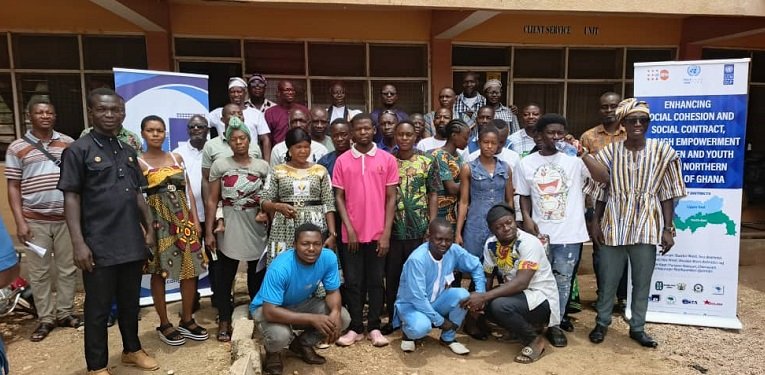
The youth in Zebilla have been admonished to shun acts of violent extremism, and rather endeavour to work hand-in-hand with the local authorities to sustain peace, and advance the interest of the area.
As influential people in the society, the youth have been challenged to amplify their voices on issues affecting the district, especially in times of conflict.
Speaking at the second sitting session of the Youth Parliament in the Bawku West District of the Upper East Region, organised by the Centre for Democratic Development-Ghana on Saturday, the Research Manager and Team Lead for Governance and Social Accountability Practice at the CDD-Ghana, Mr Mohammed Awal, said the youth were always eager to engage in violence because of peer influence.
To this end, he stated, the CDD-Ghana with funding support from the United Nations (UN) Peace building Fund through United Nations Development Programme (UNDP) and United Nations Population Fund (UNFPA), was implementing a project dubbed: ‘Enhancing social cohesion and social contract, through the empowerment of women and youth in three regions of Ghana.”

According to him, several interventions were undertaken to empower women and the youth to counter violent extremism and radicalisation.
“We want to strengthen social accountability, citizen’s participation in the governance process, both at the community level and at the district level.
“It is also about economic livelihood of citizens, and there is a component under the Fund that also seeks to support livelihood activities for the women and young persons,” Mr Awal stated.
For him, when the youth were economically empowered, and assured of sustainable livelihoods at all time, they would do everything humanly possible to resist any temptations in order to engage in aggressive behaviour that threatened the peace in communities.
Speaking on the theme: ‘Youth participation as an effective tool in preventing violent extremism; the role of the youth in picking signals for effective engagement with relevant authorities for action,’ Mr Awal asked the youth not to relent on their role to mobilise action targeted at reducing political violence and vigilantism.
Meanwhile, the CDD-Ghana, in collaboration with local partners, such as RISE-Ghana, the National Youth Authority (NYA) is implementing the project in three districts in the region: Bongo, Bawku West, and Garu.
The main objective, he mentioned, was to convene youth sitting across the project regions working with local government authorities and community associations in the selected districts to organise fora to raise awareness, and mobilise action to address the emerging threats of violent extremism and insecurity across the region.
Monica Akanaba, the Bawku West District Director for the NYA, underscored that she was optimistic the Youth Parliament would help build the confidence level of the youth, and make them acquire some leadership skills to confront issues that afflicted their well-being.
She added that, “This initiative promotes unity, meaningful dialogue, peaceful conflict resolution and networking among the youth.”
She lamented the low participation of the youth in government and decision-making process, and called on the government and other development partners to join hands with the CDD-Ghana, RISE-Ghana, and the Forum for African Women Educationists (FAWE) Ghana, among others civil society organisations, to create opportunities for the youth and encourage them to participate actively in decision-making process
FROM FRANCIS DABRE DABANG, ZEBILLA