Cambridge Conference Spotlights Future-Ready Education in Africa
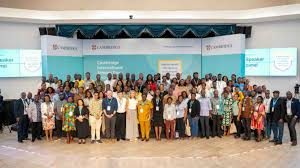
The International Education group at Cambridge University Press & Assessment has celebrated its first Cambridge International Schools Day in Sub-Saharan Africa, bringing educators together to explore how education can keep pace in an era of rapid change.
The one-day conference, held at the International Community School in Accra, focused on the theme: “Future Ready: Navigating a Changing Educational Landscape.”
It was built on insights from Cambridge’s global study, Preparing Learners to Thrive in a Changing World, which captures the perspectives of nearly 7,000 teachers and students across 150 countries on what is important to be ready for the future.
The report highlighted several priorities for action in education, including the need to strengthen students’ self-management and communication skills, and to reframe the value of subject knowledge in the age of AI in order to ensure that students are well prepared for life after education.

Louise Hendey, Managing Director for Sub-Saharan Africa at Cambridge University Press & Assessment, stated: “Our ambition for the conference was to build connections, courage, and shared responsibility, and to reaffirm the belief we hold deeply that Africa’s schools, educators, and learners are not simply helping students prepare for the future they will face, but for the future they want to create.”
Her keynote address, Leading through Chaos, explored how school leaders can create coherence and calm in a world where digital overload, social fragmentation, and chronic exhaustion increasingly influence learners’ well-being and engagement.
Other key speakers included Juan Visser, Cambridge’s Regional Director, Sub-Saharan Africa for International Education, who unpacked the findings of Cambridge’s new report. “Drawing on insights from our research, this conference offers an opportunity to support schools as they respond to a rapidly changing educational environment. We aim to develop future-ready learning environments, where curiosity is encouraged, thinking is stretched, collaboration is purposeful, and students are supported to build confidence, resilience, and a strong sense of purpose,” Mr Visser explained.
Niall McNulty, Product Lead for AI and Edtech at Cambridge University Press & Assessment, offered practical strategies for embracing AI confidently in schools.
A series of interactive sessions allowed conference participants to explore the evolving role of subject knowledge and skills, AI readiness for schools, metacognition, critical thinking, communication skills, and managing conflict productively.
Araba Botchway, Executive Director of Admissions and Financial Aid at Ashesi University in Ghana, facilitated the breakout session, Subject Knowledge: Critical for Success in Higher Education and Beyond. She elaborated, “Today’s learners need to combine deep disciplinary understanding with transferable skills such as critical thinking, problem-solving, and adaptability to thrive in diverse contexts beyond university. By bringing educators and experts together to exchange ideas, we can develop practical solutions that respond to these evolving educational needs. Ultimately, we collaborate to provide the confidence and capability the youth need to navigate an increasingly complex world.”
BY TIMES REPORTER
Join our WhatsApp Channel now! https://whatsapp.com/channel/0029VbAjG7g3gvWajUAEX12Q

Follow the latest videos and updates on the official YouTube channel of Ghanaian Times.
https://www.youtube.com/@ghanaian_times