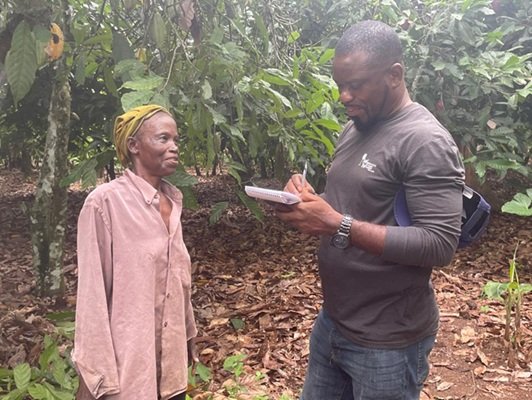
Cocoa farmers in parts of the Bono East Region are recording declining yields as prolonged sunshine and erratic rainfall continue to affect production.
A 65-year-old farmer, Ms Rebecca Owusuaa, from Boakyekrom, near Nsuta in the Techiman Municipality, said output from her five-acre farm had fallen from 28 bags per season to 17 bags last year, with production expected to drop to as few as 10 bags this season.
Speaking to The Ghanaian Times during a visit to her farm, the widow, who has been engaged in cocoa farming for 50 years, attributed the decline to changing weather patterns.
She called on the government to reintroduce and expand irrigation schemes for cocoa farms, citing an initiative implemented by the Ghana Cocoa Board (COCOBOD) between 2019 and 2021 as a measure that could help farmers cope with changing weather conditions.


Another farmer, Mr Samuel Fosu, who has been in the cocoa business for 26 years, also reported a decline in production.
He said he previously harvested 68 bags of cocoa per season from his 15-acre farm, but output had dropped to 55 bags before falling further to 48 bags last year.
Mr Fosu, who also cultivates mangoes and other food crops, said he had adopted several climate change adaptation measures to improve productivity and protect his farm.
He explained that he had planted shade trees, including mahogany and framo, to shield the cocoa trees from excessive sunshine.
He had also been applying organic manure made from poultry droppings and cow dung to improve soil fertility and boost yields.
Mr Fosu encouraged other cocoa farmers to adopt the practice, describing organic manure as a relatively cheaper alternative to synthetic fertilisers.
On the challenges confronting cocoa farmers, he called for a fair producer price that would enable them to afford essential farm inputs, including fertilisers, spraying services and agrochemicals.
He said better earnings would motivate existing farmers and encourage more young people to take up cocoa farming to replace the ageing farming population.
According to him, the high cost of hiring labour had become a major challenge, as many young people were increasingly attracted to illegal small-scale mining, popularly known as galamsey, because of its perceived financial returns.
Mr Fosu also appealed to the government to upgrade the nine-kilometre road linking Boakyekrom to Nsuta to make it easier to transport cocoa and other farm produce to market centres.
FROM DANIEL DZIRASAH, BOAKYEKROM
SKIP THE QUEUE, TAP THE NEWS

Read the Ghanaian Times and The Spectator newspapers from the comfort of your device via TimesNewsPlus.
Follow our WhatsApp Channel now! https://whatsapp.com/channel/0029VbAjG7g3gvWajUAEX12Q